
Las Vegas Convention Center · April 18–22, 2026
MAM / DAM landscape · cloud collaboration · hardware · industry insights
NAB Show 2026 closed with more than 58,000 registered attendees, with content creator registrations up 140% over 2025 and corporate media professionals nearly doubling year-over-year to over 13,000. The show floor hosted more than 1,100 exhibitors, including 132 first-time participants, with global brands like Sony, Canon, Ross, Blackmagic Design, Adobe, Google Cloud, AT&T and AWS.
But the real story is not the numbers. It's that the industry has stopped debating whether to adopt AI, the cloud, and software-defined workflows. The conversation has clearly shifted to how to operationalise them at scale — with a strong undertone of "intentional AI" rather than AI for AI's sake. As one attendee put it, the real value of AI isn't generating more content; it's unlocking the value of everything that's already been created.
For DAM and MAM vendors, this is a defining moment. Three macro themes ran through almost every booth:
1. Agentic AI as the new layer above search. Conversational, multi-step "discovery agents" replaced the keyword-based logic that defined MAM for two decades.
2. The on-prem counter-narrative. A vocal coalition led by Axle AI made on-premise infrastructure a deliberate differentiator, framing it as the responsible response to data leaks, scraping by LLMs, and runaway cloud costs.
3. The collapse of "tool boundaries" in the creative supply chain. File streaming, mounted storage, and panel-based integrations are dissolving the lines between MAM, NLE, review-and-approval, and storage.
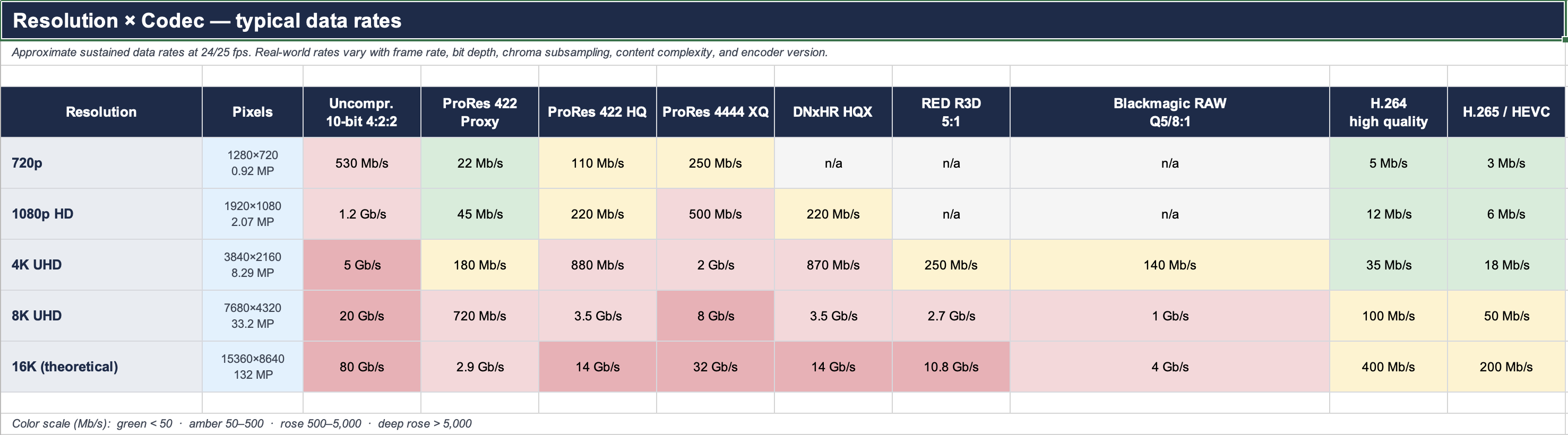
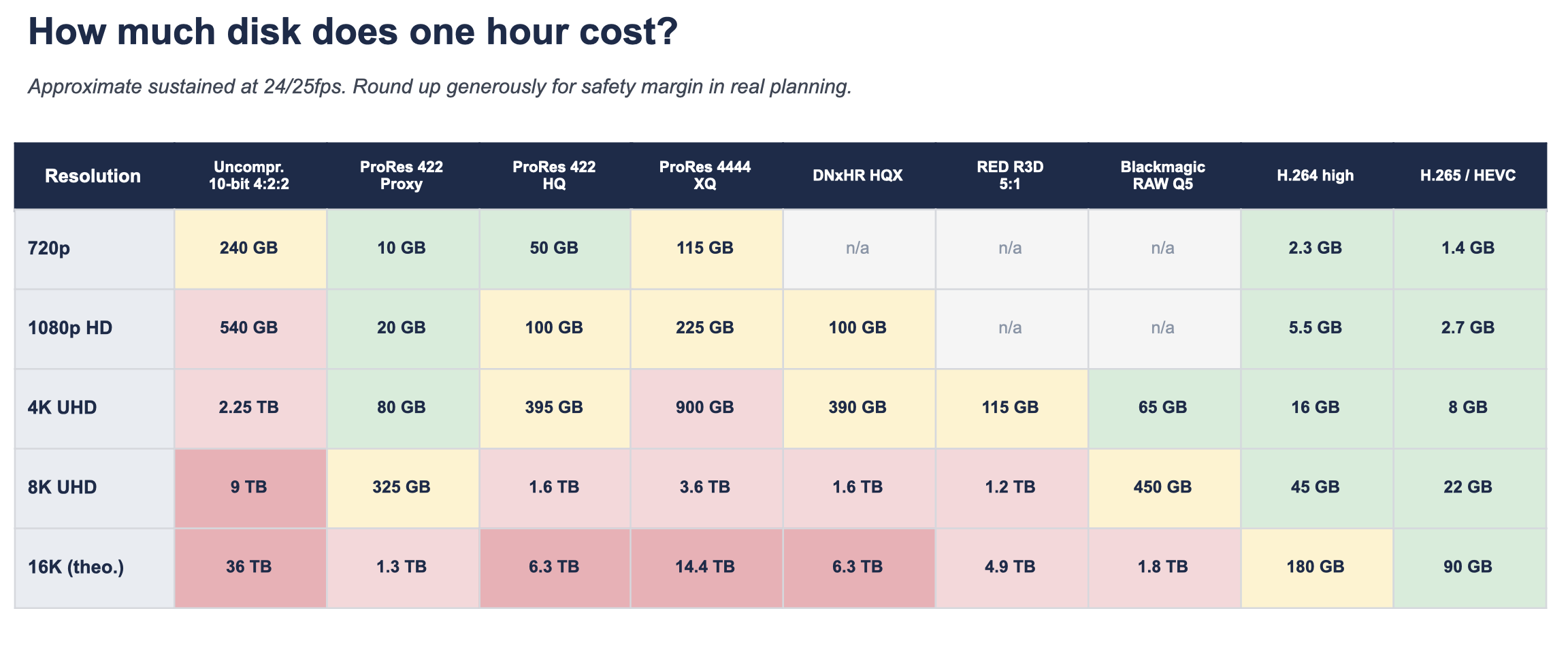
It is imprtant to remind you the foundation of video formats and codecs :


Iconik came to NAB with the strongest narrative arc of the established MAM players. The story, told jointly with sister Backlight company Wildmoka, is that Iconik and Wildmoka now form a "creative operations super-platform" built to help teams scale: more output, more control, across the media workflow — not more features for the sake of it.
The headline is the new Iconik publish panel: teams can initiate publishing workflows directly from asset context in Iconik, with Wildmoka powering execution behind the scenes — addressing the "last mile" problem of exports, re-uploads, renaming, manual packaging, and spec chasing. For multi-brand, multi-region operations, this is genuinely meaningful.
The scale numbers are striking: Backlight reported that media teams are now adding over 11 terabytes of content every hour, with nearly 903 million assets under management across the platform.
Other notable updates:
• Multi-channel audio in the web player — review up to 16 discrete tracks, mute/solo, no downloads.
• MASV integration — teams can now send assets from Backlight's Iconik MAM via MASV without leaving the application, eliminating the "double-hop" workflow while preserving metadata.
• LucidLink + Iconik — positioned as a single ecosystem where Iconik handles metadata, proxies, and discovery while LucidLink ensures the original high-res files are always accessible.
• Intentional AI — a deliberate framing: instead of forcing AI into every step, Iconik uses it where it actually adds value: automatically generating metadata, creating proxies for fast review, and making content discoverable at scale.
Moments Lab arrived in Las Vegas with arguably the cleanest agentic AI narrative on the floor. The Discovery Agent went GA, with CEO Phil Petitpont reporting rapid user uptake of more than 50% and customer feedback describing it as a "life-changing" tool — users ask in plain language and get precise, contextual results in seconds.
The new launches at booth N1011:
• Native panels for Avid Media Composer and DaVinci Resolve — joining the existing Adobe Premiere Pro panel to eliminate manual EDL workflows and dramatically reduce download times.
• Moments Gateway — a lightweight application that bridges on-premises production and archive storage to cloud systems to enable AI-powered video search.
• Projects — collaborative workspaces inside the Discovery Platform.
• Agentic Transformation Package — a dedicated package combining strategic advisory, technical deployment support, and AI indexing cost support to accelerate agentic workflow adoption.
The big strategic move was the AWS partnership announced at the show: a collaboration to help media and entertainment companies accelerate the migration of thousands of hours of video content to the AWS environment, where it can then be indexed and searched with Moments Lab's multimodal AI.
The customer momentum is real — ITN's deployment for 5 News, with the platform indexing the entire 5 News archive and enriching new daily content, plus existing wins with TF1, M6, Asharq News, AFP, the EBU, and Brut.
Mimir continued to make a virtue of its continuous-deployment model. At booth N2850, the company demonstrated more than 240 enhancements since last year's show, focused on cloud-based editing, mobile ingest, and expanded AI integrations.
The standout was Mimir Cutter, which is genuinely a category-bending move:
• Cloud-based editing tool that allows teams to create and reformat clips for multiple output formats (9:16, 1:1, 4:3) with pre-sets and keyframing, multi-track audio with waveforms and level metering, and direct rendering from Mimir using admin-defined export presets.
• Cuts can be picked up in DaVinci Resolve or Adobe Premiere Pro for more complex finishing.
On AI, Mimir doubled down on a vendor-agnostic stance — integrations with AWS, Google, TwelveLabs, and CoActive AI, with search results surfacing edit-ready segments directly in Mimir Cutter. The mobile ingest app and built-in US closed-caption handling rounded out the announcement. For news and short-form teams especially, this is where serverless workflow stops being theoretical.
Axle AI made the boldest strategic statement at the show. CEO Sam Bogoch organised the On-Prem ZONE in the North Hall — teaming up with a dozen vendors in adjacent booths (Archiware, ATTO, Cloudian, QNAP, Quantum, Qualstar, Qumulo, Magstor, Symply, ShotPut Studio, Western Digital and YoYotta) to highlight on-premise software and hardware solutions, framed explicitly as a response to data leaks, malware, intrusions, and unauthorised scraping by LLMs.
This is more than a marketing move — it's a positioning statement that on-prem is not legacy infrastructure but a deliberate, security-first choice. Given everything you've been working on with Shiseido EMEA and the Adsapp/Picto architecture, this is a genuinely useful framing for client conversations.
Product-side, Axle launched a new panel for Avid Media Composer at booth N1519 that enables editors to search, preview, and import media directly from any Axle AI MAM, with semantic search, scene understanding, automated metadata tagging, and spoken word indexing. The panel goes into immediate beta after the show, with wider release expected in June 2026.
The bigger strategic story is the Portfolio acquisition announced just before NAB: Axle AI acquired the Portfolio DAM product line from Extensis (a Monotype company) and formed a new division, Portfolio DAM, LLC. Axle hired Richard Bamford as Product Manager and is releasing Portfolio 4.1.1 in beta with a major Tomcat upgrade, JRE upgrade, and removed requirement for Windows Server. With Portfolio's heritage in workgroup DAM plus Axle's on-prem AI stack, this is a direct play at the segment that finds Orange Logic and Bynder too heavy and Iconik too cloud-locked.
Perfect Memory didn't lead with a flashy NAB launch, but the timing of the BCE deal was strategically perfect for the show. BCE selected Perfect Memory as the metadata & asset management solution for its Media-as-a-Service (MaaS) offering — a strategic collaboration strengthening BCE's MaaS platform by enhancing content governance, metadata management, and overall valorisation of media assets.
The framing matters: BCE chose Perfect Memory's advanced MAM technology to structure, manage, and contextualise media content across its MaaS environment, enabling improved interoperability, enriched metadata, and seamless access to media assets.
Sales Director Raoul Cospen positioned this clearly: the collaboration demonstrates how intelligent data and semantic technologies play a critical role in unlocking the full value of media assets within modern content-centric environments. Given Perfect Memory's "Cognitive Asset Management" pitch and its semantic graph foundation, the BCE deal is exactly the proof point the company needed for the MaaS-buying enterprise crowd.
Orange Logic walked into NAB with serious analyst momentum. Orange Logic was named a Leader in The Forrester Wave™: Digital Asset Management Systems, 2026, with the highest possible scores in asset onboarding and metadata management, the adoption criterion, and digital rights management. It was the only evaluated vendor to receive the highest possible score (5) in the Asset Performance/Content Intelligence criterion. Combined with the 2025 Gartner Magic Quadrant Leader recognition and Frost Radar Leader, Orange Logic is clearly the analyst-favoured enterprise DAM right now.
The Lionsgate win is a major signal: Lionsgate selected Orange Logic as its global platform for streamlining content production across all marketing teams, consolidating several legacy DAM systems into a centralised, cloud-based environment.
Product-side, the late-2025 platform release Orange Logic showed at NAB included:
• Media Bridge — a hybrid storage solution that seamlessly connects customer-controlled on-premise or NAS storage with enterprise governance, eliminating the need for lengthy cloud migrations. Notable: this is Orange Logic acknowledging the on-prem counter-trend Axle is leading.
• Site Builder — multi-page microsites built directly inside Orange Logic, pulling content live from the DAM.
• AI Agent Studio updates — prebuilt AI agents or custom agents trained on brand guidelines, with new Knowledge lookups, task-specific variables, Agent Teams for multi-agent workflows, chat-ready agents, and an AI usage dashboard.
• Generative integrations — Adobe Firefly, Leonardo AI, Figma Buzz, and Comcast-powered video search now connect directly into the DAM.
The Forrester analysis is a useful framing for your benchmarking work: Orange Logic is clearly positioning as the orchestration and intelligence layer for enterprise content operations, not just storage.
Elements continued to refine its "everything in one stack" pitch at NAB 2026: integrated NAS storage, Media Library, Workflow Engine and editorial panels in a single product.
The emphasis this year was on hybrid deployments with new cloud bridges, and deeper AI integrations for auto-tagging and proxy generation. For post houses and broadcasters that find the cloud-first MAMs too disconnected from storage and the pure DAMs too marketing-flavoured, Elements remains one of the cleanest "production-grade integrated stack" answers on the market — and the on-prem revival narrative plays directly to their strengths.
They quietly one of the most strategically positioned companies on the floor. They aren't selling a MAM — they're selling the AI engine that MAMs plug into. Their Marengo (multimodal search) and Pegasus (video analysis & generation) foundation models surfaced behind Mimir, several other MAM vendors, and a growing number of cloud workflow products. For DAM/MAM RFPs going forward, the question is shifting from "which AI does the platform have?" to "which foundation model does the platform run on?" — Twelve Labs is becoming the OpenAI of video understanding.
Censhare's NAB story was relatively quiet but strategically interesting. The company (now part of the Entirely portfolio) announced an integration with Blue Lucy that debuted at the show. The integration extends orchestration, content, and video workflows, with planned enhancements including full project synchronisation between systems, enabling seamless access to content across both the Censhare and Blue Lucy platforms.
For organisations running Censhare for marketing/PIM/DAM and needing media-grade video orchestration, this is a meaningful coupling. Blue Lucy was on Booth W2318 and Censhare on Booth W1353.
CYME continued its steady ascent at NAB. The Peakto story is a clean counterpoint to the cloud-first MAMs: a Mac-native, local-first DAM for photographers, videographers, and small creative teams.
The 2.7.0 release (February 26, 2026) shipped right before NAB and brought:
• Integration with Nitro and Affinity.
• Validation workflow — clear review and approval statuses.
• Native playback for Nikon and RED RAW formats (a meaningful nod to the Nikon ZR / RED ecosystem).
The earlier 2.6 line had added AI-based deduplication and culling across the entire Peakto catalog, Premiere Pro integration, and the Peakto Pro tier with multi-collaborator web access and Blackmagic RAW playback.
The "best Shade alternative" positioning is smart: Peakto is the local-first answer to Shade — where Shade requires media to live in its cloud infrastructure, Peakto indexes everything where it already is (Lightroom catalogs, Capture One sessions, Apple Photos, NAS drives) and gives you AI-powered natural language search across the entire archive, privately. Add ShareSpaces and Peakto becomes a credible team DAM for photo-led workflows that don't want cloud dependency. Worth keeping in your toolkit for Activo's photographer-heavy clients (your Michelin sports photo work being a case in point).
The are celebrating 25 years of innovation at booth N1624, sitting right inside the on-prem cluster alongside MagStor (N1626), axle ai (N1628), SYMPLY (N1630), QNAP (N1632), ATTO (N1636) and ELEMENTS (N1640). Archiware released P5 Version 8.0 with a clear strategic message: hybrid archive is no longer optional.
The headline is bidirectional cloud sync in P5 Synchronize across AWS, Azure, Google Cloud, Wasabi and any S3-compatible storage, alongside Project Restore that rehydrates archived data from EDL, OTIO, FCPXML and ALE project files — archivists can finally restore by NLE timeline rather than by folder.
Add LTO hardware encryption, selective deletion with secure erase, and the new P5 Archive DLM module for project-based storage monitoring, and Archiware ticks every box of the modern resilience playbook (3-2-1-1-0, ransomware-aware, project-aware). The release notes also quietly add back-ported P5/S3 compatibility for Iconik MAM — a small line that matters a lot for hybrid Iconik deployments.
This category effectively merged at NAB 2026. Three players are now fighting over the same patch of ground: mounted, streamed access to media, indistinguishable from a local drive.
LucidLink delivered one of the most strategically significant announcements of the show. The new LucidLink Developer Platform — a set of APIs and a Python SDK currently in beta — repositions LucidLink as something corporate AV and IT teams can automate against rather than install as a standalone tool.
The Connect expansion is the more immediately useful change: LucidLink Connect now covers Amazon S3-compatible buckets, Google Drive, Dropbox, OneDrive, SharePoint, and Adobe's Frame.io, with availability on AWS Marketplace. The Frame.io coverage is particularly important — review-and-approval content now lives in the same workspace as production media.
The integration story for traditional broadcasters: Adobe Premiere Pro, DaVinci Resolve, the Iconik MAM (a Backlight product), and post-production partner Embrace, plus the Frame.io expansion of LucidLink Connect. The Developer Platform is targeted at automated MAM-to-storage handoffs — an area where most installations still rely on custom scripts or manual moves.
The scale numbers: LucidLink supports more than 110,000 collaborators across 150+ countries, serves more than 5,000 businesses, and manages over 90 petabytes globally.
This was Adobe's most consequential NAB in years for the Frame.io product line.
Frame.io Drive — a free desktop app — was the headline. It replaces the earlier Frame.io Transfer app, retains fast uploads and downloads, and adds the ability to mount Frame.io cloud projects directly in macOS Finder or Windows File Explorer. The demo showed Premiere Pro projects opened directly from a mounted Frame.io project, with saves writing back to the cloud automatically. Round-trips also work with Photoshop, Illustrator, InDesign, Capture One, and DaVinci Resolve — the workflow is not limited to Adobe.
Frame.io Mounted Storage launched April 15, beginning at the Frame.io Enterprise tier, with rollout to all plans ongoing.
Workfront integration — Frame.io is now the primary review surface inside Adobe Workfront, replacing legacy Proof workflows. The integration connects planning, creation, and review in a single system, with multi-stage approvals supported end-to-end, shared work-in-progress storage, and bidirectional status sync. This is a big play for marketing/creative teams — exactly the audience your enterprise DAM clients need to align with.
The PDF rendering overhaul, ICC profile support, and zoom/pan controls are smaller but useful. JJ Powell from Frame.io described the trajectory clearly: Frame.io is moving from review-and-approval tool to creative management platform.
The most surprising story of the show: Suite Studios is the file-streaming engine inside Frame.io Drive. Suite Studios integrated its file-streaming technology into the newly announced Frame.io Drive, with files appearing in macOS Finder and Windows File Explorer as if locally stored.
CEO Craig Hering's framing: "Suite Studios has become the leading file streaming solution for the creative industry. Embedding inside Frame.io Drive is a natural extension of that mission."
For Suite — based in Boulder, $18M raised — this is a transformative validation. They went into NAB at booth N1817 with their S3 Native File Streaming (announced February 17), positioned for both enterprise teams with complex workflows and teams using cloud object storage, including on-prem object storage. The Frame.io Drive partnership is the kind of OEM-style win that puts a small company on the enterprise map overnight.
Blackmagic's NAB 2026 was, in their own terms, the biggest in company history. The thesis is clear: Blackmagic Design is building a complete 100G Ethernet and SMPTE-2110 live production ecosystem — from camera acquisition through switching, audio mixing, routing, standards conversion, recording, and post-production — and pricing it at a level that makes traditional broadcast infrastructure vendors very uncomfortable.
The headline products:
• DaVinci Resolve 21 — significant update introducing the new Photo page bringing Hollywood's most advanced color tools to still photography for the first time. Other updates include AI tools such as IntelliSearch for fast content searching, CineFocus for focal point adjustment, facial refinement tools, plus Krokodove additions to Fusion and Fairlight folder tracks. Photographers should pay attention — node-based grading on stills is a real challenge to Capture One and Lightroom.
• URSA Cine 12K LF 100G — flagship cinema camera with 100G port, available Q3 2026 for $8,995.
• URSA Cine Immersive 100G — the world's first immersive cinema camera designed for live production with Apple Immersive Video, dual 8K×8K RGBW sensors with 16 stops of dynamic range, available Q3 from US$26,495. Already proven on Spectrum's live LA Lakers immersive broadcasts.
• Fairlight Live — software-based live audio mixer with spatial audio and SMPTE-2110.
• ATEM Constellation IP, HyperDeck ISO Recorder 100G, Cloud Store Ultra, plus a full rack of 100G infrastructure products.
For broadcasters and OB van operators, the pricing is the real story.
Nikon's NAB was teaser-heavy but strategically clear. The company released a YouTube video co-branded with RED teasing new Z Cinema glass — "a new Nikkor chapter". The teaser hints at a series rather than a single lens, with cinema-style controls, an AF/MF switch, and footage suggesting wide-angle focus including fisheye and 12-24mm perspectives.
The ZR firmware story is more concrete. Nikon told Newsshooter at NAB that they are working on new firmware for the ZR fixing focus peaking when recording in REDCODE RAW (R3D NE), introducing recording in RED Log3G10 in H.265 (using RED color science without shooting RAW), and improving H.265 quality. There's also an internal-audio timecode bug being addressed.
REDCODE RAW for the Z8/Z9 is not coming — Nikon views those as hybrid still/video cameras that already have N-RAW. The cinema lenses will be Z mount only, not PL.
The business context matters: Nikon's Q3 management presentation explicitly identifies expansion into cinema cameras as a core future growth initiative — alongside semiconductor lithography as a long-term pillar — even while posting a projected ¥85B net loss. Cinema is no longer a side bet for Nikon.
DJI returned to NAB at Booth C6719 in the Central Hall, demonstrating the Ronin and Osmo product lines: RS 5 with next-gen RS Intelligent Tracking Module (10-meter subject tracking), Ronin 4D, Ronin 2, RS 4 Pro, RS 4, RS 4 Mini, plus Osmo 360, Osmo Nano, and Osmo Action 6.
The DJI RS 5 was the flagship reveal — lightweight commercial stabiliser with subject tracking on people, vehicles, pets, or other objects.
The political context cast a long shadow: the DJI Osmo Pocket 4 went on sale worldwide on April 16 with the US market excluded as the authorisation application remained pending. The Osmo Action 6 also launched without official US availability back in November 2025. Brandon Li's session at NAB demoed a camera most American attendees cannot officially buy from DJI. Notable that the Insta360 X5 sits on shelves at Best Buy, ships Prime from Amazon, and pushes targeted ads at US shoppers — both companies are based in Shenzhen with similar data architectures. For European customers (you, Activo's clients), this is mostly a non-issue, but for global brand campaigns sourcing from US creators, it's a real procurement complication.
Insta360 did the most interesting product reveal at the show. The new Luna Series, co-engineered with Leica, includes Luna Pro and Luna Ultra. The series features a large 1-inch sensor, a bright F1.8 aperture, a variable focal length, and support for 10-bit color. Luna Pro features a single-lens design, while Luna Ultra adds a dual-lens setup with enhanced telephoto performance.
The Luna Ultra features a dual-camera system with a 1-inch sensor, f/1.8 aperture, 14 stops of dynamic range, 10-bit iLog, and a rumored 6x zoom — competing directly with the DJI Osmo Pocket 4. The Luna lineup is expected to launch before the end of June 2026.
Other Insta360 announcements:
• Mic Pro — wireless microphone with integrated E-Ink display for custom branding.
• Flow 2 / Flow 2 Pro updates — native multi-lens support for flagship Android devices like Samsung S26 Ultra, faster 360 panorama capture, Dual View Mode, and Apple Watch control on iPhone.
• GO Ultra Tadej Pogačar Edition and GO 3S Retro Bundle.
The Leica partnership puts Insta360 on a similar trajectory to DJI's Hasselblad alliance. Combined with full US availability while DJI is locked out, Insta360 may be the bigger story of the year in compact creator hardware.
Promise reaffirmed its place as the trusted production storage hardware vendor for Mac-centric and post-production workflows. The Pegasus Thunderbolt direct-attach line and VTrak shared SAN got new all-flash NVMe variants, with Apollo cloud bridges for hybrid setups. With the on-prem counter-narrative gaining force and storage costs back in the spotlight, Promise's positioning as a stable, vendor-neutral storage substrate underneath any MAM/DAM is more relevant in 2026 than it has been in years.
Pulling the threads together, a few things stand out for those of us advising on DAM/MAM strategy:
1. The MAM/DAM divide is dissolving — and the orchestration layer is the new battleground. Iconik talks about "creative operations." Orange Logic talks about "content orchestration." Moments Lab talks about "video discovery." Frame.io talks about "creative management." Different vocabularies, same target: the layer that sits above storage and between the tools, governing how content moves, who can use it, and what AI does to it. For enterprise clients, the procurement question is no longer "which DAM" but "which orchestration philosophy."
2. Agentic AI is real, but it's a 2026–2028 maturity curve. The Discovery Agent (Moments Lab), Agent Studio (Orange Logic), and Mimir's vendor-agnostic agentic search show the same pattern: conversational prompts replacing keyword search, multi-step task automation replacing single-action workflows. Adoption metrics are encouraging (Moments Lab's 50%+ uptake) but enterprise governance is the open question. RAG, hallucination control, and audit trails for AI agents touching brand assets are not yet solved.
3. On-prem is back as a deliberate choice, not a legacy constraint. Axle AI's On-Prem ZONE crystallised what many of us have been hearing in client conversations: the cloud's data-sovereignty, scraping, and cost stories have all weakened. Orange Logic's Media Bridge is a tacit acknowledgement of the same trend. Expect "sovereign DAM" and hybrid architectures to become a 2026 RFP requirement category, not just a CIO concern.
4. File streaming is the real disruptor at the storage layer. LucidLink, Suite Studios, and now Frame.io Drive — the "mount it like a local drive, stream from the cloud" pattern is now table stakes. The MAM vendors who don't have a clean, native integration with at least one of these will be at a disadvantage in 2026 RFPs. Iconik + LucidLink and Frame.io + Suite Studios are the two reference architectures to watch.
5. The hardware story is not separate from the workflow story. The Nikon ZR with R3D NE, Insta360 Luna with Leica color, and Blackmagic's full 100G ecosystem all push a single point: capture quality and codec sophistication keep rising, which means MAM/DAM platforms have to handle native playback, proxy generation, and AI indexing for a wider matrix of formats than ever. Peakto adding native Nikon and RED RAW playback at 2.7.0 is a small but telling indicator.
6. The convergence of marketing operations and media production is finally happening. Frame.io + Workfront, Orange Logic + Adobe Firefly, Censhare + Blue Lucy — the integrations announced at NAB 2026 are the strongest signal yet that the historical wall between MarTech (DAM, MRM, PIM, CMS) and MediaTech (MAM, NLE, broadcast) is genuinely coming down. For Activo's enterprise clients, this is the strategic conversation that should shape the next 18 months of architecture decisions.
A useful reference for the formats that turned up across booths at NAB 2026 and that anchor most of the architecture conversations that follow a show like this. Organised by where each format sits in the production-to-distribution chain.
These are what comes off the sensor, and they shape every downstream decision: storage volume, proxy strategy, AI indexing performance, archive cost.
RAW formats — minimally processed sensor data, maximum latitude in post.
• ARRIRAW — uncompressed Bayer, the cinema reference. Massive file sizes, used on ALEXA productions. Now also ARRIRAW HDE (High Density Encoded) for ~40% smaller files.
• REDCODE RAW (R3D) — wavelet-compressed RAW from RED. Variable compression ratios (e.g. 3:1 to 22:1). The new R3D NE (announced for the Nikon ZR) is a more mainstream-friendly variant — same RED color science, smaller footprint, integrated into a mirrorless body.
• Blackmagic RAW (BRAW) — a partial-debayer hybrid: some processing happens in-camera, the rest in post. Far more efficient than uncompressed RAW while preserving most of the latitude. Standard on URSA Cine and Pocket Cinema.
• ProRes RAW / ProRes RAW HQ — Apple's RAW format, supported natively in Final Cut Pro and increasingly in Premiere/Resolve. Used on Atomos recorders, some Nikon and Panasonic bodies.
• Sony X-OCN (LT/ST/XT) — RAW-like 16-bit linear codec for VENICE and FX9. Excellent quality-to-size ratio.
• Canon Cinema RAW Light (CRM) — Canon's compressed RAW for C300/C500/C700.
• N-RAW — Nikon's TICO-RAW-based 12-bit format on Z8/Z9, distinct from the R3D NE on the ZR.
Compressed acquisition codecs — already debayered, smaller, faster to work with.
• ProRes 422 family (Proxy, LT, 422, 422 HQ, 4444, 4444 XQ) — the universal mezzanine. 4444 carries an alpha channel; XQ pushes 12-bit/4444 for VFX-heavy work.
• DNxHR / DNxHD — Avid's equivalent. DNxHR is the resolution-independent successor used in Avid-centric facilities and shipped natively in Resolve.
• XAVC / XAVC-I / XAVC-S / XAVC-HS — Sony's H.264/H.265-based family. XAVC-I is intra-frame (broadcast-friendly), XAVC-S is long-GOP (consumer/prosumer), XAVC-HS is the H.265 evolution.
• XF-AVC / XF-HEVC — Canon's broadcast-oriented family.
• AVC-Intra / AVC-LongG — Panasonic broadcast codecs, still common in news workflows.
Working formats that sit between acquisition and delivery — chosen for editing performance, color fidelity, and round-trip stability.
• ProRes 422 HQ is the de facto standard for online editing, finishing, and archival masters in much of the industry.
• DNxHR HQX / 444 is the Avid equivalent, with 444 used for VFX and grading round-trips.
• JPEG 2000 — the SMPTE-standardised codec for IMF (Interoperable Master Format) packages and DCP (Digital Cinema Package). Visually lossless, intra-frame, mathematically reversible at higher bit depths.
• Cineform — wavelet-based, GoPro-acquired, still used in some VFX pipelines for proxies and offline work.
What the audience actually receives.
• H.264 / AVC — still the universal lowest common denominator. Every device, every platform.
• H.265 / HEVC — ~50% better compression than H.264 at equivalent quality. Used by Apple, Netflix 4K, broadcast 4K, premium streaming. Patent licensing complexity slowed adoption.
• AV1 — royalty-free, developed by AOMedia (Google, Netflix, Amazon, Meta, Apple, Microsoft). Now mainstream on YouTube, Netflix, Twitch. Roughly 30% better than H.265 at the cost of higher encode complexity.
• VP9 — Google's predecessor to AV1, still common on YouTube and Android.
• VVC / H.266 — the successor to H.265, ~40–50% gain over HEVC. Slow commercial rollout because of patent uncertainty, but starting to appear in some broadcast experiments and 8K work.
• MPEG-5 LCEVC — an enhancement layer that sits on top of an existing base codec (H.264, HEVC, AV1) to improve quality at low bitrates. Picking up in lean-back streaming and constrained-bandwidth scenarios.
• MPEG-DASH and HLS are not codecs but adaptive-bitrate streaming protocols — they package the codecs above for delivery.
The big NAB 2026 story, particularly with Blackmagic going all-in on 100G.
• SDI (Serial Digital Interface) — the legacy coax-based standard. 3G-SDI for HD, 6G-SDI for 4K30, 12G-SDI for 4K60. Still ubiquitous in trucks and studios.
• SMPTE ST 2110 — the IP-based replacement for SDI. Separates video (-20), audio (-30), and ancillary data (-40) into discrete streams over IP networks. Built on PTP (Precision Time Protocol) for synchronisation. ST 2110-22 adds JPEG XS for compressed-but-low-latency video — the format Blackmagic is using for live Apple Immersive Video output.
• SMPTE 2022-7 — seamless redundancy: two simultaneous network paths, automatic failover. Now standard practice for broadcast IP.
• NDI (Network Device Interface) — NewTek/Vizrt's IP video standard. More accessible than ST 2110, widely used in corporate, esports, houses of worship, and live streaming. NDI HX is the compressed variant; NDI 5/6 added bridge and remote capabilities.
• IPMX — an emerging open standard from AIMS, layering professional AV requirements on top of ST 2110 plus extensions for the pro AV market. Positioned to unify broadcast IP and AV-over-IP.
• JPEG XS — ultra-low-latency intra-frame codec used inside ST 2110-22 streams and increasingly in remote production over the public internet.
• SRT (Secure Reliable Transport) and RIST — open-source contribution/distribution protocols for moving live video over unmanaged networks.
The "envelopes" that hold the codecs above.
• MXF (Material Exchange Format) — broadcast workhorse. OP1a (single-file, common in news and program delivery), OP-Atom (Avid/Nexis-friendly, separate essence files). Carries metadata, timecode, ancillary data.
• MOV (QuickTime) — Apple's container, the default for ProRes and many camera codecs.
• MP4 (ISO BMFF) — the dominant streaming container, derived from MOV. Used for H.264, H.265, AV1 distribution.
• IMF (Interoperable Master Format) — SMPTE 2067, a component-based mastering format. One core video master + multiple audio/subtitle/version components, assembled per territory or platform. Now a Netflix/Disney+/Amazon delivery requirement.
• DCP (Digital Cinema Package) — the theatrical delivery package. JPEG 2000 video, uncompressed PCM audio, XML composition playlists.
• MKV — open-source container, less common in professional broadcast but widely used in archive workflows for its codec flexibility.
Increasingly central to MAM/DAM strategy as native playback and accurate proxy generation become table stakes.
• Rec. 709 — HD/SDR standard. The baseline for legacy broadcast.
• Rec. 2020 — UHD/HDR-capable wide gamut. The container space for most HDR delivery.
• DCI-P3 — digital cinema primaries, used in theatrical and on Apple displays.
• PQ (ST 2084) — perceptual quantizer transfer function. Absolute brightness encoding, used by HDR10, HDR10+, Dolby Vision.
• HLG (Hybrid Log-Gamma) — relative HDR transfer function backwards-compatible with SDR displays. The BBC/NHK-developed standard for broadcast HDR.
• HDR10 — open static-metadata HDR (one tone-mapping setting per title).
• HDR10+ — Samsung-led, dynamic metadata, royalty-free.
• Dolby Vision — proprietary, dynamic metadata per scene/frame, the premium-tier HDR format.
• ACES (Academy Color Encoding System) — not a delivery format but a color management framework: a single working space (ACES2065-1/AP0) and a viewing transform pipeline that abstracts grading from any specific display target. Increasingly the "lingua franca" for high-end production color.
• Camera log spaces — ARRI LogC3/LogC4, Sony S-Log3, Canon C-Log2/3, RED Log3G10, BMD Film Generation 6 (now in URSA Cine), Nikon N-Log. Each maps the sensor's dynamic range into a log curve for grading flexibility.
• Linear PCM — uncompressed, the production master.
• Dolby E — 8-channel compressed audio over a single SDI pair, broadcast workhorse.
• AC-3 / E-AC-3 (Dolby Digital / Plus) — distribution.
• AAC / AAC-LC / HE-AAC — streaming.
• Dolby Atmos — object-based immersive audio. ADM BWF for production, Dolby Digital Plus JOC for streaming, MAT 2.0 for broadcast.
• MPEG-H 3D Audio — object-based competitor, used in ATSC 3.0 broadcasts and some streaming.
The reason this matters in our world, not just on the camera floor:
• Native playback matrix. A serious DAM/MAM in 2026 needs to handle native preview of at least: ProRes (all flavors), DNxHR, BRAW, R3D / R3D NE, X-OCN, N-RAW, ProRes RAW, plus the H.264/H.265/AV1 distribution formats. Peakto's 2.7.0 addition of Nikon and RED RAW playback is the kind of incremental coverage every vendor is racing on.
• Proxy strategy is an architecture decision. What format, what bitrate, where generated (edge vs. cloud), how stored (with or alongside the original), and how surfaced to AI indexing pipelines. Frame.io's H.264 / HEVC / ProRes 422 web proxy options for Peakto and the broader push toward edit-ready proxy formats are part of this conversation.
• AI indexing is codec-sensitive. Multimodal models like Moments Lab's MXT-2 generally consume normalised proxies, not native RAW — but the proxy generation step has to be lossless enough to preserve the cues the AI needs (faces, OCR text, scene composition).
• Archive format choice has 10–20 year consequences. ProRes 422 HQ in MXF OP1a is the safest bet for most enterprise archives today. JPEG 2000 in IMF for tier-one masters. Avoid proprietary RAW formats in long-term archive unless you also archive a high-quality mezzanine alongside.
• HDR and color management are the new compliance dimension. Brand and broadcast clients now require deliverables in HDR10, Dolby Vision, and SDR — your DAM has to track which versions exist, which color space, which transfer function, and ideally enforce that the right master goes to the right destination. Orange Logic's high score on digital rights and governance partly reflects this; expect every serious enterprise DAM to add HDR-aware version management as a 2026/2027 capability.
• SMPTE ST 2110 is now a MAM concern, not just a broadcast engineering one. When camera, switcher, recorder, and storage all live on 100G IP, the MAM has to ingest from IP streams, understand SMPTE timecode and ancillary data, and integrate with PTP-aware infrastructure. Most enterprise MAMs are not yet there — this is where Mimir, Iconik, and the broadcast-focused MAMs (EditShare, Dalet, Vizrt) will increasingly differentiate.
Sources: NAB Show official press releases, vendor announcements, Sports Video Group, TV Tech, ProVideo Coalition, RedShark News, AVNation, CineD, PetaPixel, Newsshooter, Y.M.Cinema, and direct vendor coverage from April 2026


