
PIM consulting empowers businesses to connect structured product data with rich media by aligning Product Information Management (PIM) and Digital Asset Management (DAM). Consultants support strategy, taxonomy design, system integration, and governance to ensure seamless content workflows, consistent product experiences, and scalable operations across all digital channels.
In today’s digital transformation era, product content is king. Customers demand accurate information and compelling visuals across every channel – from e-commerce sites and mobile apps to print catalogs. Many organizations, however, still struggle with a divide: product data lives in one silo (spreadsheets or an ERP), while images and media assets live in another (shared drives or separate libraries). The result is often inconsistency, slow updates, and a poor customer experience.
This is where product information management consulting becomes invaluable. By unifying Product Information Management (PIM) and Digital Asset Management (DAM) solutions through a strategic, expert-led approach, companies can create a single source of truth for both data and assets. The goal isn’t just to deploy new software – it’s to harmonize how teams manage product content, streamline workflows, and ultimately drive better business outcomes. In the sections below, we’ll explore why integrating PIM and DAM is essential, what it takes to do it successfully, and how an independent consulting partner like Activo can guide your organization to PIM-DAM success.
Content Silos Slow You Down: Imagine a marketing team trying to launch a new product line. Without integration, they might pull product specifications from a database or Excel file, then separately hunt for approved images in a DAM or, worse, in someone’s email. This siloed approach wastes time and invites errors – a wrong image here, an outdated description there. In fast-paced markets (retail, manufacturing, life sciences, you name it), such delays and inconsistencies can be costly.
Omnichannel Consistency is Crucial: Modern consumers interact with product content on websites, social media, marketplaces, and in-store displays. They expect the product name, specs, price, and images to be consistent and up-to-date everywhere. If your online store shows a different photo or conflicting details compared to your catalog or Amazon listing, trust erodes. Unifying PIM and DAM ensures that every channel draws from the same well of information and assets – maintaining brand consistency and accuracy automatically.
Content Velocity and Personalization: Integrated PIM-DAM systems dramatically increase content velocity – the speed and volume at which you can create and update content. When product data and media are centrally managed and linked, it becomes easier to roll out new products or campaigns quickly. For example, updating a product spec in the PIM can instantly trigger updates to e-commerce pages, and the DAM ensures the latest approved images are in use. This agility also enables better personalization: your content teams can quickly tailor product content for different regions or customer segments, confident they’re pulling from approved, centralized assets and data.
In short, a unified PIM-DAM solution isn’t just a tech luxury – it’s a strategic necessity for any organization dealing with large product catalogs or rich marketing content. It lays the foundation for efficiency and consistency, which translates into faster time-to-market, happier customers, and fewer headaches internally.

To appreciate the power of integrating PIM and DAM, let’s briefly define their roles:
On their own, each system is powerful. The PIM brings order and validation to product data; the DAM brings organization and control to media assets. Together, they form a powerhouse: a PIM describes a product in words and data, and a DAM shows the product with visuals and documents. When integrated properly, a change in one system can be reflected in the other – for instance, attaching a new photo in the DAM can automatically link to the corresponding product record in the PIM. This synergy means your product page or print catalog is always complete – both the text and the imagery align perfectly.
Integrating your PIM and DAM solutions yields a host of benefits that directly impact operational efficiency and business growth. Here are the key advantages:
When PIM and DAM work in unison, product launches and updates move at lightning speed. Teams no longer shuffle between disparate systems or spreadsheets to gather content. For example, as soon as a new product is added to the PIM (with all its specs and descriptions), the DAM can be queued up with its imagery and videos linked to that product. Automation kicks in – the moment everything is approved, the integrated system can publish the updated product page with the latest data and assets. This streamlined workflow means no more waiting on last-minute asset hunts or data corrections. The result? New products, seasonal catalogs, or campaign content reach the market faster, giving your business an edge in capitalizing on trends and meeting customer demand.
Integration dramatically reduces manual data entry and duplicate work, which are common sources of errors. In a unified PIM-DAM environment, product information is entered once in the PIM and linked to assets in the DAM, rather than being recreated in multiple places. This “single source of truth” approach means that when you update a detail (say, correcting a product dimension or changing a price), that update propagates everywhere consistently. Likewise, the DAM ensures only the latest approved images or media are associated. Fewer mistakes make it to your sales channels. Customers get reliable, accurate information and visuals, which builds trust in your brand and prevents costly errors like incorrect shipments or returns due to misinformation.
Think of how much time your teams spend searching for the right asset or double-checking if a product description is up to date. An integrated system eliminates these pain points. Cross-functional collaboration becomes seamless: the marketing team, e-commerce team, and product managers all access the same centralized hub for content. No more frantic emails asking “Is this the latest image for product X?” or “Has the spec sheet been updated?” Workflows can be automated – for instance, when a photographer uploads new product images to the DAM, the PIM can notify the product manager to enrich the product entry with those images. Approvals and reviews can happen in one place. Overall, teams devote less effort to chasing data and assets, and more to actually improving content and strategy. This efficiency not only boosts productivity but also morale – people can focus on high-value creative and analytical tasks instead of tedious admin work.
A PIM-DAM integration virtually guarantees that your brand presents a unified face across all channels. Since both the textual content and the visuals are coming from connected systems, every channel (online store, mobile app, print brochure, marketplace listings, social media) pulls consistent information. For example, a unified system can ensure that when you update a product’s marketing description in the PIM, every instance of that description online is refreshed, and the DAM ensures all channels display the same up-to-date product imagery. This consistency strengthens brand identity and customer experience – shoppers get the same story whether they’re on Instagram or in your print catalog. It also simplifies compliance with brand guidelines and regulatory requirements (important in industries like life sciences or cosmetics), because you can trust that only approved language and imagery are being used everywhere.
As your business and product catalog grow, a unified PIM-DAM solution provides the scalable infrastructure to handle it. You can add new products, new asset types, or even new sales channels without missing a beat. Because the integration is in place, adding a new channel (say you expand to a new e-commerce marketplace or launch in a new country) is far easier – your PIM can feed the required product data, and your DAM can supply the localized images or videos, all from the same core systems. Moreover, this unified content hub is future-proof in the sense that it’s ready to integrate with emerging technologies. Whether it’s hooking into a new content delivery platform, leveraging AI for automated tagging and translations, or adopting a headless commerce model, a well-integrated PIM-DAM foundation can adapt and plug in. In other words, investing in integration now means you’re building a content ecosystem that can evolve with your digital strategy, rather than a dead-end silo.
These benefits underscore why integration isn’t just an IT project, but a strategic initiative. However, realizing them requires more than just flipping a switch. Companies often find that expert guidance is needed to connect PIM and DAM effectively and tailor the system to their unique needs. That’s where a consulting partner comes in – to ensure you truly reap these rewards without stumbling over common pitfalls.

Integrating PIM and DAM is a game-changer, but it’s also a complex undertaking. Success depends on more than just technology – it hinges on careful planning and management of data, systems, and people. Here are the critical factors to get right:
● Metadata and Taxonomy Alignment: At the heart of PIM-DAM integration is metadata – the labels and attributes that let the two systems “talk” to each other. To link product data with assets, you need a common language. This means defining how a product’s unique ID, SKU or other key fields in the PIM will correspond to asset metadata in the DAM. For example, you might decide that every asset in the DAM has a “Product ID” field that must match a valid ID in the PIM. Likewise, categories or tags used in the DAM should align with product categories in the PIM. Establishing a clear, shared taxonomy (e.g., consistent naming conventions for products, colors, seasons, etc.) is vital. It ensures that when someone searches the DAM for “Blue Widget Model 123,” they find the exact image linked to that product record in the PIM. Invest time upfront in a metadata strategy – it will pay off with smoother integration and easier content discovery down the line.
● Integration Architecture & Interoperability: Technically connecting a PIM and a DAM involves deciding how data flows between them. Will you use direct API connections? Middleware or an integration platform? Batch exports or real-time sync? The right answer depends on your use case, but a general best practice is to enable near-real-time synchronization for key updates (so that, say, a newly approved asset in DAM is immediately flagged in the PIM). Modern PIM and DAM solutions often come with APIs and even pre-built connectors for popular platforms – leverage these when possible to reduce custom development. It’s also important to design interoperability with other systems: your PIM-DAM duo will likely interface with e-commerce platforms, a CMS, or ERP systems. A consulting expert can help map out an integration architecture where PIM, DAM, and all related systems communicate smoothly, with data transformations handled and any potential bottlenecks identified. A well-planned architecture prevents the common scenario of integrations breaking or data not matching between systems.
● Governance and Data Quality: A fancy integrated system won’t help if the data and assets in it are poor quality or mismanaged. Governance is the glue that holds your PIM-DAM ecosystem together over time. This means establishing roles and responsibilities: Who can approve new product data? Who tags and uploads assets? Who has the final say if there’s a discrepancy between data and asset info? Setting up a governance model involves defining user roles (e.g., product data stewards, DAM librarians, marketing managers), workflows for approval, and rules for data quality (like completeness checks in the PIM and mandatory metadata fields in the DAM). It also includes policies for things like version control, rights management, and archival of old assets. For instance, you might enforce that every product in the PIM must have at least one image linked, and that every marketing image in the DAM must be tied to a product or campaign. With strong governance, you maintain high data quality and consistency even as hundreds of users work in the system. Think of it as the “traffic laws” of your product content highway – preventing chaos and collisions.
● Change Management & User Adoption: Let’s not forget the human side. Integrating PIM and DAM often introduces new processes and tools for your teams. Without proper change management, even the best-designed system can falter due to lack of adoption. It’s critical to involve stakeholders early, communicate the “why” behind the change, and provide training and support. For example, your creative team might need to learn a new step: attaching metadata to images so that the PIM can recognize them. Your product managers might have to adjust to a new workflow for launching products that includes selecting assets from the DAM. These changes must be clearly explained as improvements to make their jobs easier (not just extra bureaucracy). Hands-on training sessions, documentation, and even internal champions or “super-users” can make a big difference. Remember the adage: technology is 5% of the solution, people and processes are 95%. Successful PIM-DAM integration projects treat change management as a core workstream – celebrating quick wins, addressing user feedback, and ensuring everyone knows how to leverage the new unified system to its full potential. When teams embrace the change, you unlock the full ROI of integration through higher productivity and more innovative content uses.
By focusing on these success factors – metadata alignment, solid integration design, strong governance, and proactive change management – you set the stage for a smooth integration journey. But orchestrating all of this can be challenging, which is why many organizations turn to specialized consultants to lead the charge.
Bringing in an expert consulting partner can be the difference between an integration that merely functions and one that truly thrives. Product information management consulting is all about providing the strategic guidance, technical know-how, and industry best practices to make your PIM-DAM integration a success. Here’s how a consultant (like the seasoned team at Activo Consulting) typically adds value:

In summary, product information management consulting brings a mix of strategic vision, technical skill, and change leadership that de-risks the entire integration journey. It’s about making sure technology serves your business needs (and not the other way around), all while empowering your people. ACTIVO Consulting, as an independent partner, exemplifies this approach – focusing on your unique challenges and crafting a PIM-DAM integration that delivers real value, from quick wins to long-term scalability.
To make this more tangible, let’s consider a simplified real-world scenario. Imagine a global outdoor gear retailer that sells everything from hiking boots to camping tents. They have thousands of products, each with detailed specifications and dozens of images, videos, and user manuals. Initially, their product data was managed by the merchandising team in spreadsheets and an outdated database, while their creative team stored lifestyle photos and instructional PDFs on a separate DAM with minimal tagging.
This retailer partnered with a PIM/DAM consulting team to unify their systems. The consultants first helped them implement a modern PIM solution, importing all the spreadsheet data and structuring it into a clean, hierarchical model (with categories like Footwear, Apparel, Equipment, etc., and standardized attributes for each). They also refreshed the DAM taxonomy, ensuring every asset got tagged with at least a product SKU, category, and region usage rights. The integration linked the two: whenever a new product was created in the PIM, it automatically generated an empty asset collection in the DAM awaiting images; and whenever the photography team uploaded new images to the DAM, they could instantly associate them with the correct product via that SKU tag.
When launch time came for their new winter collection, the benefits were clear. The marketing team used the PIM to bulk-update product descriptions with last-minute spec changes (like a jacket’s waterproof rating) and those updates flowed directly to their e-commerce site and print catalog layout software. Meanwhile, the DAM served up the latest approved photos to each channel – the website got high-res images and a video, the mobile app got appropriately compressed images, and the print catalog got CMYK high-resolution versions – all without manual intervention. In planning meetings, instead of juggling printouts and files, teams pulled up the PIM interface which showed each product’s status: green checkmarks indicating all required data and assets were attached and approved.
Crucially, employees embraced the new way of working. Why? Because tasks that used to take days took hours. A marketer who previously might spend an afternoon digging for the correct tent image in a network folder could now find it in seconds via the DAM’s search (since it’s linked to the product entry). A product manager expanding the line to a new region could duplicate an entire product record in PIM and see a checklist of what new translations or photos were needed for that market – no surprises, no forgotten elements. The consulting partner’s change management efforts – training sessions and on-call support – meant that within a few weeks, the teams felt comfortable and even enthusiastic about the integrated system. They saw fewer mistakes (for the first time, not a single product was missing an image in the winter catalog, and no outdated logos slipped into marketing materials), and they could respond faster when leadership requested a mid-season promotion because everything was centralized.
For this retailer, the PIM-DAM integration translated into measurable success: a 30% faster product launch cycle, a noticeable bump in online conversion rates (thanks to richer, consistent content), and reduced returns due to incorrect info. Employees reported less frustration and more confidence that the content they publish is always correct and on-brand. This example echoes the experience of many enterprises: when done right, unifying PIM and DAM isn’t just an IT upgrade – it fundamentally improves how the business operates.
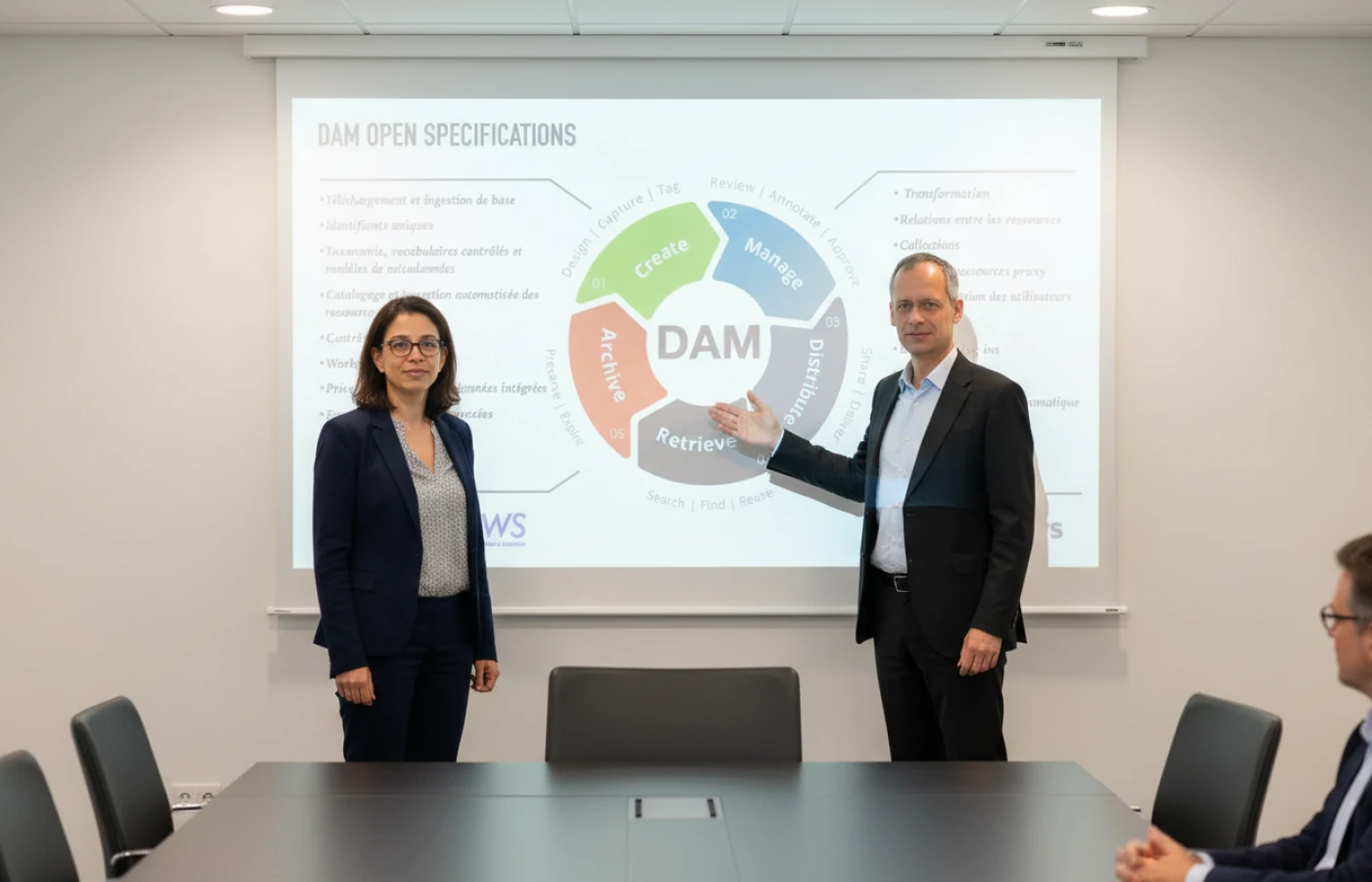
The journey to integrate PIM and DAM solutions is undoubtedly a significant project, but the payoff is equally significant. By combining centralized product data with centralized asset management, organizations unlock the capability to deliver superior product content at scale – the kind of content that wins customers’ trust and keeps them engaged.
A few closing thoughts on making this journey a success: First, always tie the integration to your broader business goals. Whether you aim to expand into new markets, increase digital sales, or improve compliance, let those objectives guide your requirements and priorities. This ensures the project has executive support and clear metrics for success. Second, don’t underestimate the importance of governance and ongoing management. Treat your PIM-DAM system as a living ecosystem – assign owners, continuously refine your data and metadata standards, and keep training new team members as roles evolve. This is what makes the solution sustainable and “future-proof” years down the road.
Finally, remember that you don’t have to go it alone. Leveraging expert product information management consulting can significantly de-risk the process. An experienced partner will not only implement the technology correctly but also equip your team with the knowledge and best practices to thrive long after implementation. The right consultant focuses on transferring skills and confidence to your organization – so you become self-sufficient in managing your unified content hub.
In a world where digital agility separates market leaders from laggards, unifying PIM and DAM gives you a powerful engine to drive content velocity, accuracy, and consistency. It empowers your teams to collaborate effectively and innovate with product content, rather than fighting fires or juggling spreadsheets. And it ensures that as your brand grows, your systems and processes can scale effortlessly alongside.
Integrating PIM and DAM with the guidance of expert consulting is more than a one-time IT integration – it’s an investment in transforming your product content operations for long-term success. By breaking down silos and fostering a cohesive, governed approach to product data and assets, you set the stage for scalable, future-proof growth. The result is a compelling win-win: customers get rich, reliable product experiences across every touchpoint, and your organization gains efficiency, speed, and the confidence to tackle new digital challenges. In essence, PIM-DAM integration done right is a catalyst for digital commerce excellence – and with the right strategy and partner in place, your business can fully harness that potential.

Interested in a joint project, a web demo or just getting to know us? We'll get back to you as soon as possible.
