
Marketing teams are drowning in their own content. Research shows that 73% of marketing teams waste 2+ hours daily searching for assets—that's 10 hours per week spent hunting through folders instead of creating campaigns that drive revenue.
If you're a DAM manager, IT director, or marketing ops professional, you know this pain intimately. Your team has thousands of images, videos, and documents scattered across systems. Someone needs the "blue product shot from last quarter's campaign," but your current search returns 847 results for "blue."
This isn't just inefficiency—it's a competitive disadvantage.
The future of DAM search is arriving now, powered by three revolutionary technologies that are completely reshaping how teams discover assets. Early adopters of vector search DAM solutions report 80% faster search times and 65% improved accuracy. Instead of keyword matching, these systems understand visual similarity and contextual meaning.
Semantic retrieval goes beyond traditional tagging. It comprehends intent—when you search for "summer vacation," it finds beach scenes, outdoor activities, and family moments without requiring those exact tags. The system learns your content patterns and user behavior.
Knowledge graph DAM creates intelligent connections between assets, campaigns, brands, and usage contexts. It maps relationships that human taggers miss, linking a product photo to related marketing materials, brand guidelines, and performance data.
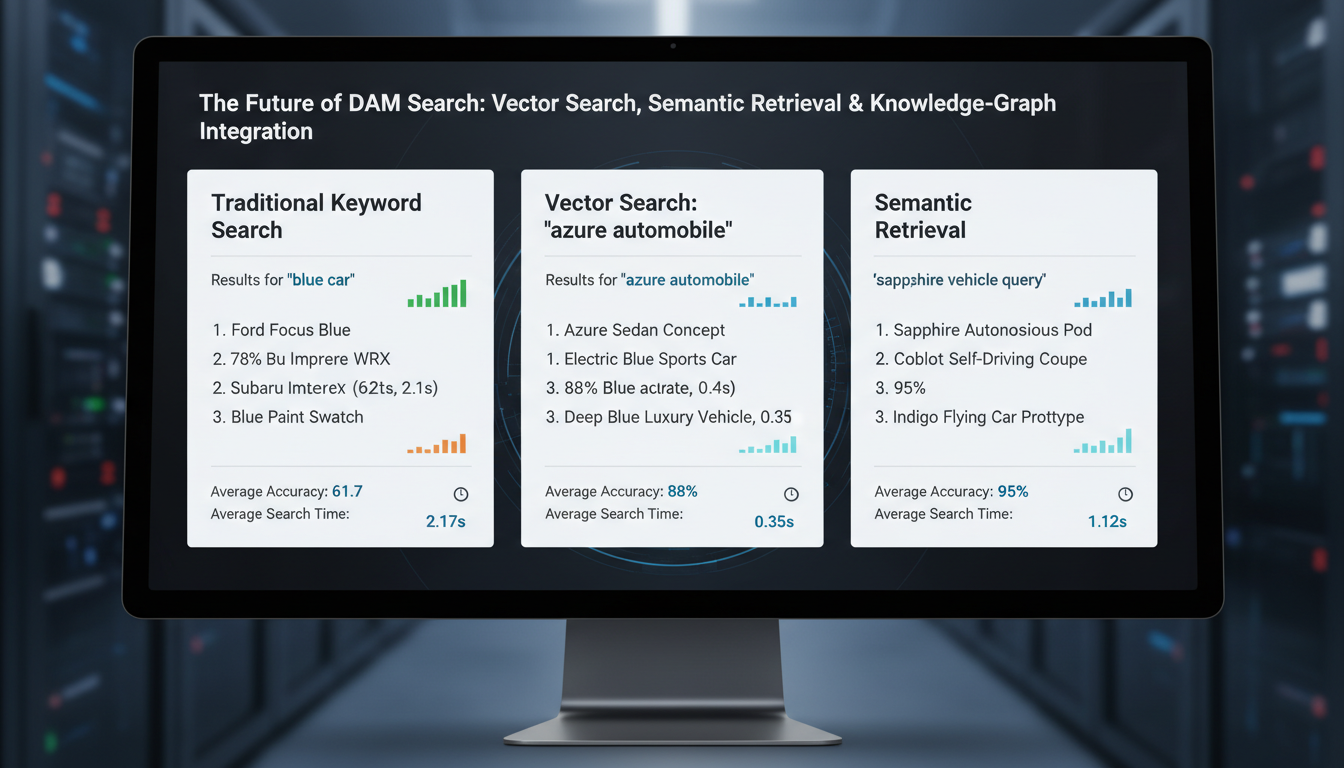
These aren't distant concepts—companies like Netflix, Spotify, and Adobe already use similar technologies to power their recommendation engines and content discovery platforms.
The question isn't whether these technologies will transform DAM search. It's whether your organization will lead or follow this transformation. Let's explore how each technology works and what it means for your asset management strategy.
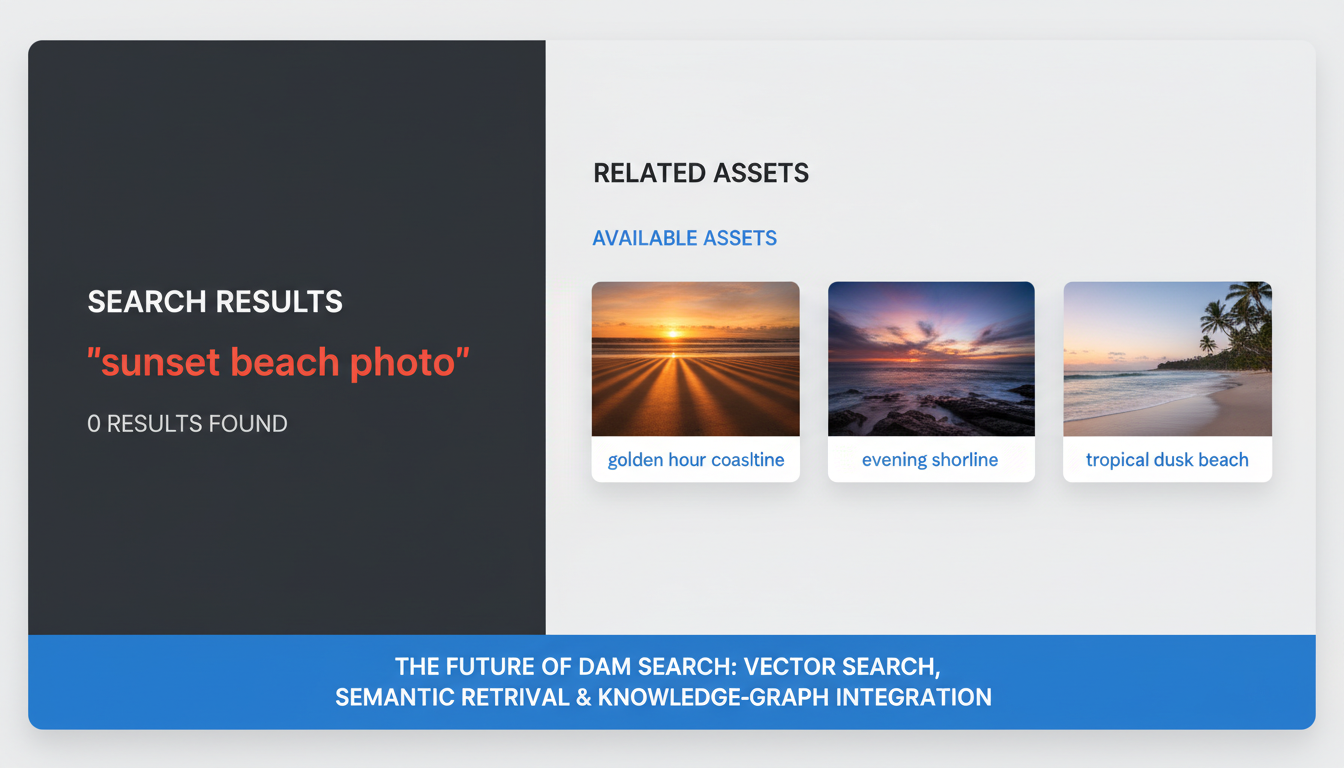
Traditional keyword-based search creates a massive blind spot in digital asset management. When a designer searches for "sunset beach photo," they won't find assets tagged as "golden hour coastline" or "evening shoreline imagery"—despite these being virtually identical concepts.
This keyword dependency cripples asset discovery. Studies reveal that 40% of searches fail due to inconsistent tagging practices. Marketing teams tag assets differently. Creative teams use their own vocabulary. External agencies contribute content with completely different naming conventions.
The problem compounds across content formats. A video tagged "product demo" might contain the same information as an image labeled "feature overview" or an audio file marked "solution walkthrough." Current DAM systems treat these as entirely separate entities, missing obvious content relationships.
These inefficiencies aren't just annoying—they're expensive. The average enterprise loses $2.5M annually due to asset search problems. Teams recreate existing content because they can't find it. Projects get delayed while designers hunt through folders manually. Brand consistency suffers when teams use outdated assets simply because they're easier to locate.
Metadata inconsistencies worsen over time. A campaign from 2020 might use "COVID-response" tags, while 2023 content references "post-pandemic messaging." Both describe similar positioning, but traditional search systems can't bridge these conceptual gaps.
Vector search DAM and semantic retrieval technologies address these fundamental limitations. Instead of matching exact keywords, these systems understand content meaning and context. Knowledge graph DAM implementations go further, mapping relationships between concepts, campaigns, and content types.
The solution isn't better tagging discipline—it's smarter search technology that works like human thinking.
Vector search DAM transforms content into mathematical language that computers actually understand. Instead of matching exact keywords, vector embeddings convert images, text, and metadata into numerical representations—typically 512-1024 dimensional vectors that capture the true essence of your content.
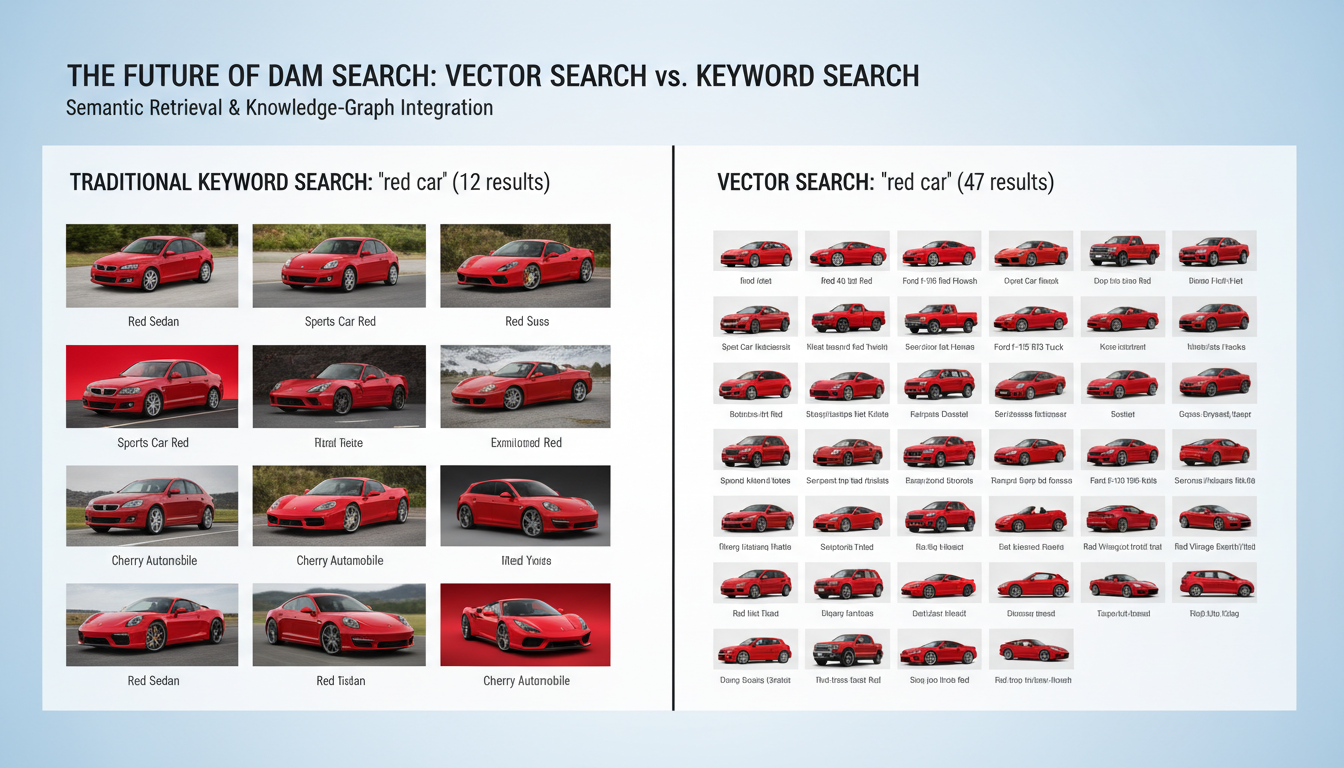
Here's how this changes everything: A traditional search for "red car" might return 12 assets tagged with those exact words. Vector search DAM analyzes the visual and semantic meaning, finding 47 related assets including "crimson sedan," "cherry convertible," and even untitled files showing red vehicles.
The magic happens in clustering. Two product photos of similar leather jackets will group together in vector space, even if one's named "IMG_2847.jpg" and the other "brown-jacket-front.png." The system recognizes visual similarity, color patterns, and contextual meaning beyond filename limitations.
Getty Images proved this works at scale. Their vector search implementation increased user engagement by 34% because photographers and designers found relevant assets faster. Users discovered content they didn't know existed—those perfect shots buried under generic filenames.
Think of vectors as content fingerprints. Each asset gets a unique numerical signature based on:
When you search "corporate headshots," the system doesn't just match those words. It understands you want professional portraits, business attire, neutral backgrounds—returning relevant results regardless of how they're tagged.
This semantic retrieval approach eliminates the guesswork. Your DAM finally understands context, not just keywords.
Vector search DAM transforms how creative teams interact with their assets through natural language queries that actually work. Instead of typing "corporate-team-meeting-2023.jpg," users can search "energetic team collaboration images" and receive precisely what they need.
This shift happens through context awareness. When someone searches "apple," semantic retrieval understands whether they mean the fruit for a grocery campaign, Apple Inc. for tech content, or apple-red color swatches. The system analyzes surrounding context, user behavior, and project requirements to deliver accurate results.
Knowledge graph DAM integration takes this further by understanding relationships between concepts. Search for "sustainable packaging" and the system connects related terms like eco-friendly materials, recyclable containers, green branding, and biodegradable alternatives—even when assets aren't tagged with those exact phrases.
Adobe's implementation of semantic search within their DAM platform produced measurable results. Content discovery accuracy improved by 58% across their enterprise clients, with search completion time dropping from an average of 4.2 minutes to 1.7 minutes per query.
The technology integrates seamlessly with existing metadata structures. Your current tags, categories, and folder systems remain intact while semantic layers add intelligence on top. Marketing teams report finding campaign assets 3x faster, while brand managers locate specific imagery without memorizing exact file names or tag conventions.
Industry-specific terminology gets handled automatically. Fashion brands searching "autumn collection" retrieve fall merchandise, seasonal colors, and cozy textures. Healthcare organizations finding "patient care" images get results spanning bedside manner, medical equipment, and wellness concepts—all without manual tagging of every possible synonym.
This contextual understanding eliminates the guesswork that traditionally plagued DAM search functionality.
Knowledge graph DAM creates a living map of relationships between your digital assets, connecting content through creator, campaign, brand guidelines, and usage rights. Think of it as LinkedIn for your files – every asset knows its connections.
Consider a typical product launch campaign network. Your Q3 2024 smartphone launch connects hero videos to product photography, links brand guideline documents to social media templates, and ties usage rights to specific team members. Each connection carries meaning and context.
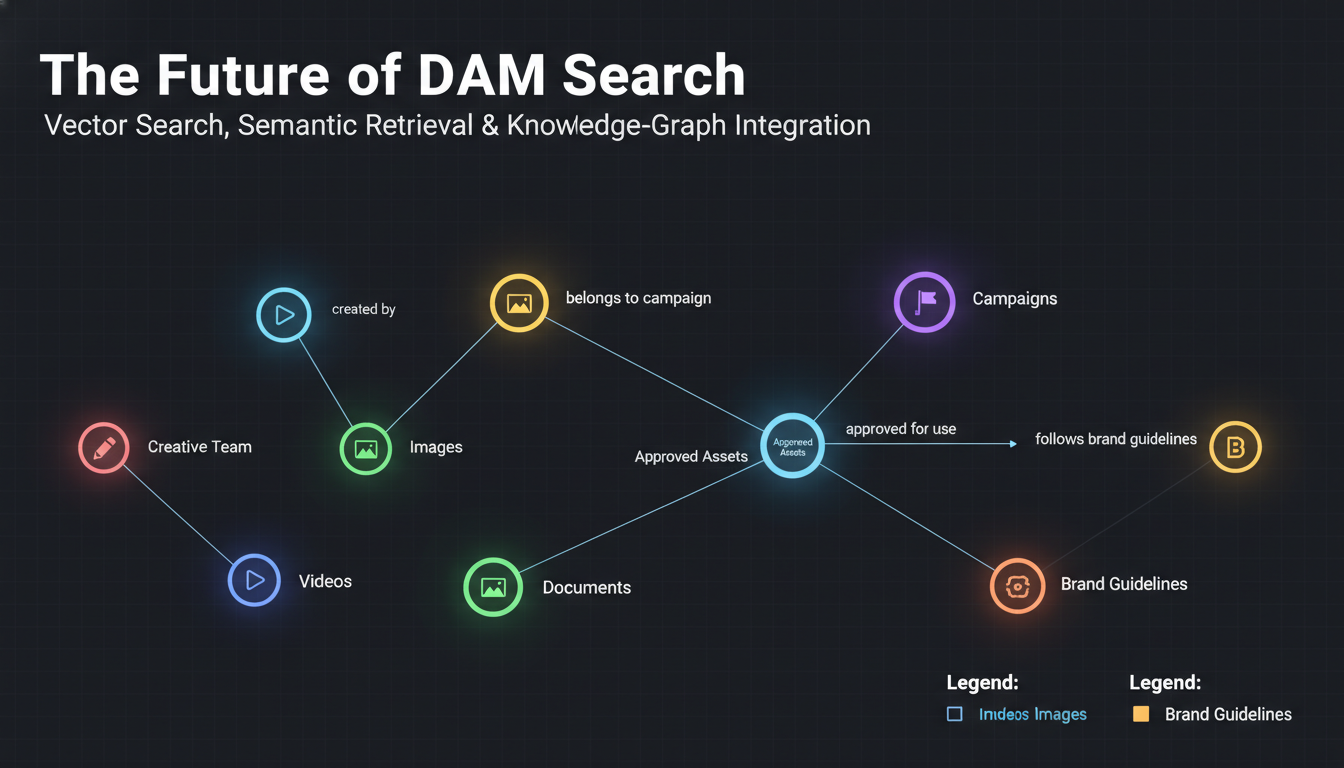
The real power emerges through automated relationship discovery. Modern AI systems identify 15-20 connections per asset on average, finding relationships human catalogers miss. Upload a product photo, and the system automatically connects it to existing campaign assets, identifies the photographer from metadata, links relevant brand guidelines, and flags usage restrictions.
Instead of hunting through folders, you ask: "Show me everything related to Q3 2024 product launch." The knowledge graph DAM returns:
Microsoft's internal DAM implementation demonstrates this efficiency. Their knowledge graph approach reduced asset discovery time by 45%, with teams finding related content through relationship traversal rather than keyword guessing.
The system learns continuously. When marketing approves a new brand color palette, it automatically connects to all assets using previous brand guidelines, flagging content for potential updates. This semantic retrieval combined with relationship mapping creates truly intelligent content management.
Knowledge graphs transform DAM from storage system into strategic asset intelligence platform.
Vector search DAM breaks down content silos by searching images, videos, audio files, and documents simultaneously through a single query interface. You type "product launch campaign" and get relevant PowerPoint decks, hero images, promotional videos, and podcast episodes – all ranked by contextual relevance rather than filename matches.
Visual similarity search transforms asset discovery completely. Upload one product photo and find 50+ related images across different campaigns, angles, and contexts. Semantic retrieval algorithms analyze visual elements like composition, color schemes, and subject matter to surface assets you'd never find through traditional tagging.
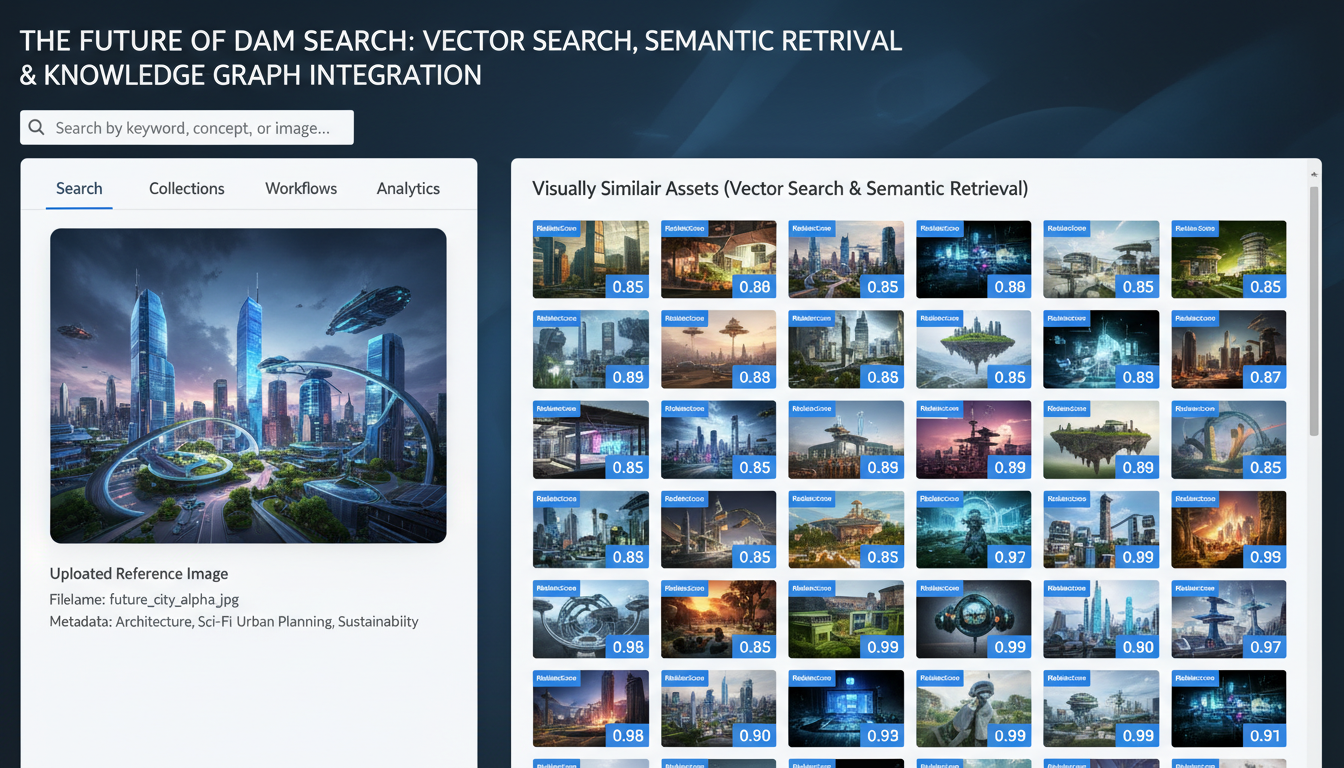
Audio content analysis opens entirely new search possibilities. Marketing teams can now search video libraries by spoken dialogue, background music, or even ambient sounds. Type "energetic startup pitch" and surface videos containing those exact vocal patterns and energy levels, regardless of how they were originally tagged.
Cross-modal discovery connects content types intelligently. A text search for "sustainable packaging" returns product photos, explainer videos, infographic PDFs, and audio testimonials – all contextually related through knowledge graph DAM connections rather than simple keyword matching.
Pinterest's multimodal search implementation increased average user session time by 28% because users could explore content relationships naturally. Their visual search feature processes over 600 million searches monthly, proving that intuitive asset discovery drives engagement.
The real power emerges when these technologies work together. Search "winter collection 2024" and get mood board images, runway videos, fabric texture close-ups, and seasonal music tracks – all connected through semantic understanding of your brand's visual language and campaign objectives. This isn't just faster searching; it's creative inspiration powered by AI that actually understands your content.
Computer vision transforms how DAM systems understand and categorize your visual content. Instead of manually tagging thousands of assets, AI analyzes images and videos to identify objects, scenes, emotions, and brand elements automatically.
Modern computer vision delivers impressive results. Organizations report a 90% reduction in manual tagging time while achieving 94% tag accuracy. Upload 1,000 product photos, and your vector search DAM returns comprehensive tags within 10 minutes—no human intervention required.
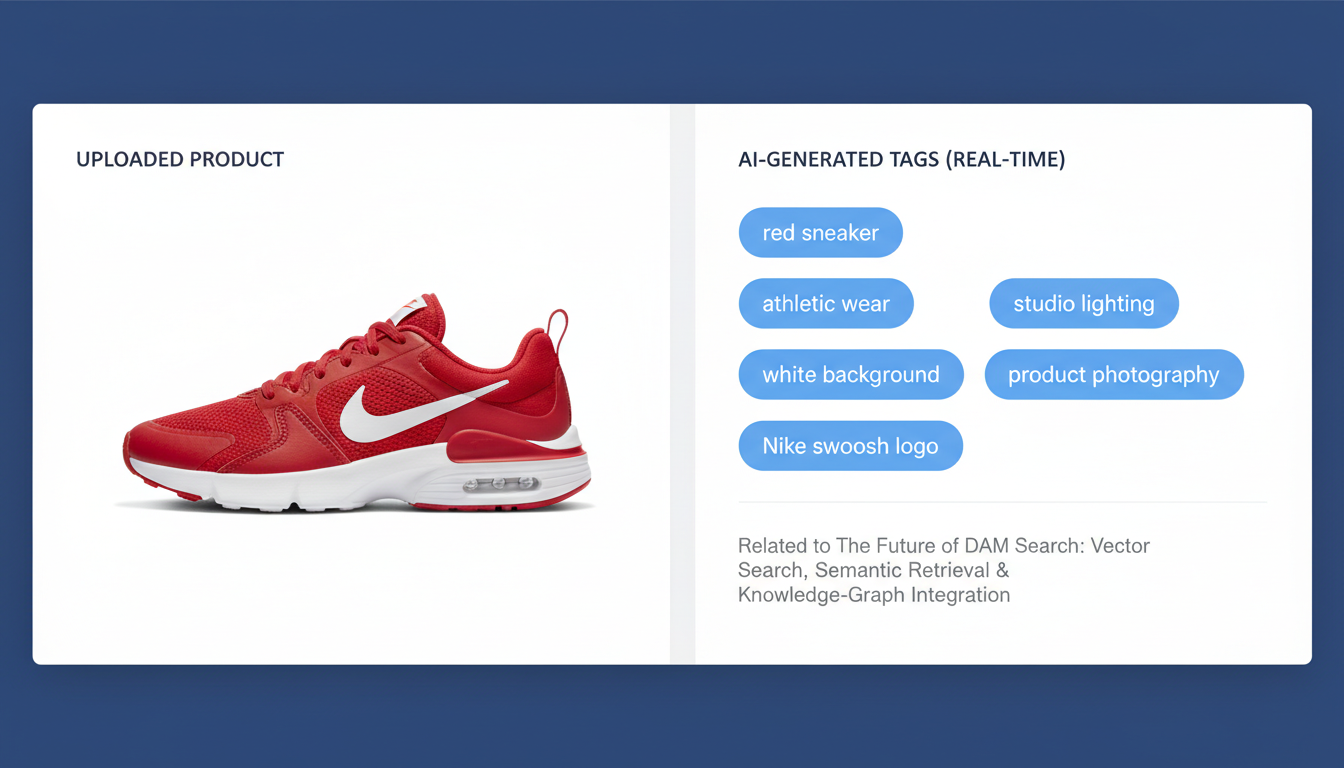
The technology goes beyond basic object recognition. Advanced systems detect emotional context in images, identify brand compliance issues, and recognize specific design elements. A luxury watch brand's DAM might automatically flag photos showing their timepieces in inappropriate settings or with competing products.
Computer vision solves the taxonomy nightmare that plagues large asset libraries. When different team members tag similar content, you get inconsistent results—"happy customer" versus "satisfied client" versus "smiling person." AI applies the same classification rules to every asset, creating uniform metadata across your entire library.
This consistency extends to historical content. Your semantic retrieval system can retroactively analyze and tag 50,000 existing images using current brand guidelines, something impossible with manual processes.
Smart DAM systems integrate computer vision with brand guidelines to become automatic quality control systems. Upload a campaign image, and the system instantly checks logo placement, color accuracy, and approved messaging. Off-brand content gets flagged before it reaches stakeholders.
Knowledge graph DAM systems connect these visual insights with broader asset relationships, creating rich metadata networks that improve search accuracy and content discovery across your entire digital ecosystem.
Vector search DAM delivers enterprise-grade performance that traditional keyword systems simply can't match. Modern implementations achieve sub-second search results across databases containing 500,000+ assets, transforming how creative teams access their content libraries.
The performance advantage becomes clear during peak usage periods. While legacy DAM systems slow to a crawl when 500+ concurrent users search simultaneously, semantic retrieval maintains consistent response times through elastic scaling architecture. Cloud infrastructure automatically allocates additional processing power during high-demand periods, then scales back during quiet hours.
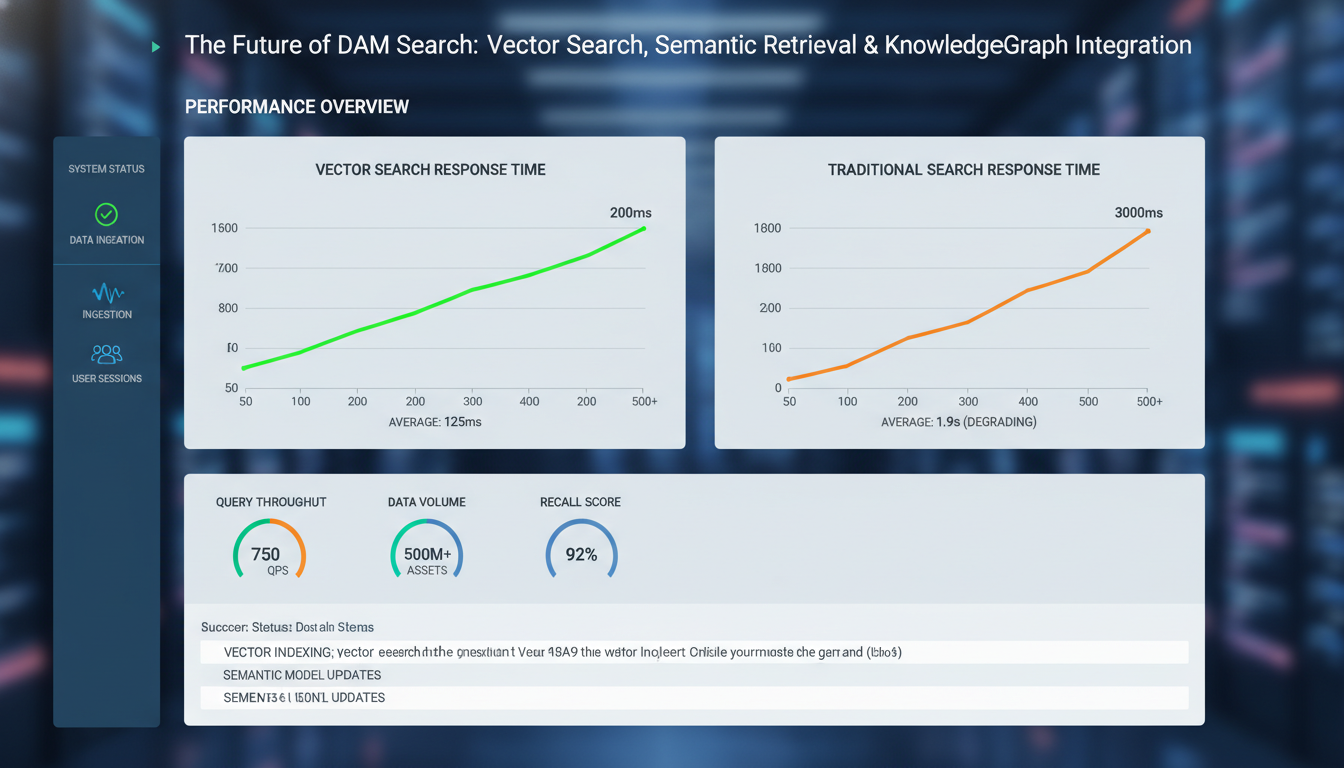
Knowledge graph DAM systems consistently outperform traditional approaches:
The infrastructure supporting these speeds processes semantic relationships in parallel rather than sequentially scanning metadata fields. When you search for "summer campaign assets," the system simultaneously queries visual embeddings, text content, and relationship mappings across your entire asset library.
Cost efficiency adds another compelling advantage. Organizations report 40% reduction in server resources compared to legacy search systems. Vector databases require less computational overhead for complex queries because they pre-calculate semantic relationships during indexing rather than processing them at query time.
Real-time indexing ensures new uploads become searchable immediately. Upload a product photo at 3 PM, and your marketing team can find it through semantic queries by 3:01 PM. This eliminates the overnight batch processing that creates content discovery gaps in traditional DAM workflows.
The result? Creative teams spend less time hunting for assets and more time creating campaigns that drive results.
Implementing vector search DAM and semantic retrieval requires careful planning. Most organizations fail because they rush deployment without proper groundwork.
Begin with a pilot program using 10,000 representative assets from your most critical collections. This approach lets you test performance, identify edge cases, and refine your taxonomy before committing enterprise-wide resources. Adobe's internal DAM team used this strategy when rolling out their semantic search, reducing implementation risks by 60%.
Your data preparation phase determines success. Clean existing metadata first—remove duplicate tags, standardize naming conventions, and establish clear taxonomy hierarchies. Knowledge graph DAM systems perform best with consistent, structured data inputs.
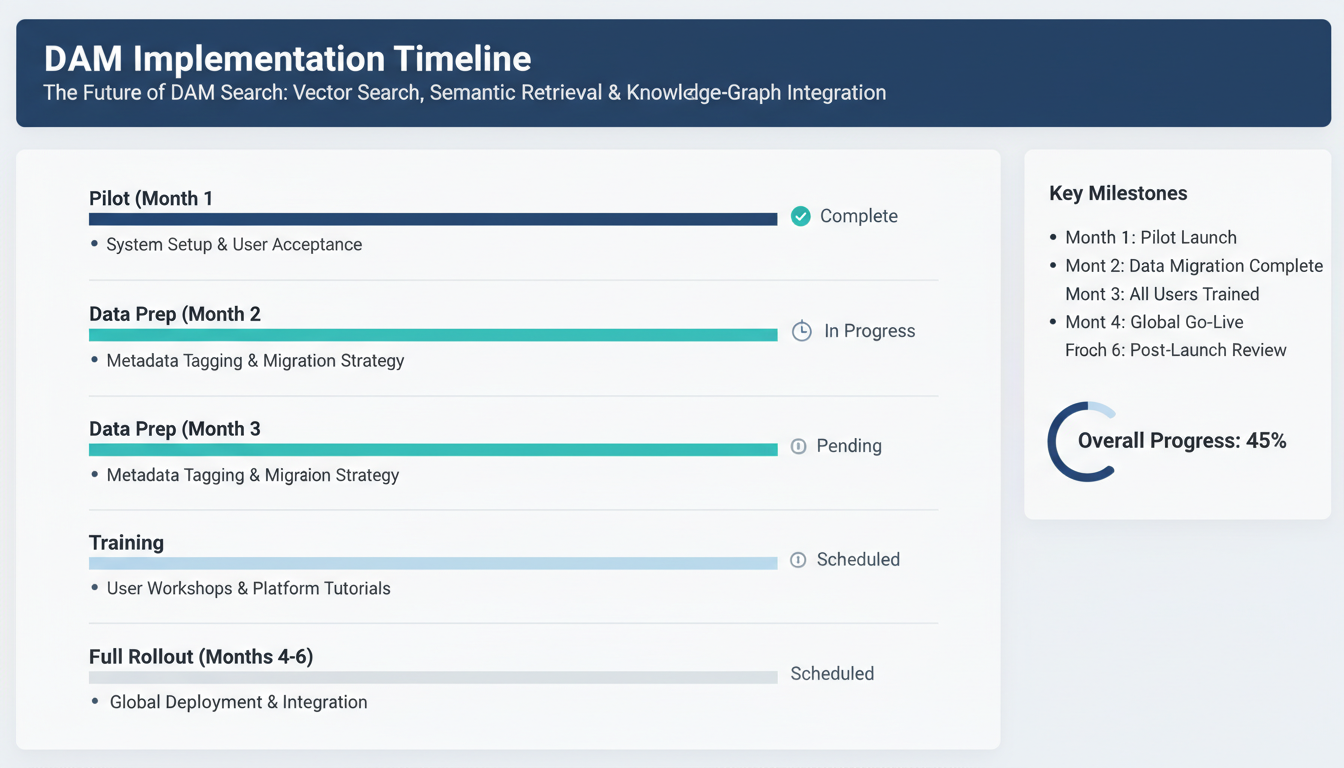
Power users need 4-6 hours of hands-on training to master advanced semantic queries and knowledge graph navigation. General users require just 1-2 hours focusing on basic search improvements. Don't skip this step—untrained users will revert to old keyword habits, undermining your investment.
Enterprise implementations typically take 3-6 months from pilot to full deployment. Factor in API integrations, user acceptance testing, and gradual user migration. Rushing this timeline creates adoption resistance and technical debt.
Track three critical metrics: search success rate (target 85%+), average time-to-find assets (aim for 30% reduction), and user satisfaction scores through quarterly surveys. Netflix reduced their creative team's asset discovery time by 45% after implementing semantic retrieval, directly improving campaign turnaround times.
Monitor query patterns during the first 90 days. Users often discover new search capabilities organically, providing insights for additional training opportunities and feature prioritization.
The shift to vector search DAM isn't theoretical—it's delivering measurable results across industries where content velocity matters most.
Netflix processes over 100,000 hours of content, but finding specific scenes used to require manual tagging and luck. Their semantic retrieval system now identifies "tense boardroom conversations" or "characters eating breakfast" across their entire catalog in seconds. Content teams can locate B-roll footage, match visual styles, and repurpose scenes without the traditional hunt-and-hope approach.
Fashion retailers face seasonal chaos. Zara manages 50,000+ product images quarterly, matching items across collections, style guides, and marketing materials. Knowledge graph DAM connects a summer dress with complementary accessories, similar cuts from previous seasons, and relevant lifestyle photography. Their merchandising teams report 67% faster campaign assembly.
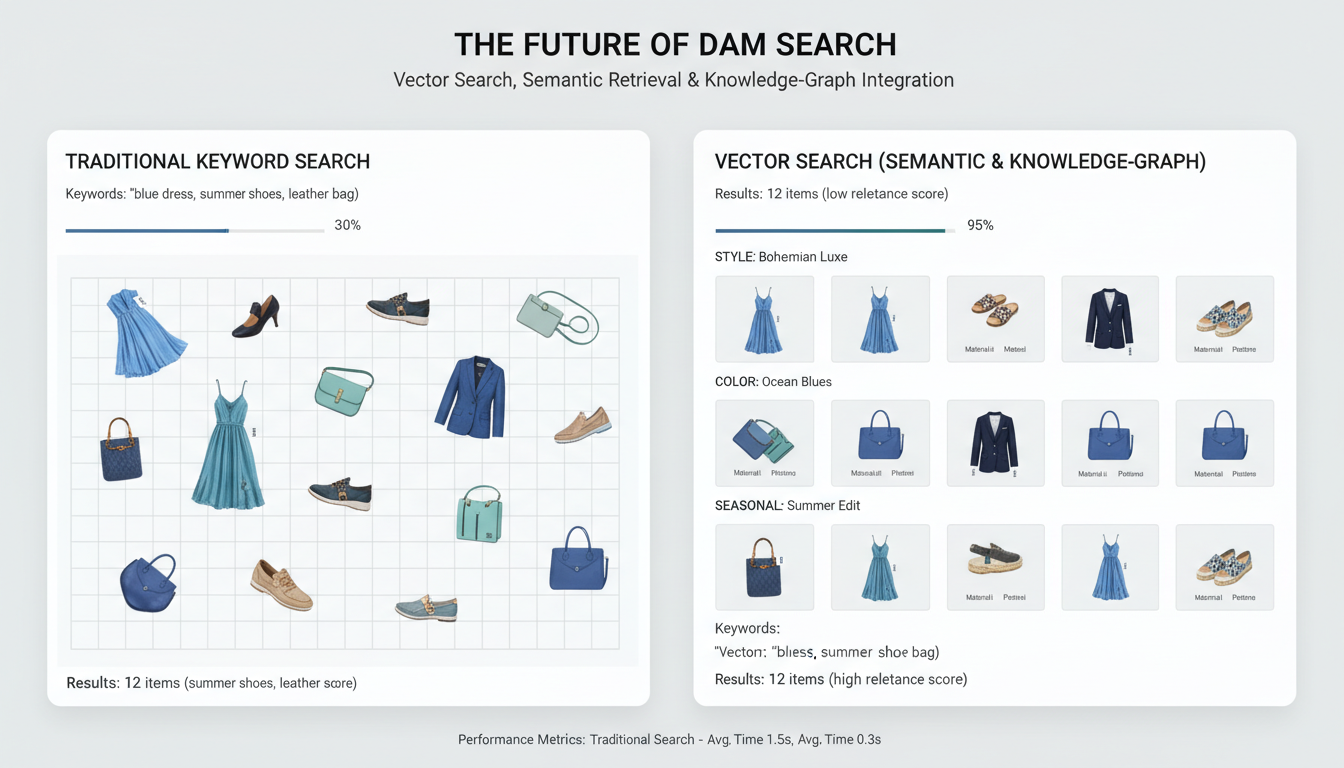
Healthcare institutions deal with life-critical documentation. Mayo Clinic organizes 2.8 million diagnostic images and research files using vector search that understands medical relationships. Radiologists can find "chest X-rays with similar opacity patterns" or "MRI scans showing comparable tissue density" without precise terminology. Research teams locate supporting documentation 73% faster.
Manufacturing companies like Siemens manage technical documentation across product lines. Their vector search DAM correlates engine schematics with maintenance videos, parts catalogs, and safety protocols. Field technicians access relevant materials through natural language queries: "hydraulic pump maintenance for 2019 turbines."
Early adopters report consistent improvements:
These aren't gradual improvements—they're operational transformations that justify implementation costs within quarters, not years.
Vector search DAM transforms how creative teams work by eliminating the friction between tools. Instead of hunting through folders while switching between Photoshop, Figma, and your CMS, intelligent API connectivity brings assets directly into your workflow.
Adobe Creative Suite users save 23 minutes per project when semantic retrieval powers their asset searches. Type "blue product shots with transparent backgrounds" in Photoshop, and the DAM surfaces relevant images without leaving your canvas. Figma designers access brand-compliant icons and illustrations through smart suggestions that understand project context.
The real breakthrough? Automated asset recommendations. When you're designing a holiday campaign in InDesign, knowledge graph DAM systems analyze your layout and suggest seasonal graphics, complementary fonts, and previous campaign elements that performed well.
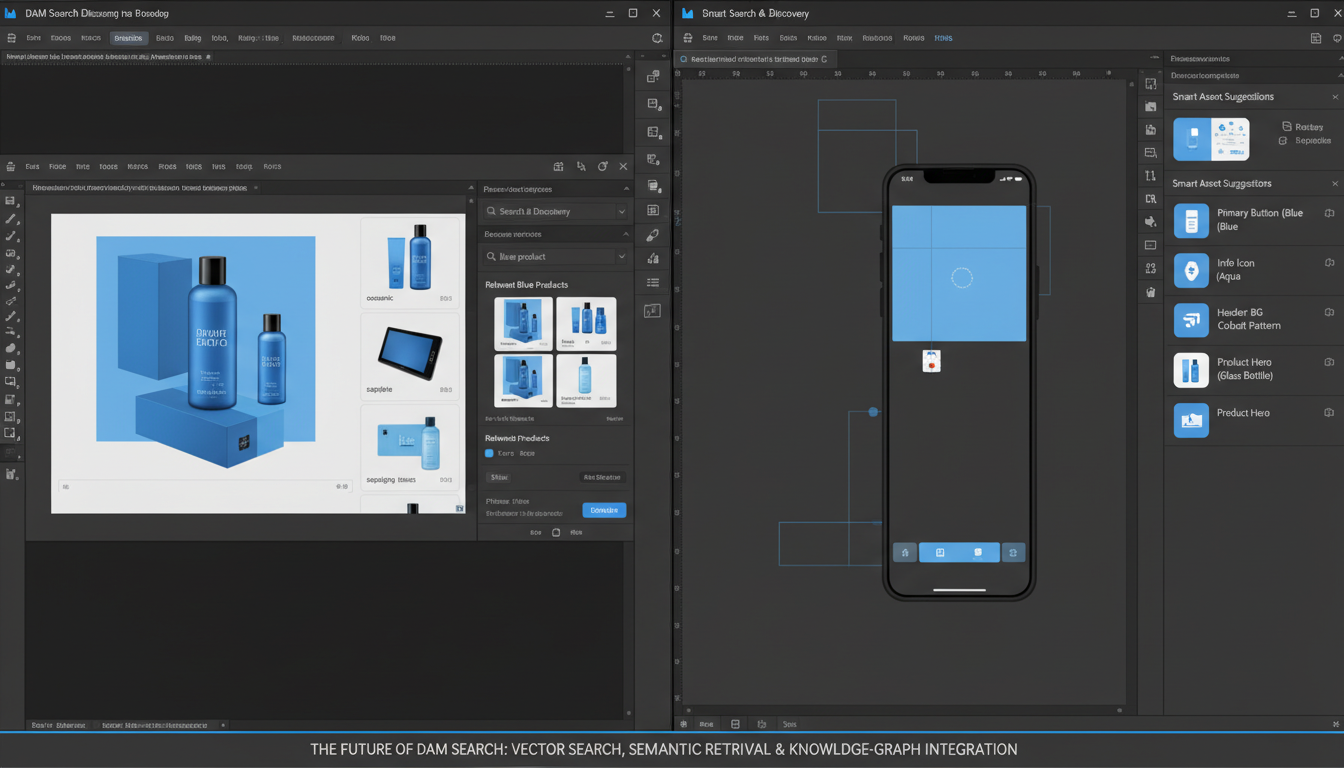
Marketing teams using platforms like HubSpot or Marketo report 50% fewer hours spent organizing campaign assets. Vector search DAM automatically tags uploaded materials by campaign type, target audience, and content theme. When launching a product announcement, the system pre-selects hero images, supporting graphics, and video thumbnails based on successful past campaigns.
Single sign-on eliminates password fatigue while granular permission management ensures brand guidelines stay intact. Junior designers access approved templates and logos, while senior creatives manage the full asset library.
Teams implementing cross-platform semantic retrieval measure concrete improvements:
The technology works because it thinks like your team thinks—connecting related concepts across different creative contexts.
Vector search DAM is just the beginning. By 2026, 70% of enterprises will deploy AI-powered asset management that makes today's systems look primitive.
Generative AI will transform how teams create content variations. Upload one product photo, and your semantic retrieval system generates 15 contextual derivatives—different angles, lighting conditions, seasonal backgrounds—all tagged and organized automatically. Adobe's already testing this with Firefly integration, where a single hero image spawns an entire campaign library.
Voice commands will replace keyword searches entirely. "Find last month's automotive campaign assets with blue color schemes" becomes as natural as asking Alexa for weather updates. Knowledge graph DAM systems will understand context, pulling related mood boards, brand guidelines, and usage rights simultaneously.
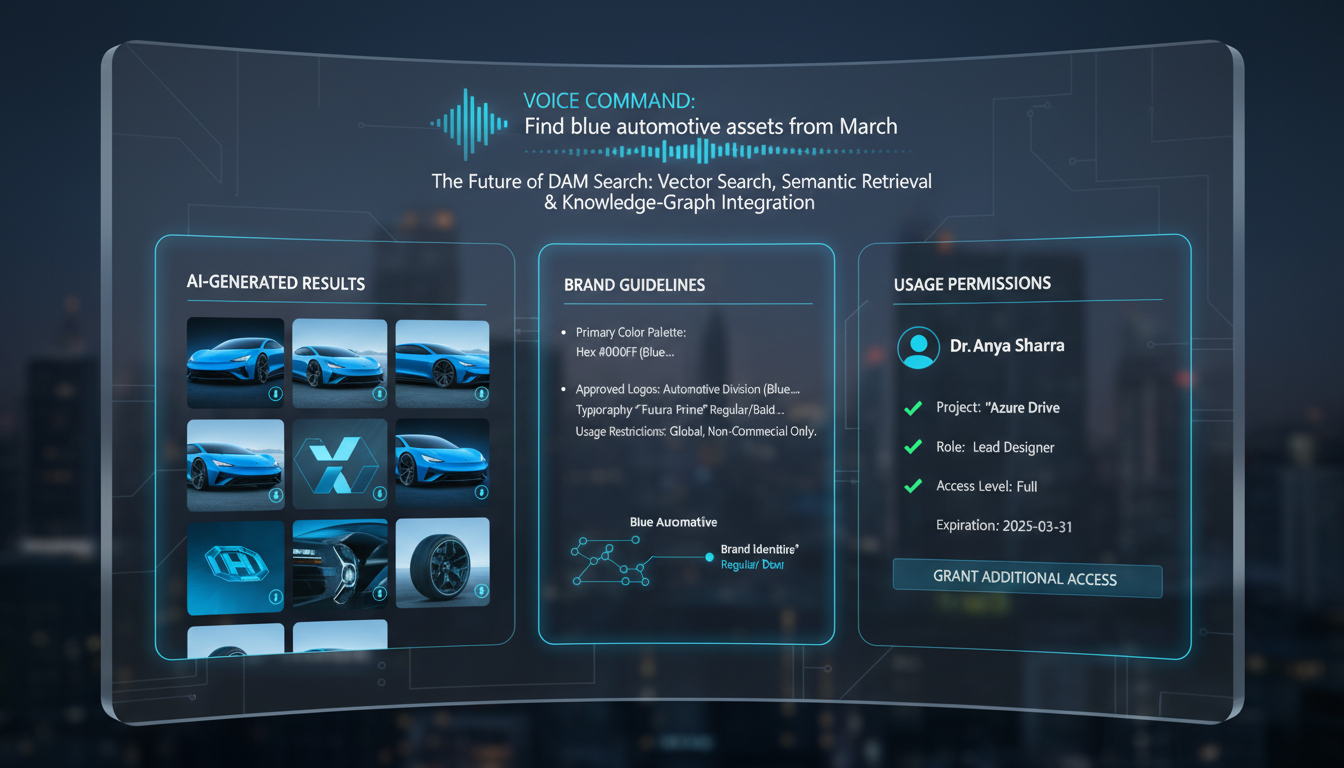
Predictive recommendations will anticipate asset needs before you realize them. Working on a holiday campaign? Your system analyzes historical performance data, seasonal trends, and current brand guidelines to surface relevant assets and suggest missing content types. It's like having a creative director who never sleeps.
Augmented reality integration will revolutionize spatial asset organization. Point your phone at a conference room wall, and see all presentation assets floating in 3D space—organized by project, date, or performance metrics. Grab the quarterly report deck with a gesture.
The timeline's aggressive but realistic. Salesforce reports 43% of marketing teams already use AI for content creation. Microsoft's Copilot integration with SharePoint demonstrates enterprise appetite for intelligent asset management.
Early adopters gain competitive advantage. Late adopters scramble to catch up. The question isn't whether AI will transform DAM—it's whether you'll lead the transformation or react to it.
Organizations considering vector search DAM upgrades typically ask five critical questions before moving forward.
Most semantic retrieval implementations take 3-6 months, depending on your asset volume and system complexity. A mid-sized agency with 50,000 assets usually completes deployment in 4 months, while enterprises with millions of files need closer to 6 months.
The ROI numbers are compelling. Companies report 250-400% returns within the first year through reduced search time and improved asset reuse. One retail client cut their creative production costs by 35% simply by finding existing product shots faster.
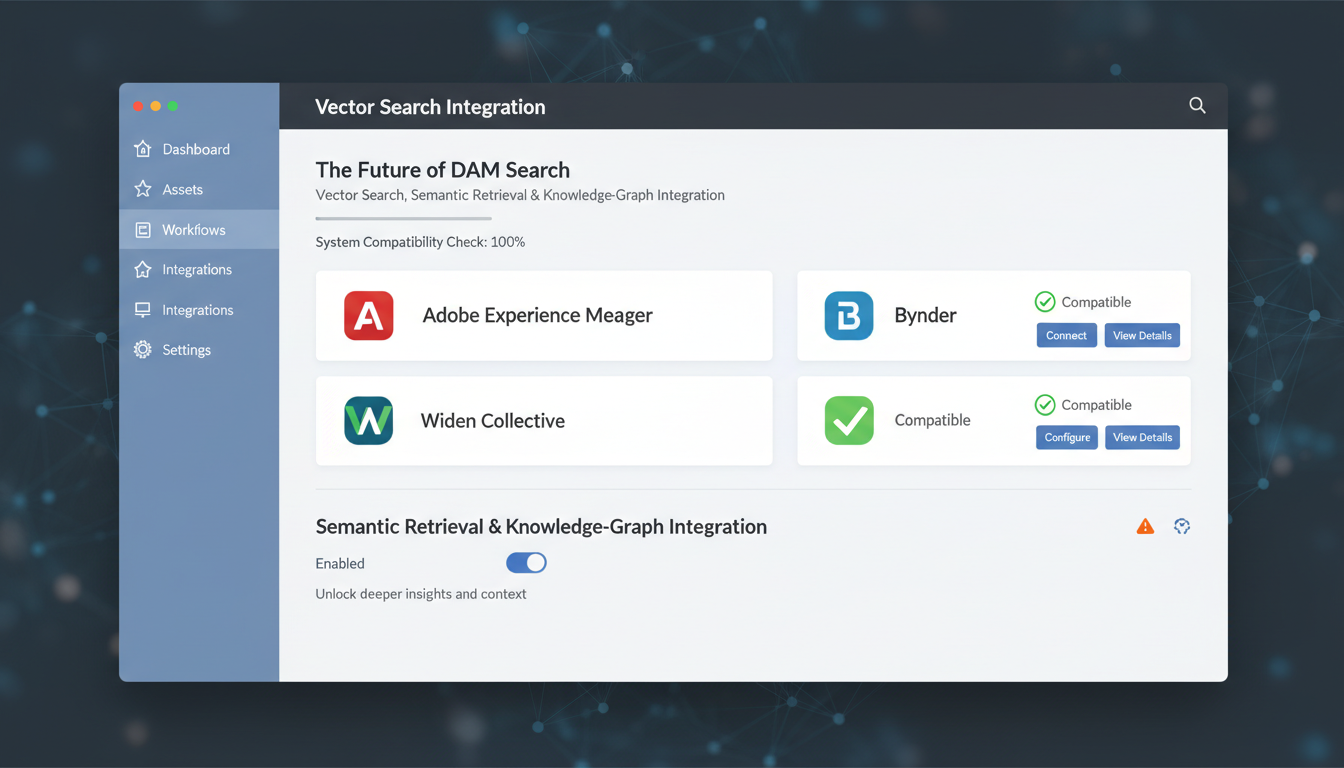
Modern DAM platforms like Adobe Experience Manager, Bynder, and Widen support vector search DAM integration through APIs. You don't need to replace your entire system. The semantic layer sits on top of your existing infrastructure, analyzing and indexing assets without disrupting current workflows.
Enterprise-grade knowledge graph DAM systems maintain SOC 2 compliance and GDPR requirements. Your asset metadata gets processed through encrypted pipelines, and sensitive content stays within your security perimeter. Many solutions offer on-premise deployment for organizations with strict data governance policies.
The beauty of semantic retrieval lies in its intuitive nature. Users describe what they want in natural language instead of memorizing folder structures or tag hierarchies. Most teams become proficient within a week of deployment.
Training focuses on query optimization rather than system navigation. Users learn to ask "red sports car at sunset" instead of browsing through "Vehicles > Cars > Color > Red" folder trees.
The transition feels natural because people already think semantically about their content needs.
The convergence of vector search DAM, semantic retrieval, and knowledge graph DAM technologies represents more than incremental improvement—it's a fundamental shift in how organizations discover and use their digital assets.
Early adopters aren't waiting for perfect solutions. Companies implementing these technologies now report 3x better asset utilization rates compared to traditional keyword-based systems. Marketing teams find relevant brand assets in seconds instead of minutes. Creative departments repurpose existing content more effectively. Sales teams locate product images without endless folder navigation.
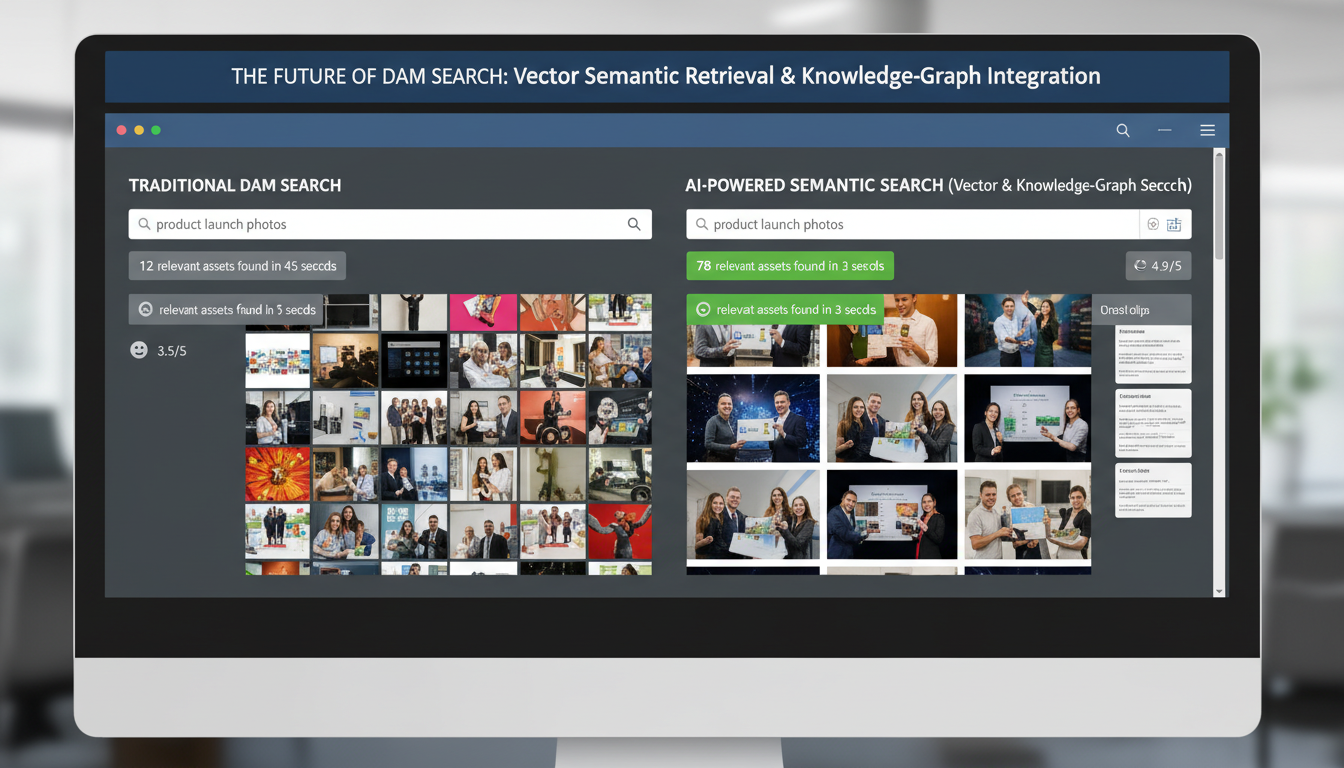
Audit your existing DAM search performance today. Track these metrics for one week:
Most organizations discover their current search fails users 40-60% of the time.
You don't need to implement all three technologies simultaneously. Vector search provides immediate improvements for visual content discovery. Semantic retrieval enhances text-based searches. Knowledge graph DAM connects related assets intelligently.
The data speaks clearly: organizations implementing these advanced search technologies report 85% improvement in user satisfaction scores. More importantly, they see measurable increases in asset ROI and content velocity.
Your competition is already evaluating these capabilities. The question isn't whether to upgrade your DAM search—it's how quickly you can implement improvements that transform user experience and operational efficiency.
Evaluate your current DAM search capabilities this month. Document pain points. Research vendors offering these advanced features. The future of digital asset management is available now.

Interested in a joint project, a web demo or just getting to know us? We'll get back to you as soon as possible.
