Product information management (PIM) centralizes and enriches product data, while product experience management (PXM) leverages that data to craft personalized, omnichannel experiences. This article explains the strategic differences and complementarities between the two, offers frameworks for evaluating when and how to move from a PIM‑only approach to PXM, and provides governance and integration guidance to help enterprises deliver consistent yet tailored experiences that drive conversion.
Why PXM vs PIM matters
Understanding PXM vs PIM is no longer an academic exercise; it is a strategic imperative. In a marketplace where buyers expect personalised, context‑aware product stories, organisations cannot rely solely on a central product information hub. They need to extend that data into experiences that resonate across channels. This article explores how PIM establishes the foundation and how PXM builds on it. You’ll learn to make informed decisions about when to deploy each, how to integrate them, and what governance frameworks are required for success.
PIM as the Foundation: Centralising and Enriching Product Data
Why PIM exists
At its core, Product Information Management is the strategic process of centralising all structured product data — names, descriptions, specifications, pricing, media files and technical attributes — into a single source of truth. Organisations adopt PIM to solve three perennial problems:
Fragmented data silos. Without a central hub, product attributes live in spreadsheets, ERP records, marketing repositories and supplier feeds. Reconciling these sources manually is labour‑intensive and error‑prone.
Inconsistent outputs. When information is maintained manually in multiple places, slight deviations creep in. A product may show one weight on the web store, another in a printed catalogue and a third on a marketplace listing. These discrepancies erode trust and create operational headaches.
Inefficient workflows. Teams waste time chasing the “latest version” of product data and re‑entering it into each channel. This slows launches, increases cost and distracts specialists from high‑value activities.
Core capabilities of PIM
A mature PIM program addresses these challenges by offering the following capabilities:
Central repository and taxonomy management.PIM establishes a canonical data model, defining categories, attributes and relationships between products, variants and bundles. Taxonomy consistency ensures that new items can be onboarded quickly and that attributes make sense across product families.
Data enrichment and quality rules. PIM systems support rich attribute definitions — dimensions, materials, compliance data — and provide validation rules to prevent incomplete or malformed entries. Automated completeness scoring and mandatory field enforcement raise data quality without manual policing.
Workflow and role‑based access. Different stakeholders — merchandisers, marketers, engineers and compliance officers — can contribute to product data according to their expertise. PIM orchestrates approval flows, ensures that data changes are tracked and enforces who can edit which attributes.
Channel syndication. Once data is cleansed and enriched, PIM formats and delivers it to downstream systems such as e‑commerce platforms, print catalogues, marketplaces, digital signage or partner portals. Templates map internal attributes to the requirements of each channel, ensuring compliance and reducing manual reformatting.
Integration with surrounding systems. PIM rarely operates alone. It ingests item masters from ERP, digital assets from DAM, product designs from PLM and customer data from CRM. It exports to CMS, e‑commerce, marketing automation and distribution channels. A mature integration approach (discussed later) ensures real‑time accuracy while avoiding brittle point‑to‑point connections.
PIM’s business outcomes
Implementing PIM yields tangible outcomes that improve both operational efficiency and data governance:
Reduced time to market. New product introductions require fewer manual steps and less duplication. Teams update attributes once and push them to every channel simultaneously.
Lower error rates. Central validation rules and workflow reduce the likelihood of incorrect information reaching the customer. Consistency across channels improves compliance with regulatory standards and retailer requirements.
Greater scalability. A well‑designed data model scales gracefully as product assortments grow. Adding new families or variants does not require reinventing the structure, so complexity remains manageable.
Operational transparency. Audit trails and version control show who changed what and when. This accountability simplifies troubleshooting and supports regulatory audits.
PIM, therefore, is not just a technology but a discipline. It requires cross‑functional governance, data stewardship and clear processes. However, on its own, PIM is insufficient to drive the personalised, context‑aware experiences that modern buyers demand. That is where PXM enters the picture.
Beyond Data: The Emergence of Product Experience Management
Defining PXM
Product Experience Management expands on PIM by focusing on how product information is presented and adapted to consumers. Rather than merely storing and distributing data, PXM uses that data to craft personalised, channel‑specific narratives. It combines structured product information with digital assets, contextual metadata and behavioural insights to deliver experiences that feel tailored rather than generic.
Why PXM evolved
The need for PXM emerged from two converging trends:
Consumer expectations for personalisation. Buyers no longer accept one‑size‑fits‑all product pages. They expect recommendations based on their preferences, location and behaviour. They also demand consistency across websites, mobile apps, social media and physical stores. PIM provides accurate information, but PXM adapts that information to speak directly to each audience.
Proliferation of channels. A decade ago, organisations managed a handful of sales channels — an online store and perhaps a printed catalogue. Today, they must orchestrate content across dozens of endpoints: e‑commerce sites, marketplaces, social commerce, voice assistants, digital signage, augmented reality apps and more. Each channel has its own format, tone, visual guidelines and metadata requirements. PXM orchestrates this complexity while maintaining the integrity of the underlying data.
Key components of PXM
PXM is not a single tool but a collection of capabilities and practices. Common components include:
Experience orchestration. PXM uses rules and templates to adapt product information to each channel and audience. This may involve rephrasing copy for social media, swapping imagery for mobile screens or selecting related accessories for cross‑selling.
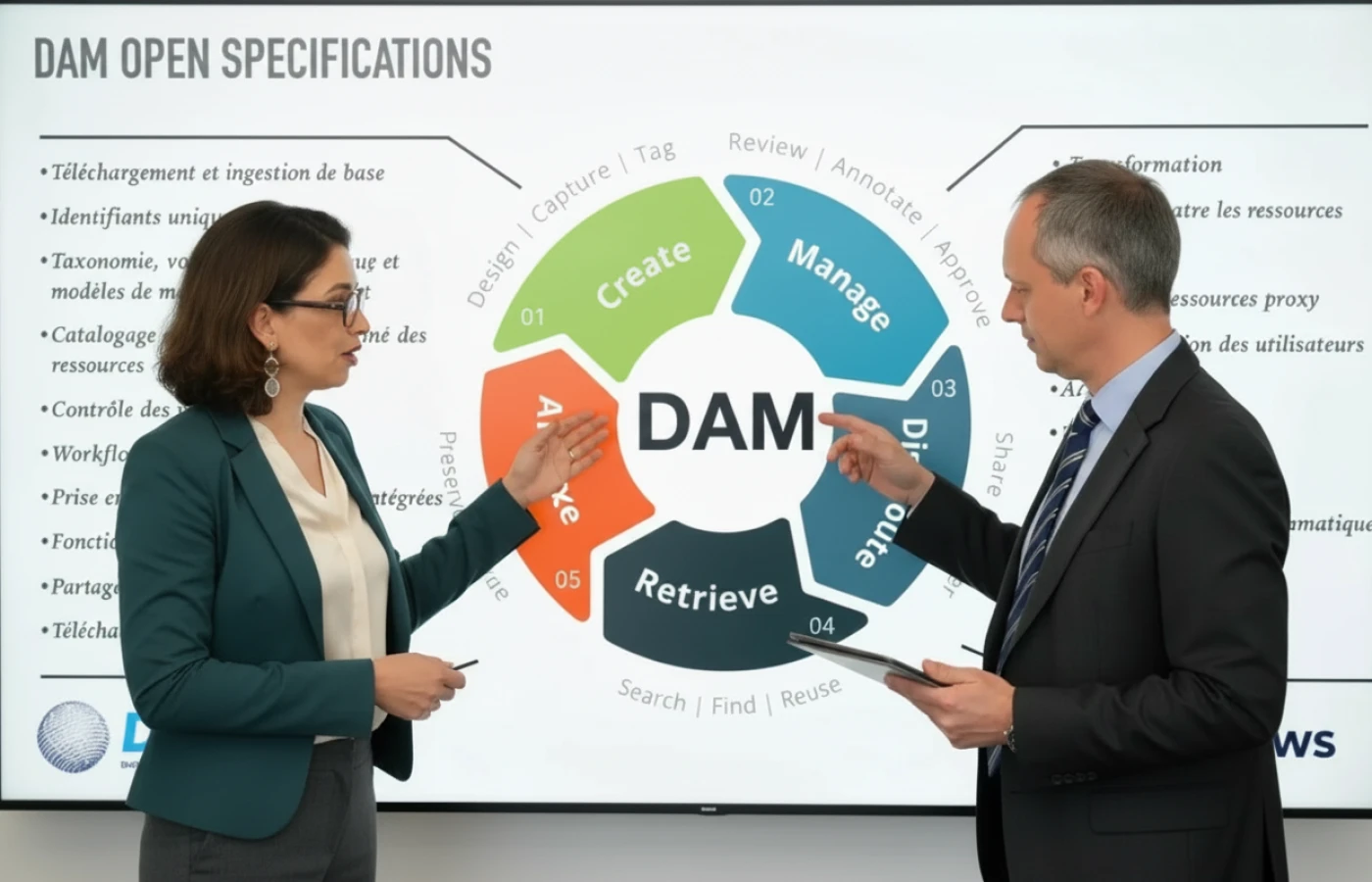
Digital asset management integration. PXM pulls images, videos, documents and 3D models from the DAM, ensuring that assets are tied to the correct product variants and usage rights. It manages renditions and metadata so that assets are optimised for performance and compliance across channels.
Contextual metadata and segmentation. PXM augments product data with behavioural, geographic and demographic insights. Segments can be built around market, language, persona or purchase history. Experiences are then tailored accordingly — different hero images for different regions, or alternative product bundles for first‑time buyers.
Analytics and feedback loops. PXM platforms measure how each product story performs. Metrics such as click‑through rates, conversions, bounce rates and digital shelf placement feed back into optimisation. Data insights drive continuous improvement of product content and merchandising strategies.
Syndication and orchestration automation. Just as PIM pushes data to downstream channels, PXM coordinates the delivery of experience‑ready content. Syndication rules govern when and how updates propagate, ensuring that personalised experiences remain consistent as underlying data changes.
PXM outcomes
Enterprises that invest in PXM realise benefits that complement the efficiency gains of PIM:
Higher engagement and conversion. Personalised, context‑aware product stories capture attention and drive actions. Content resonates with diverse audiences, reducing friction in the buying journey.
Brand consistency at scale. Even as content is tailored to channels and personas, governance ensures that brand voice, imagery and values remain coherent. This balance between localisation and global brand integrity is central to modern commerce.
Improved feedback loops. PXM’s analytics inform product development and marketing strategies. Understanding which features, descriptions or visuals resonate enables more targeted innovation.
Reduced churn and returns. When customers understand exactly what they are buying and see relevant recommendations, they are less likely to return products or abandon shopping carts.
PXM vs PIM: A Strategic Comparison
Complementary roles rather than competitors
One common misconception is that PXM replaces PIM. In reality, PXM and PIM are layers in a maturity model. PIM’s structured, validated information is a prerequisite for any personalised experience. Without it, PXM would propagate inconsistent data across channels, undermining trust. Conversely, PIM alone cannot deliver experiences that adapt to different contexts and audiences. Strategic decision‑making involves understanding when each layer becomes necessary and how they interact.
Comparative framework
Primary focus: PIM (Product Information Management) konzentriert sich darauf, strukturierte Produktdaten zu zentralisieren und zu pflegen. PXM (Product Experience Management) richtet den Blick auf die Bereitstellung personalisierter, kanalspezifischer Produkterlebnisse.
Key outputs: PIM liefert korrekte, angereicherte Produktattribute und validierte Daten zur weiteren Verwendung. PXM generiert aus diesen Daten kontextualisierte Produktgeschichten, personalisierte Inhalte und ausgewählte Assets.
Stakeholder groups: PIM wird hauptsächlich von Datenverwaltern, Produktmanagern, Compliance-Teams und IT genutzt. PXM richtet sich an Marketing‑, Merchandising‑, Kundenexperience‑Teams und E‑Commerce‑Strategen.
Value proposition: PIM schafft operative Effizienz, senkt Kosten, verbessert die Compliance und skaliert Datenqualität. PXM steigert das Engagement, erhöht Konversionsraten, fördert die Kundenbindung und differenziert die Marke.
Tools and integrations: PIM arbeitet eng mit ERP, PLM, DAM, CMS und Marktplätzen zusammen und sorgt für Konsistenz im Datenmodell. PXM baut auf PIM und DAM auf und bindet Analyse- und Segmentierungswerkzeuge sowie Marketinglösungen ein.
Metrics of success: Der Erfolg von PIM wird an der Datenvollständigkeit, der Reduktion von Fehlern, der Time-to-Market und der Effizienz von Workflows gemessen. PXM wird anhand von Engagementraten, Konversionen, Warenkorbgrößen, Kundenzufriedenheit und Customer-Lifetime-Value bewertet.
Timing in maturity: PIM bildet die grundlegende Basis für den digitalen Handel und ist Voraussetzung für kanalübergreifende Konsistenz. PXM ist die fortgeschrittene Stufe, die dann eingesetzt wird, wenn ein Unternehmen seine Kunden durch differenzierte Erlebnisse gewinnen will.
When to adopt PXM
You may already have a well‑structured PIM program and wonder if it is time to extend into PXM. The following signals suggest readiness:
Audience segmentation becomes critical. Your marketing team wants to deliver different product stories to different personas or regions, but manual personalisation is unsustainable. PXM automates the adaptation of content to each audience.
Channel complexity escalates. New sales channels — marketplaces, social commerce, digital out‑of‑home signage—appear faster than your team can tailor content. PXM provides templates and orchestration to maintain relevance across all endpoints.
Performance insights are lacking. You push product data out but struggle to measure which content resonates. PXM platforms provide analytics to close the loop between content and outcomes.
Experiential differentiation is a priority. You compete on more than price and product features. Experience is your differentiator, and PXM is the vehicle to deliver those differentiated experiences consistently.
Adopting PXM does not mean discarding PIM. Instead, PXM builds on PIM’s governance. Organisations that view PXM as a bolt‑on marketing tool without strengthening their data foundation will encounter inconsistent messages and fractured customer journeys.
Building a PIM‑PXM Strategy: Frameworks and Roadmaps
Step 1: Assess maturity and goals
Before investing in PXM, perform a candid maturity assessment across people, processes and technology. Consider:
Data quality and taxonomy. Are product attributes consistently defined? Are there clear naming conventions, units of measure and classification schemes? Gaps here must be addressed first.
Workflow discipline. Do teams follow formal data governance and approval processes? If “rogue” updates happen outside of the system, personalisation layers will amplify inconsistencies.
Integration readiness. Does your PIM integrate reliably with ERP, DAM, CMS and commerce platforms? Without automated synchronization, personalised experiences may lag behind real‑time stock or pricing changes.
Experience design capability. Does your marketing team have the skills to define personas, craft narratives and measure performance? PXM is as much about creative storytelling as it is about technology.
Set goals aligned to business outcomes: increasing conversion rates, reducing returns, improving speed to launch or entering new markets. This clarity will inform prioritisation.
Step 2: Design a layered architecture
Rather than treating PXM as a monolithic system, conceptualise a layered architecture:
Data layer (PIM and MDM). This layer defines the core product model, governance policies and integration with master data domains such as customer, supplier and inventory. It ensures that all downstream systems receive accurate, enriched product data.
Asset and media layer (DAM). Digital assets — including images, videos, 3D models and documents — are managed in a DAM. Metadata ties assets to product SKUs and usage rights. The DAM provides renditions appropriate for each channel.
Experience orchestration layer (PXM). This layer draws from PIM and DAM to create tailored product stories. It applies segmentation rules, selects appropriate assets, assembles product bundles and adapts language and formatting to each channel. It coordinates syndication and monitors performance.
Delivery layer (CMS, ecommerce, marketing automation, marketplaces). The final layer receives content from the PXM and delivers it to end users. Headless architectures and APIs allow for flexible, omnichannel delivery.
Designing these layers separately encourages modularity. You can evolve each layer independently, swap vendors without disrupting the whole and avoid vendor lock‑in. It also clarifies responsibilities: IT stewards the data layer, creative teams manage assets, and marketing orchestrates experiences.
Step 3: Define governance and roles
Governance is the linchpin of any successful PIM‑PXM strategy. Without clear accountability, personalisation efforts may lead to inconsistencies and inefficiencies. Consider establishing the following roles:
Data stewards. Subject matter experts who own specific product categories. They define attribute values, maintain taxonomies and approve changes. Their focus is on data quality and compliance.
Experience designers. Marketers or merchandising specialists who craft product stories for each audience. They define segmentation rules, choose assets and test messaging variations. Their success is measured by engagement and conversion metrics.
Integration architects. Technologists who design and maintain the interfaces between PIM, DAM, PXM and downstream systems. They ensure data flows reliably and performance scales with traffic.
Governance committee. A cross‑functional body that sets policies, resolves conflicts and ensures that PIM and PXM investments align with business objectives. This group balances efficiency with creativity and enforces standards across departments.
Adopting a hub‑and‑spoke model can also help manage governance complexity. In this model, PIM acts as the hub, and each downstream channel or region functions as a spoke. Data stewards at the hub maintain the global core, while spokes localise content within defined parameters. PXM orchestrates this localisation systematically.
Step 4: Implement in phases
Enterprises rarely switch from PIM‑only to full PXM overnight. A phased approach mitigates risk and builds momentum:
Phase 1 – PIM optimisation. Use this stage to clean your data, refine taxonomies, improve workflow adoption and eliminate manual processes. Build APIs to connect PIM to ERP, PLM and DAM. Ensure that your data foundation is stable.
Phase 2 – Targeted PXM pilot. Select a strategic product line, region or channel where personalisation can yield tangible benefits. Define personas, craft alternate product narratives and measure conversion improvements. This pilot proves the value of PXM without overwhelming the organisation.
Phase 3 – Scale up PXM. Expand the PXM program to additional product lines and channels. Automate segmentation, integrate analytics and refine algorithms. Build governance guidelines for personalisation to maintain brand coherence.
Phase 4 – Optimise and innovate. Use insights from PXM metrics to inform product development, marketing campaigns and cross‑sell opportunities. Experiment with AI‑driven personalisation, dynamic pricing and interactive content such as augmented reality. Continuously refine the experience based on evolving customer expectations.
Step 5: Measure what matters
Metrics are essential to justify investment and guide continuous improvement. Track both operational and experiential metrics:
Operational metrics: Data completeness scores, attribute accuracy rates, workflow cycle times and error resolution times. These indicators show whether the PIM layer is functioning effectively.
Experience metrics: Engagement (views, time on page), conversion (add‑to‑cart rates, purchases), average order value, return rates and customer satisfaction scores. These reveal the impact of PXM on the customer journey.
Governance metrics: Policy compliance rates, cycle time for content approvals, number of exceptions raised. Governance metrics surface bottlenecks and highlight the need for training or process adjustments.
ROI and cost metrics: Compare incremental revenue from improved conversion rates to costs of additional technology, content creation and governance. Use a multi‑year horizon, as PXM often delivers compounding benefits over time.
Trade‑Offs and Considerations in PIM‑PXM Adoption
Balancing standardisation with personalisation
One of the biggest challenges in PIM‑PXM strategies is balancing the need for global consistency with local relevance. Over‑standardisation can render experiences bland and generic, failing to connect with local audiences. Conversely, unconstrained local personalisation creates fragmented branding and operational chaos.
To strike the right balance, develop a personalisation framework that defines which elements of your product story are fixed and which are adaptive. For example, core specifications and safety information may always remain consistent, while imagery, tone, cross‑sell recommendations and promotional messaging can vary by audience. Enforce this framework through PXM templates and workflow approvals.
Governing content velocity
PXM accelerates the rate at which content is created and updated. As product assortments grow and channels multiply, content velocity can become overwhelming. To prevent burnout and maintain quality:
Automate wherever possible. Use automated translations, dynamic asset resizing and AI‑driven attribute enrichment. But ensure human oversight for tone and nuance.
Reuse modular content. Break product stories into components — copy snippets, feature descriptions, imagery — and reuse them across channels and segments. This reduces duplication and allows quick assembly of new experiences.
Invest in asset planning. Develop a content calendar that aligns product launches, marketing campaigns and channel updates. This ensures that cross‑functional teams know when assets and stories are needed.
Choosing technology platforms
Selecting technology for PIM and PXM is challenging because the landscape is crowded and marketing messages often blur definitions. To maintain independence:
Define requirements before evaluating vendors. Document your data model, integration needs, governance workflows and personalisation objectives. Use these as criteria when assessing platforms.
Avoid vendor lock‑in. Choose systems that provide open APIs, flexible data models and the ability to export your data. PIM and PXM should integrate with your existing ERP, DAM, CMS and analytics rather than forcing you to adopt a monolithic suite.
Consider total cost of ownership. SaaS platforms offer rapid deployment and regular updates, while open‑source or self‑hosted solutions provide greater control and flexibility. Factor in licensing, implementation, maintenance, customisation and training costs.
Assess scalability and performance. As product catalogs and traffic volumes grow, your PIM and PXM infrastructure must scale. Evaluate throughput, latency and concurrency limits.
Aligning organisational culture
Technology cannot compensate for misaligned culture. To succeed with PIM and PXM, encourage collaboration between IT, marketing, merchandising, supply chain and compliance teams. Invest in training so that stakeholders understand the value of data accuracy and personalisation. Recognise that perfection is impossible; iterate quickly and learn from feedback.
Integrating PIM and PXM with DAM, CMS and Other Enterprise Systems
Data flows and interfaces
In a modern enterprise, product information does not exist in isolation. A robust integration strategy ensures seamless flow of data and experiences:
ERP to PIM: The ERP provides master item records — SKUs, cost data, inventory levels. PIM enriches this data with marketing attributes, packaging information and regulatory details.
PLM and CAD to PIM: Engineering departments manage design and technical specifications in PLM systems. PIM imports these to ensure that product descriptions and attributes reflect the latest designs.
DAM to PIM/PXM: Digital assets are stored in the DAM with metadata linking them to products, variants and usage rights. PIM references these assets, while PXM orchestrates which renditions are used in which context.
CRM and customer data platforms to PXM: To personalise product experiences, PXM needs segmentation and behavioural data. Integrating customer profiles and purchase history enables dynamic recommendations and targeted content.
CMS and ecommerce to PXM: PXM publishes experiences into headless CMS platforms, ecommerce sites and mobile apps. API‑driven architectures allow for synchronous updates and consistent presentation across endpoints.
Analytics back to PXM and PIM: Performance data loops back to both layers. PIM may adjust attribute structures or completeness requirements based on analytics, while PXM refines templates and messaging.
Integration patterns
To implement these flows, enterprises can adopt different integration patterns:
Hub‑and‑spoke: PIM acts as the hub, with spokes connecting to ERP, DAM, PLM and downstream channels. Data transformations are centralized, simplifying maintenance. PXM sits on top as an orchestrator pulling from the hub and pushing to channels.
Middleware/iPaaS: Integration platforms (iPaaS) mediate between systems, providing mapping, transformation and monitoring. They reduce the need for custom code but require governance to avoid “black box” complexity.
Event‑driven architectures: For real‑time updates, event streams publish changes from PIM and other systems. PXM subscribes to relevant events and triggers content updates immediately. This pattern supports high‑volume, asynchronous communication.
Avoiding integration pitfalls
Integration efforts can stall due to scope creep and hidden complexities. To mitigate:
Document data contracts. Clearly define the structure, semantics and ownership of each data element exchanged between systems. Avoid ambiguous attribute names and undocumented transformations.
Implement robust error handling. Build retry mechanisms, dead‑letter queues and alerting into integration workflows. Without them, a single malformed record can propagate errors across channels.
Prioritise security and compliance. Ensure that sensitive attributes (e.g., price tiers, restricted materials) are segregated and access‑controlled. Map data flows against regulatory requirements such as GDPR or industry‑specific standards.
Governance and Data Quality: The Bedrock of Reliable Experiences
Establishing data stewardship
Data stewardship is not optional; it is the engine that keeps PIM and PXM running smoothly. Effective stewardship programs include:
Clear accountability. Assign owners for each product category and attribute set. Owners are responsible for accuracy, completeness and compliance. They coordinate with other teams to resolve conflicts.
Standards and guidelines. Develop documentation that outlines naming conventions, allowed values, taxonomies and classification rules. Ensure that new products and attributes adhere to these standards before entering the system.
Quality monitoring. Use automated validation and periodic audits to detect gaps. Dashboards displaying data completeness and quality scores help prioritise clean‑up efforts.
Training and communication. Provide onboarding for new stewards and ongoing workshops to share best practices. Maintain open channels for questions and feedback.
Managing metadata and taxonomy
Metadata — the data about data — is critical in both PIM and PXM. Without consistent metadata, assets and attributes become hard to find and reuse. Adopt the following practices:
Attribute governance. Define attribute types (text, number, enumeration, date) and assign clear semantics. Avoid creating overlapping attributes that cause redundancy.
Controlled vocabularies. Where possible, use controlled vocabularies or picklists for attribute values. This reduces variance and simplifies mapping to external standards.
Versioning. Maintain versions of taxonomy models. When changes are needed — adding a new category or renaming an attribute — follow a formal change process to assess impact and communicate updates.
Cross‑domain linkage. Connect product metadata with digital asset metadata. For instance, link color attributes to photographic swatches in the DAM, ensuring that the correct images accompany each variant.
Aligning governance with compliance
Enterprises in regulated industries — such as consumer goods, pharmaceuticals or electronics — face additional requirements. Product information must meet safety, environmental and labeling standards across regions. To align PIM‑PXM governance with compliance:
Incorporate compliance rules into the data model. Create attributes for regulatory codes, certifications and hazard classifications. Use validation to prevent missing or outdated values.
Define approval workflows. Require compliance officers to review and approve product data before publication. Document audit trails for regulators.
Adapt experiences by region. PXM should tailor product descriptions, warnings and imagery to meet local regulations. For example, some regions require specific language on packaging or restrict certain claims.
The Future of PIM and PXM: Emerging Trends and Opportunities
AI and machine learning in product experiences
Artificial intelligence and machine learning are reshaping how product information and experiences are managed. AI‑driven algorithms can:
Automate data enrichment. Natural language processing can parse supplier catalogues and extract attributes, reducing manual work. Computer vision can tag images with colours, patterns and styles.
Personalise experiences at scale. Recommendation engines and predictive models can identify which products to highlight to each customer. Dynamic content assembly can generate on‑the‑fly product narratives based on user behaviour, preferences and context.
Optimise search and navigation. Semantic search capabilities improve product discoverability by understanding user intent and synonyms. AI can also generate dynamic facets and filters based on popularity and relevance.
Enhance compliance and quality. Machine learning models can detect anomalies in data, identify missing attributes and flag potentially non‑compliant content.
To leverage AI effectively, organisations must have robust PIM and PXM foundations. Clean, structured data is the fuel that powers accurate models. Transparent governance ensures that AI recommendations remain ethical and aligned with brand values.
Digital product passports and sustainability
Emerging regulations and consumer demand for sustainable practices are spurring the adoption of digital product passports. These passports provide end‑to‑end traceability of materials, manufacturing processes, repairability and recycling information. They rely on accurate product data and require a PIM‑PXM ecosystem to communicate this information to consumers in understandable ways. Enterprises that embrace digital passports will need to integrate supply chain data into their PIM, enrich it with sustainability attributes and deliver it through PXM across channels.
Composable architectures and headless commerce
The shift toward composable architectures and headless commerce empowers enterprises to assemble best‑of‑breed components rather than relying on monolithic suites. In this paradigm:
PIM serves as an interchangeable microservice that exposes product data via APIs. Organisations can swap the front‑end experience or DAM without disrupting the PIM.
PXM functions as an orchestration layer that can be replaced or enhanced independently. As new channels and engagement models emerge — such as voice commerce or immersive shopping — PXM can evolve without forcing a complete platform overhaul.
APIs and event streams become the glue connecting microservices. Governance must extend to API management, version control and security across the ecosystem.
Adopting composable architectures requires careful planning, but it offers the agility to adapt quickly to market demands and technological innovation.
From Information Management to Experience Differentiation
The debate of pxm vs pim is less about choosing one over the other and more about recognising where each fits within your digital transformation journey. PIM lays the groundwork by centralising and enriching product data, ensuring accuracy, and enabling efficient multi‑channel distribution. PXM extends that foundation by transforming product information into personalised, context‑aware experiences that resonate with modern buyers. The secondary consideration of pim pxm is not a dichotomy but a continuum of maturity.
For enterprise decision‑makers, the path forward involves:
Investing in PIM first. Without a reliable data foundation, personalisation efforts will collapse under the weight of inconsistent information.
Building cross‑functional governance. Collaboration between data stewards, marketers and technologists ensures that PIM and PXM initiatives support both operational efficiency and customer engagement.
Adopting PXM when ready. Use PXM to tailor content to audiences, orchestrate cross‑channel stories and leverage analytics for continuous improvement.
Designing for flexibility. Choose modular architectures, open APIs and governance frameworks that allow you to adapt as new channels, regulations and technologies emerge.
Ultimately, enterprises that successfully integrate PIM and PXM will not only achieve operational excellence but also create product experiences that inspire loyalty and drive growth. In a world where customers have infinite choices, the combination of clean product information and personalised storytelling becomes your competitive differentiator.
Have we sparked your interest?
Interested in a joint project, a web demo or just getting to know us? We'll get back to you as soon as possible.