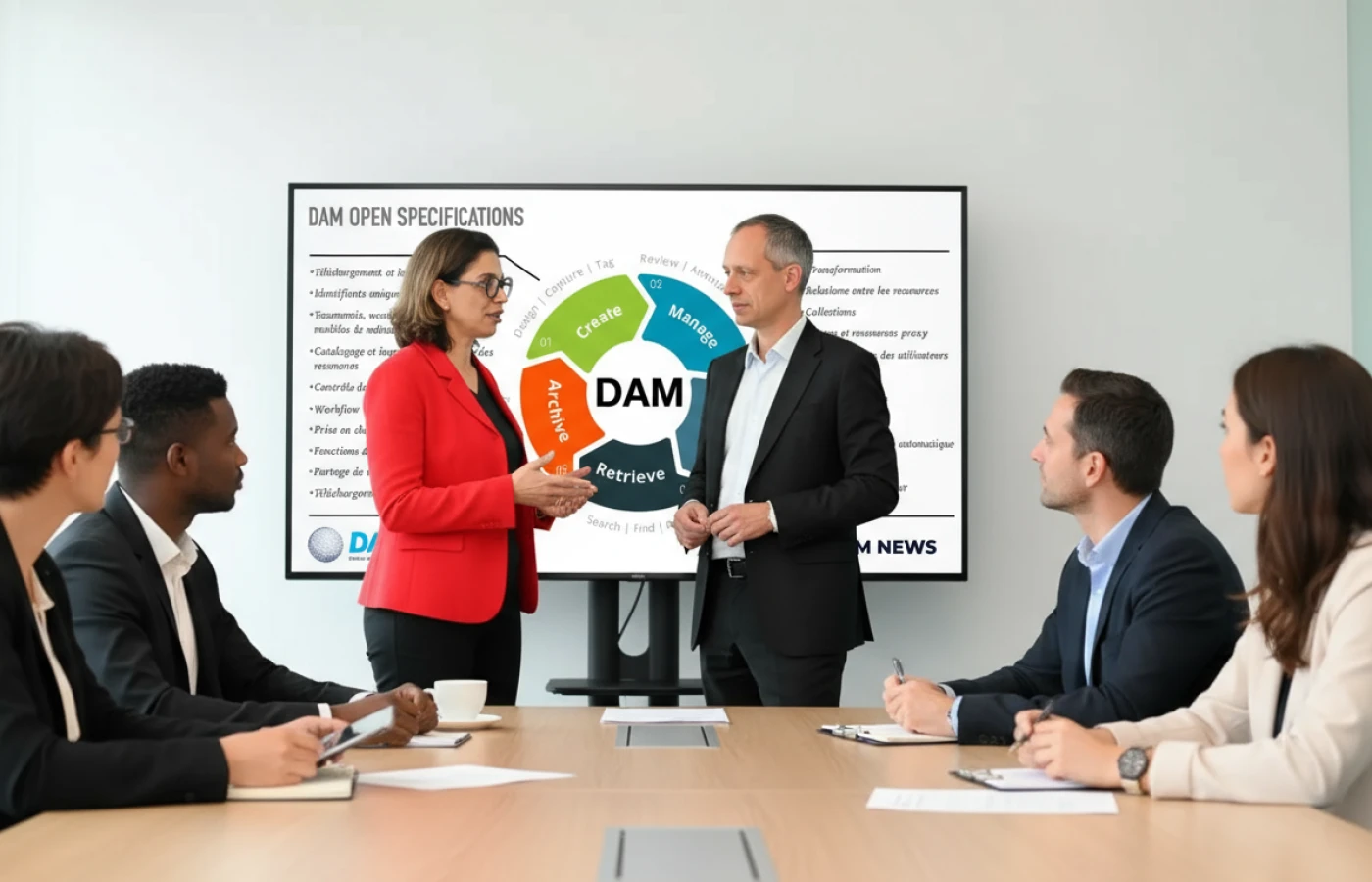
Enterprises localizing brand messaging need more than file storage. They require centralized libraries, multilingual metadata, translation workflows, regional permissions, templated customization with guardrails, AI‑driven tagging, robust rights management, cloud scalability and seamless integration with PIM and CMS. This piece breaks down the key features of DAM solutions that support localization strategy, outlines governance models to ensure consistency and compliance across regions, and offers decision frameworks to help executives invest wisely.
Localization Meets Digital Asset Management
Global enterprises operate in a world where customer experience is shaped by language, culture and regulation. Simply translating a slogan or swapping an image is no longer enough to engage local markets. You need a localization strategy that adapts messaging while protecting the core brand. Digital Asset Management (DAM) systems play a pivotal role in this process because they centralize assets, enforce standards and orchestrate content across languages and channels. In this article you’ll explore the key features of DAM solutions for localization strategy, understand how DAM solutions help localize brand messaging, and learn governance models that support multilingual content operations. The goal is to provide decision‑makers with practical frameworks and trade‑offs, not product pitches or vendor comparisons.
Why Localized Brand Messaging Matters
Personalization at Scale
Customers expect experiences tailored to their context. That means language, cultural nuances, local trends and regulatory requirements all influence how a brand should show up. Enterprises that ignore these factors risk seeming disconnected or inauthentic. Personalization at scale requires a systematic approach to managing and adapting content. Without the right infrastructure, local teams might improvise, leading to inconsistent or off‑brand messaging.
The Cost of Inconsistency
Inconsistent branding erodes trust and wastes resources. If each region modifies artwork or copy without guidance, duplicate production costs soar and legal risks increase. An audit of marketing spend often reveals unnecessary expenses driven by fragmented asset creation. Standardizing your localization process reduces rework and ensures every asset contributes to your content investment.
Regulatory and Cultural Compliance
Beyond aesthetics, localized messaging must adhere to regional laws, data privacy rules, accessibility standards and cultural sensitivities. Missteps can trigger fines, reputational damage or boycotts. DAM platforms provide the governance mechanisms to embed compliance into workflows so content is approved by the right stakeholders before publication.
The Role of DAM in Localization Strategy
When organizations scale beyond a handful of markets, spreadsheets and shared drives crumble under the weight of thousands of images, videos, documents and translations. A modern DAM solution provides the backbone for localization through three core capabilities: centralization, orchestration and governance.
Centralization ensures every approved asset lives in a single library, eliminating duplicates and establishing a “single source of truth.” This includes master files, localized variants and associated metadata.
Orchestration refers to the ability to automate workflows across the asset lifecycle — ingesting, tagging, reviewing, translating, approving, publishing and archiving. DAM orchestrates this lifecycle while integrating with other systems such as product information management (PIM), content management systems (CMS) and translation management systems (TMS).
Governance encompasses the policies, roles and permissions that maintain brand consistency, rights compliance and auditability. Without governance, a DAM is just a media library; with governance, it becomes a strategic platform for content operations.
The following sections dive into the features that deliver these capabilities and explain how they support multilingual brand messaging.
Key Features of DAM Solutions for Localization Strategy
Centralized Asset Library
At the heart of localization is the ability to find and reuse content across markets. A centralized library consolidates assets previously scattered across file servers, cloud drives and agency desktops. With a unified repository:
Version Control: Each asset — whether an image, video, document or 3D model — maintains its revision history. You can roll back to previous versions or see how a file evolved over time. This is essential when multiple teams adapt assets for different regions and need to ensure they’re using the latest approved version.
Rendition Support: Localization often requires different aspect ratios, file formats or resolutions. A DAM should generate and store multiple renditions (e.g., cropped, resized, subtitled) on demand, ensuring regional teams can access the right format without external conversions.
Bulk Upload and Download: High‑volume marketing campaigns necessitate importing thousands of assets and distributing them to agencies or partners. Bulk operations save time and reduce errors.
Multilingual Metadata and Taxonomy
Metadata — the information about your assets — is the backbone of discoverability and automation. For localization, metadata must be multilingual and structured. Critical capabilities include:
Language‑Specific Fields: Assets may have titles, descriptions and keywords in multiple languages. Structured metadata fields (parent and child fields) allow the same concept to be represented across languages. For example, the parent field might hold the English term, while dependent fields hold translations. This approach lets users search or filter assets in their native language.
Controlled Vocabularies and Taxonomies: A controlled vocabulary ensures that everyone uses the same terms to describe assets. For global organizations, hierarchical taxonomies can mirror regional product lines, campaigns or markets. Regional teams can extend the taxonomy with localized terms without disrupting the global hierarchy.
Metadata Mapping: Automated mapping from filenames or ingest profiles can populate metadata fields during upload. For example, file names containing locale codes (e.g., “FR” or “ES”) can trigger language‑specific metadata and assign the asset to the correct locale. This reduces manual tagging and speeds up ingestion.
AI‑Assisted Tagging: Artificial intelligence can analyze images, videos and audio to generate initial tags such as objects, colors, or sentiment. When trained on the organization’s vocabulary, AI can suggest translations or synonyms, further accelerating multilingual metadata creation.
Translation Workflows and TMS Integration
Manual translation processes create bottlenecks and increase the risk of misalignment. DAM systems integrated with translation management systems (TMS) automate the flow of assets requiring translation.
Automatic Identification: When a new asset is uploaded and flagged for localization, the DAM can automatically route it to the TMS based on metadata (e.g., missing language fields). The TMS assigns translators, tracks progress and returns localized content.
Round‑Trip Synchronization: Once translations are complete, the TMS pushes localized versions back into the DAM. Version control ensures that these variants are linked to the master asset, preserving the hierarchy of originals and translations.
Automation Triggers: Localization often involves multiple steps such as translation, review by in‑country marketing teams and legal approval. Workflow engines within the DAM can trigger notifications, assign tasks and track completion to move assets through translation stages quickly.
Terminology Management: Integration with translation tools allows the DAM to reference glossaries and translation memories, ensuring consistent terminology across languages. Translators can access brand guidelines and reference assets directly from the DAM.
Role‑Based Access and Regional Permissions
Localization relies on collaboration across headquarters, regional offices, agencies and translation vendors. Fine‑grained permissions ensure that users see only what they need and can edit only what they’re responsible for.
User and Group Roles: Define user groups (e.g., North America marketing, EMEA product team, Asia‑Pacific partners) with specific permissions. Groups can have different upload profiles, metadata fields and asset visibility. For instance, French users might only see assets tagged for the French market and view metadata fields in French.
Regional Asset Flags: Visual indicators on asset thumbnails can signal regional usage, such as “Europe only” or “Global.” This helps users quickly identify which assets apply to their market and prevents misuse.
Localized Dashboards and Portals: While the core DAM interface might use a single language, user‑facing dashboards and branded portals can be customized with local language instructions, curated asset collections and marketing messages. External portals for agencies or resellers provide localized experiences while maintaining brand integrity.
Template‑Based Localization With Guardrails
Local teams often need to customize assets — edit text, swap images, adjust dates — without altering core brand elements. Template functionality within DAM allows for controlled customization.
Smart Templates: Designers create master templates with locked brand elements (logos, colors, legal text) and editable regions (copy, images, call‑to‑action). Local marketers can produce region‑specific materials (flyers, banners, social posts) by editing only allowed fields. Guardrails ensure consistency across languages and channels.
On‑Demand Rendering: Templates generate final assets on the fly, so marketing teams don’t need graphic design software. They can produce print‑ready PDFs or digital files directly from the browser, greatly accelerating time‑to‑market.
Automated Expiry and Updates: Legal statements or offers often vary by region and time period. Templates can embed dynamic content from a central data source (e.g., a regulatory database). When regulations change, updates cascade across all templates, ensuring compliance without manual rework.
Configurable Workflows: DAM systems provide configurable workflows that mirror your organization’s approval chain. For instance, a localized asset may require translation, local marketing approval and legal review. Tasks and notifications are assigned automatically, reducing delays and providing visibility into bottlenecks.
Parallel vs. Sequential Tasks: Some approvals can occur in parallel (e.g., translation and image editing), while others must occur sequentially (legal sign‑off after translation). Workflow configuration should support both, allowing teams to optimize for speed and compliance.
Audit Trails: Every action — upload, edit, approval or deletion — is recorded with user, timestamp and action details. Audit logs are essential for demonstrating compliance with data privacy laws and tracking how localized messaging was developed.
Version Comparison: Side‑by‑side comparisons of asset versions (e.g., original vs. localized) allow reviewers to verify changes quickly. Automatic highlighting of differences in text or design reduces the risk of missing errors.
AI‑Powered Tagging, Search and Content Generation
Artificial intelligence enhances localization in several ways:
Smart Tagging: AI models trained on domain‑specific data can automatically tag assets with objects, topics or emotions, and even detect which language is present in text or audio. This reduces manual tagging and improves searchability across languages.
Semantic Search: Instead of relying solely on exact keyword matches, AI‑powered search can understand synonyms, cultural references and context. For example, searching for “holiday” could return assets tagged “vacation” or “festive season” depending on locale.
Multilingual Captioning and Transcription: AI can generate subtitles or captions in multiple languages for video content. This not only improves accessibility but also speeds up the creation of localized audiovisual assets.
Content Quality Checks: AI can flag potential copyright issues, profanity or culturally sensitive content before assets reach translation. This preemptive review saves time and reduces reputational risk.
While AI accelerates workflows, its role should support human judgment rather than replace it. Enterprises must tune AI models to their vocabulary and establish review processes to ensure accuracy and cultural relevance.
Rights Management and Content Authenticity
Localization often involves complex rights issues. An image licensed for a US campaign may not be cleared for use in Asia. A photograph depicting people might require additional consent in certain jurisdictions. Key features include:
Licensing Metadata: Record usage rights, license expiration dates, geographies and restrictions as metadata fields. Automatic reminders can alert teams when rights are expiring or when assets are no longer permitted in certain regions.
Digital Rights Enforcement: Permissions and download restrictions can be enforced based on rights metadata. If an asset isn’t licensed for a region, regional users cannot access or export it.
Content Provenance: As generative AI and synthetic media become prevalent, verifying authenticity is critical. DAM systems are starting to support provenance metadata based on emerging standards such as the Coalition for Content Provenance and Authenticity (C2PA). This records how an asset was created, edited and by whom, ensuring transparency and trust.
Cloud‑Native Scalability and Connectivity
Localization strategies demand systems that scale with the pace of content creation and distribution.
Elastic Storage and Processing: Cloud‑native DAMs can handle billions of assets with dynamic scaling. They manage large file sizes, including 4K video, AR/VR assets and rich media. Storage automatically scales up during campaigns and down after, optimizing cost.
Global Accessibility: Cloud infrastructure provides fast access regardless of user location. Regional cloud zones ensure low latency while complying with data residency requirements. Hybrid models allow sensitive data to remain on premises while leveraging cloud scalability for non‑sensitive assets.
Resilience and Disaster Recovery: Cloud architectures replicate data across multiple regions, ensuring business continuity in case of outages or disasters.
Integration with CMS, PIM and Marketing Ecosystems
DAM does not exist in isolation. Effective localization depends on connectivity across your content stack.
PIM Integration: Product information management systems store structured product data (SKU, dimensions, descriptions). Integrating PIM with DAM ensures that product images and videos are linked to accurate product metadata. When product specs change, associated assets update automatically across languages.
CMS Integration: Content management systems deliver experiences across websites, mobile apps and e‑commerce. Integration allows editors to pull approved assets directly from the DAM using APIs or plug‑ins. This reduces duplication and ensures that localized assets appear correctly in each language version of your site.
Marketing Automation and Social Tools: DAM integration with marketing platforms (email, social, advertising) enables dynamic content insertion. Localization tags can automatically select the right language variant for each recipient based on user profile or region.
Creative Tools: Designers often work in tools like Adobe Creative Cloud or Figma. Direct integration allows them to save files into the DAM, retrieve assets and maintain version control without leaving their design environment.
Analytics and Insights for Localization Performance
Localization strategy isn’t just about producing localized content; it’s about measuring its effectiveness.
Usage Analytics: Track which assets are downloaded, edited or shared by region, channel or role. Identify content that drives engagement and understand where assets are underutilized.
Performance Correlation: Connect asset usage data to downstream metrics such as campaign performance, sales or customer engagement. This requires integration with analytics platforms. Understanding which localized assets deliver results helps prioritize future localization efforts.
Governance Metrics: Monitor approval turnaround times, translation durations and compliance incidents. These metrics highlight bottlenecks and inform process improvements.
Localization ROI: By comparing the cost of localization efforts (translations, design time) with revenue or engagement uplift in each market, enterprises can quantify ROI and make informed budgeting decisions.
Sustainability and Responsible Digital Asset Management
Sustainability has become an enterprise priority. DAM contributes by reducing digital waste and optimizing resource use.
Single Source to Reduce Duplication: Storing assets once and reusing them across channels avoids creating redundant copies and reduces storage footprints and carbon emissions. Consolidating assets also saves energy by minimizing unnecessary transfers and downloads.
Lifecycle Management: Assets have life spans. Automated rules can archive or delete assets when they expire or are no longer relevant, preventing clutter and lowering storage consumption.
Energy‑Efficient Workflows: Centralized processing for tasks such as transcoding or metadata extraction consumes less energy than running separate processes on multiple user machines. Cloud providers increasingly offer sustainability metrics to track the carbon impact of your digital operations.
Governance Models for Multilingual DAM
Technology alone does not ensure localization success. Governance defines how people use the system, what rules apply and how exceptions are managed. A robust governance model should address the following areas:
Metadata Strategy and Taxonomy Governance
Establish a metadata committee that includes representatives from global and regional teams. Define mandatory fields (e.g., language, region, licensing) and controlled vocabularies. Provide guidelines on how to add new terms or languages. Periodically audit metadata quality and usage to identify gaps or inconsistencies.
Roles and Permissions Framework
Define roles such as Global DAM Administrator, Regional Administrator, Local Marketer, Translator and Legal Reviewer. For each role, specify permissions: view, upload, edit, approve, publish and administer. Document the process for requesting new permissions and conduct periodic access reviews to align with organizational changes.
Quality Assurance and Approval Policies
Localization introduces multiple points of failure. Formalize approval policies that determine who must sign off on translations, regional modifications and rights clearances. Establish service level agreements (SLAs) for approvals to keep campaigns on schedule. Use checklists and forms to ensure compliance with brand guidelines and regulations.
Change Management and Local Champions
Adoption requires more than training; it requires advocates. Identify local champions in each region who serve as points of contact between headquarters and local teams. These champions manage local metadata, coordinate translations and provide feedback on workflows. Empower them with partial administrative privileges so they can adapt templates or metadata to regional needs without breaking global standards.
Data Protection and Compliance
Localization often involves handling personally identifiable information (PII) or sensitive content. Governance policies should delineate how personal data is stored, encrypted and accessed. Compliance with regulations such as GDPR in Europe or data residency laws in different jurisdictions must be baked into workflows, with automatic redaction or anonymization where necessary.
Decision Framework: Evaluating DAM Features for Localization
Selecting a DAM platform is a high‑impact decision with long‑term ramifications. The following framework helps executives evaluate which features are essential for their localization strategy:
Strategic Objectives: Clarify your primary goals — are you focused on accelerating time‑to‑market, reducing translation costs, ensuring regulatory compliance, supporting omnichannel marketing or all of the above? Prioritize features that directly support your objectives.
Complexity of Localization: Assess how many languages, regions and product lines you manage. Organizations with dozens of languages need robust multilingual metadata and advanced permissioning; those with a few languages can leverage simpler workflows.
Integration Requirements: Map your existing technology stack (PIM, CMS, TMS, CRM, marketing automation, creative tools). Evaluate how well the DAM integrates with each system. The more integrations you require, the more critical open APIs and modular architectures become.
Organizational Maturity: Consider your team’s readiness for change. A sophisticated DAM with every feature may overwhelm a team still operating on shared drives. Conversely, a basic DAM may limit a mature organization’s ability to innovate. Match the platform to your current capabilities with room to grow.
Governance and Compliance: Identify the regulatory environments you operate in (data privacy, accessibility, industry‑specific rules). Ensure the DAM can enforce the necessary controls, provide audit trails and support content provenance.
Total Cost of Ownership (TCO): Look beyond license fees. Evaluate implementation costs, migration, training, customization, integrations, storage, support and potential future upgrades. Assess the ROI you expect from improved efficiency, reduced duplication and increased market impact.
Use these considerations to create a weighted scorecard. Invite stakeholders from marketing, IT, compliance and regional teams to evaluate each platform against the scorecard. This collaborative evaluation surfaces trade‑offs and avoids vendor bias.
Implementation Guidelines for Localization‑Focused DAM
Once a platform is selected, implementation determines whether your localization strategy succeeds. Follow these guidelines:
1. Define Scope and Objectives
Align stakeholders on what localization success looks like. Document which markets, languages and asset types are in scope for the initial rollout. Identify quick wins (e.g., centralizing brand assets) and longer‑term milestones (e.g., integrating PIM or automating translation workflows).
2. Audit Existing Content and Workflows
Before migration, conduct a comprehensive audit of assets, metadata, workflows and systems. Identify duplicates, outdated files and inconsistent naming conventions. Document current translation processes, approvals and pain points. This audit informs your migration strategy and future metadata schema.
3. Develop a Metadata and Taxonomy Plan
Design a metadata schema that covers language, region, market, usage rights, campaign, version and status. Create controlled vocabularies and taxonomies that reflect your organization’s structure. Involve regional teams in validating terms and translations. Determine which metadata fields are mandatory and which can be optional.
4. Configure Workflows and Permissions
Translate your real‑world approval processes into digital workflows. Define entry points (uploads, translations), review stages, conditional branches and escalation paths. Set up user groups with appropriate permissions based on roles and regions. Test workflows with sample assets to ensure tasks are assigned correctly and notifications trigger as expected.
5. Pilot With a Representative Region
Select one or two regions to pilot the DAM implementation. Choose regions with moderate complexity — enough to test workflows, translations and governance but not so complex that they overwhelm the team. Gather feedback from pilot users and refine workflows, metadata and training materials accordingly.
6. Migrate Assets and Train Users
Develop a phased migration plan. Start with high‑value assets (brand guidelines, product images) and add more content as metadata and workflows stabilize. Provide role‑based training — uploaders, translators, reviewers — so each group understands how to perform tasks in the new system. Offer on‑demand training to accommodate time zones and staff turnover.
7. Launch and Iterate
Roll out the DAM region by region or business unit by unit. Monitor adoption metrics, asset usage, workflow completion times and user feedback. Make adjustments to metadata fields, workflows, permissions or templates based on real‑world usage. Localization is dynamic; expect to evolve your system as markets and strategies change.
Future Directions: AI, Authenticity and Sustainability
Localization and DAM are evolving rapidly. Consider these emerging trends as you build your strategy:
Generative AI: Advances in generative models allow for automatic creation of localized assets — translating not just text but generating culturally relevant imagery or voice overs. This raises questions about authenticity, bias and rights management. Organizations need policies and provenance metadata to identify AI‑generated content and maintain trust.
Content Authenticity Standards: Initiatives like content provenance frameworks are growing in importance. As misinformation and deepfakes proliferate, being able to prove where content came from, who edited it and that it hasn’t been tampered with becomes essential. DAM systems will increasingly embed cryptographic signatures and chain‑of‑custody metadata.
Sustainability Metrics: Environmental considerations will drive demand for dashboards that report the energy consumption and carbon impact of digital operations. Enterprises may prioritize vendors with sustainable infrastructures and features that minimize storage redundancy and compute waste.
Convergence of PIM, DAM and MDM: Product, marketing and digital teams are converging. Expect tighter integration between PIM, master data management (MDM) and DAM systems, creating a unified data and asset backbone that powers personalized experiences across markets.
Localization is no longer a peripheral activity but a core component of digital strategy. Enterprises need to deliver culturally relevant experiences without sacrificing brand consistency, compliance or efficiency. A modern Digital Asset Management system provides the foundation for this balancing act. By investing in the key features of DAM solutions for localization strategy — centralized libraries, multilingual metadata, translation workflows, regional permissions, templated customization, AI enhancements, rights management, cloud scalability, integration and analytics — you empower your teams to localize brand messaging confidently and at scale.
Governance models, decision frameworks and disciplined implementation ensure those features translate into measurable outcomes. As markets and technologies evolve, organizations that treat DAM as strategic infrastructure — rather than a siloed repository — will be best positioned to deliver consistent yet locally resonant experiences, today and in the future.
Have we sparked your interest?
Interested in a joint project, a web demo or just getting to know us? We'll get back to you as soon as possible.