
Effective DAM governance transforms your asset library from a mere repository into a strategic business engine. This article lays out how to craft a living governance framework, including policy development, role definition and measurable metrics. It explains why governance must be built around people, process and technology, details the trade‑offs between control and agility, and proposes practical steps for sustainable adoption. Decision‑makers will gain frameworks to align their DAM program with organisational goals, ensure compliance and measure success over time.
Digital asset management is more than a technology purchase; it’s a long‑term operating model for how your organisation creates, stores, and uses its digital content. When teams treat a DAM as a digital warehouse, without governance structures to guide behaviours, the repository inevitably devolves into a chaotic dumping ground. Assets become duplicated and mislabeled, legal rights are unclear, and users lose trust in the system. Governance is the antidote. It provides the rules, responsibilities and accountability mechanisms that keep your DAM aligned with strategic objectives.
Governance does not mean bureaucracy for bureaucracy’s sake. Instead, it offers a structured, sustainable way to manage change, ensure compliance, and maximise the value of your content. It connects people, processes and technology so that decisions are made consistently and responsibly. Without governance, your DAM investment risks delivering marginal improvements at best and causing confusion at worst. With governance, you create a living framework that guides day‑to‑day operations, supports long‑term evolution and builds trust across the organisation.
To appreciate the value of governance, consider why organisations invest in a DAM in the first place: they want a single source of truth, faster collaboration, brand protection and compliance with internal and external rules. A properly governed DAM delivers these benefits by defining what qualifies as an official asset, how it should be tagged and classified, who has access and what they can do with it. Governance ensures that every uploaded asset meets quality standards, that metadata is accurate and usable, and that licensing and rights information is documented.
Perhaps more importantly, governance fosters accountability. When users know that every action is traceable and that policies are applied consistently, they are more likely to follow procedures and less likely to circumvent the system. Governance also empowers leadership to make informed decisions. With clear metrics on usage, adoption, and performance, decision‑makers can adjust policies, allocate resources and plan investments based on evidence rather than guesswork. In short, governance transforms the DAM from a static archive into an active operating system for content.

Effective governance rests on several guiding principles:
With these principles in mind, let’s explore how to establish a governance framework that articulates policies, defines roles and tracks metrics.
Establishing a robust governance program begins with setting a clear purpose and scope. Without a shared understanding of why your DAM exists and what it should achieve, policies risk becoming disconnected rules that fail to drive desired behaviours. Here’s how to lay the groundwork.
Start by articulating a purpose statement for your DAM. This should describe why the system exists, what business needs it serves, and the outcomes it should deliver. For instance, your purpose might be to enable teams across regions to access brand‑approved assets quickly, ensure compliance with rights and regulations, and reduce operational waste. A succinct statement anchors all governance decisions and sets expectations for stakeholders.
Next, craft a vision of how your DAM should function three to five years out. Will it support real‑time personalisation? Connect with product information and commerce platforms? Serve as the hub for generative AI content workflows? Having a vision ensures your governance model is forward‑looking and avoids technical or operational dead ends.
Governance is a team sport. Identify stakeholders from across the organisation who rely on or contribute to the DAM. Typical stakeholders include marketing, creative services, legal, compliance, IT, procurement, sales, product management and regional teams. Each group has unique needs and insights that must be reflected in governance policies.
To coordinate these voices, establish a governance committee. This cross‑functional body owns the governance program, defines policies, resolves conflicts and monitors adoption. The committee should meet regularly — monthly or quarterly — to review metrics, assess risks and prioritise improvements. Membership should be representative yet lean enough to be effective. A typical committee might include a DAM program manager, a metadata specialist, a representative from legal or compliance, a regional marketing lead and a senior IT operations manager.
Documentation is the cornerstone of governance. Without a central, accessible repository of policies and guidelines, the best intentions quickly degrade into ad hoc practices. Your governance documentation should cover:
These documents should live within the DAM environment or an easily accessible knowledge base. They should be version‑controlled, regularly updated and communicated widely.

Assigning clear roles ensures accountability and prevents overlaps or gaps in coverage. Roles can vary depending on organisational structure, but the following archetypes provide a starting point for delineating responsibilities.
The governance committee, as described earlier, sets policies and prioritises improvements. It acts as the central authority for the DAM. Responsibilities include:
Often called the DAM lead, this person manages the daily operation of the system. Key responsibilities include:
The program manager enforces policies while championing user adoption. They must balance control with flexibility, enabling innovation without compromising governance.
Metadata is the lifeblood of findability and governance. The metadata specialist:
This role often partners with the program manager to refine taxonomy structures as business needs evolve.
The librarian curates collections, ensures high‑value assets are easy to find, and monitors lifecycle management. Responsibilities include:
The curator ensures the repository remains a lean, high‑value resource rather than an unmanageable archive.
Legal oversight is critical for protecting the organisation from rights violations, licensing breaches and regulatory penalties. This role:
Global organisations often require regional leads who interpret governance policies for local contexts. Responsibilities include:
Finally, all users share responsibility for adhering to policies. They are expected to:
By assigning responsibilities clearly and enforcing them consistently, organisations create a culture of accountability and ownership.

Policies are the rules that dictate how the DAM is used. While your governance documentation outlines many of these rules, writing policies requires careful thought to balance rigidity with flexibility. Policies should support business objectives, protect the organisation from risk, and empower users. Below are key domains to address.
Not every file belongs in your DAM. Policies should define:
Clearly defined ingestion policies prevent clutter, maintain quality and reduce administrative overhead.
Metadata quality determines whether users can find and reuse assets. Policies should cover:
Frequent audits are essential. Regularly analyse metadata completeness and accuracy, then provide targeted training or corrective measures.
Unclear rights are a major risk. Policies should ensure that rights information is captured and enforced.
Without clear permissions, you risk either too much control (bottlenecks) or too little (security breaches).
As assets evolve, version control and lifecycle management prevent confusion and content rot.
Policies are only effective if people understand and follow them. Include guidelines for:
By establishing comprehensive policies across these domains, you create predictable behaviours and reduce the risk of misuse or neglect.
Governance without metrics is guesswork. Metrics provide evidence of success, highlight problem areas, and guide continuous improvement. The challenge is choosing metrics that align with your purpose and drive the right behaviours. Here we propose a balanced scorecard tailored for DAM governance.
These metrics reveal whether your DAM is being used as intended and whether governance policies are encouraging adoption.
Metadata metrics reflect the health of your classification system and the adherence to standards.
These metrics help ensure legal and regulatory obligations are met.
Understanding how assets move through their lifecycle helps identify bottlenecks and opportunities for improvement.
Increasingly, organisations are measuring the environmental impact of their digital operations. DAM governance can support sustainability by reducing digital waste.
Finally, gauge the human side of governance through qualitative measures.
By selecting a balanced mix of metrics across adoption, quality, compliance, efficiency, sustainability and user engagement, you create a dashboard that reflects the full health of your DAM governance program.
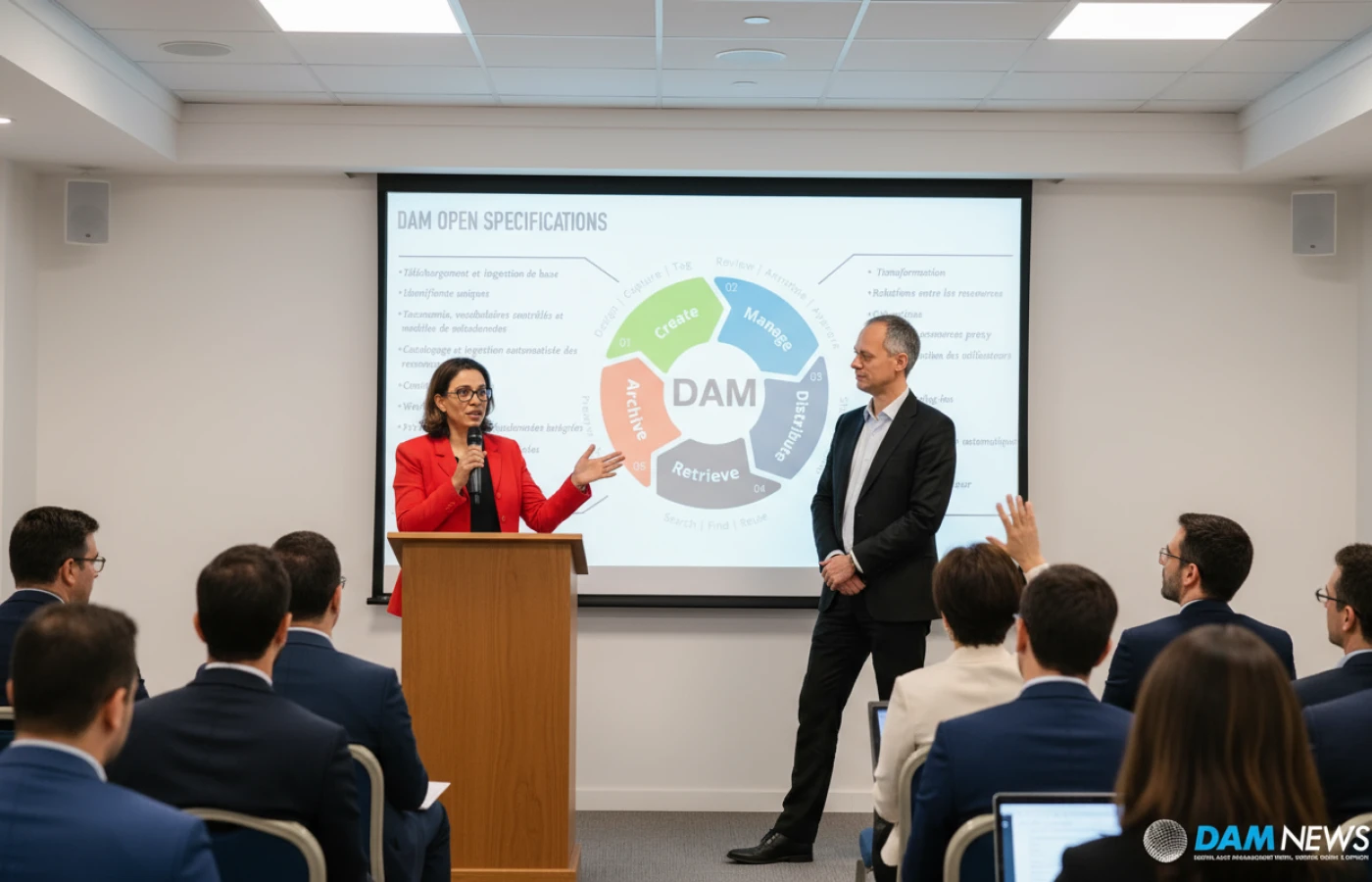
Turning theory into action requires a stepwise approach. This section provides a roadmap for implementing and maintaining DAM governance.
Before implementing policies, assess your current state. Inventory existing assets, user roles, workflows and metadata quality. Identify pain points such as duplicate content, inconsistent naming conventions or ambiguous access controls. Interview stakeholders to understand their needs and pain points. This audit forms the baseline against which you’ll measure progress.
Based on your audit, set specific, measurable objectives. For example, reduce search time by 30% within six months, achieve 90% metadata completeness, or cut duplicate assets by half. Align objectives with business goals — shorter time to market, improved brand consistency, reduced legal risk — and use them to prioritise your governance initiatives. Define success criteria that reflect desired outcomes, not just outputs. For instance, improved campaign speed is an outcome, while training completion is an output.
Formalise your governance committee with clear roles and charters. Include representatives from marketing, creative, IT, legal and regional teams. This group should meet regularly to review metrics, approve policies and address issues. Provide them with access to dashboards and usage reports so they can make data‑driven decisions.
Draft policies in collaboration with stakeholders. Pilot them with a small group to test usability and gather feedback. Avoid overcomplicating; start with core policies (ingestion, metadata, rights, permissions) and expand as needed. Document policies thoroughly, using plain language and real examples. Once approved by the governance committee, publish them in a central repository and incorporate them into training materials.
Your DAM platform should enforce governance by default. Configure metadata fields, picklists, and mandatory entry settings. Set up role‑based access controls aligned with your policies. Create workflows for approvals, reviews, and rights checks. Where possible, automate notifications for expiring rights or incomplete metadata. Implement audit trails to record user actions and provide accountability.
Effective training is critical. Develop self‑service modules, live workshops, and documentation tailored to different user roles. Emphasise why governance matters and how it benefits individuals — faster searches, fewer compliance issues, easier collaboration. Encourage users to practice uploading and tagging assets under supervision before migrating real content. Provide refresher sessions when policies change or new features are introduced.
Once your governance framework is live, monitor your metrics regularly. Use dashboards to track usage, metadata quality, rights compliance, and other KPIs. Conduct quarterly or semi‑annual audits to identify new pain points or rule violations. Evaluate the effectiveness of policies and adjust where necessary. Engage the governance committee to discuss findings, update policies, and plan improvements.
Policies and metrics only succeed if they are embraced by the organisation. Encourage a culture of governance by:
By embedding governance into the organisational culture, you ensure long‑term sustainability beyond the initial rollout.
Governance involves trade‑offs between control and agility, centralisation and flexibility, automation and human oversight. A decision framework helps you navigate these trade‑offs based on your business context.
A centralised governance model emphasises consistency, compliance and efficiency. Policies are defined at the corporate level and applied uniformly. This works well for highly regulated industries or brands requiring strict adherence to guidelines. However, centralisation can slow down local teams and stifle creativity.
At the other end of the spectrum, a decentralised model allows regional or departmental teams to define their own rules and workflows. While this fosters agility and responsiveness, it risks fragmentation and brand dilution.
Most enterprises adopt a hybrid approach: core policies (metadata standards, rights management, security) are centralised, while local guidelines (language and cultural nuances, market-specific campaigns) are delegated to regional leads. Use a matrix to determine which policies must remain global and which can be local. Align this matrix with risk assessments and business priorities.
Rigid policies reduce ambiguity but may hinder innovation. Flexible policies encourage experimentation but can lead to inconsistent practices. When deciding on policy strictness:
A good practice is to define minimum standards while allowing optional processes for advanced users. For example, require metadata fields for all assets but allow additional tags for teams that want to track campaign-specific information.
Automation accelerates processes and reduces manual errors. Automated metadata tagging, approval routing and rights alerts can dramatically increase efficiency. However, over‑reliance on automation can introduce new risks, such as incorrect tags or missed nuance in rights agreements.
Use automation to handle repetitive tasks but keep humans in the loop for quality control and sensitive decisions. For instance, allow AI to suggest keywords but require a metadata specialist to approve them. Or automate rights expiry alerts but require a legal officer to confirm before assets are removed. This balanced approach leverages technology without sacrificing governance integrity.
A closed system restricts asset uploads to trained staff, ensuring quality and consistency. An open system allows employees, partners or customers to contribute content directly. Open contribution fosters innovation and increases the volume of content but can overwhelm governance controls.
If you open your DAM to external contributors, you need clear onboarding, vetting, and approval processes. Provide templates and checklists to ensure submissions meet standards. Use staging areas where assets are reviewed before entering the main library. Determine whether open contribution aligns with your resource capacity to manage quality control.
These frameworks help you make conscious decisions rather than defaulting to extremes. Document these decisions and revisit them as your organisation grows and markets evolve.
Governance challenges vary by industry, size and maturity. Understanding common patterns helps you anticipate issues and apply best practices.
A global brand manages assets across languages, markets and regulatory environments. Their governance model emphasises centralised standards for metadata and rights while delegating localisation to regional leads. The governance committee includes representatives from each region, ensuring that global policies consider local realities. Metrics focus on cross‑regional reuse rates, search success for multilingual content and compliance with region-specific regulations.
In practice, this organisation creates global campaign toolkits that include core assets, guidelines and templates. Regional teams adapt these assets, using defined metadata fields to indicate language, market and adaptation status. Rights information includes region-specific restrictions. A digital librarian monitors usage patterns to identify assets needing localisation or better regional discoverability.
In regulated sectors, compliance and risk management dominate governance. Policies require rigorous approval workflows, documented rights, and strict access controls. The governance committee includes legal and compliance officers who enforce adherence to industry regulations.
Lifecycle management is critical: assets containing time‑sensitive claims or regulatory approvals must be archived or updated when rules change. Metadata includes regulatory approval codes and expiry dates. Audits occur frequently to ensure no expired content is in circulation. Metrics include rights documentation coverage, audit pass rates and compliance incident counts.
Agencies need speed and creativity while maintaining brand consistency. Governance emphasises flexible workflows, template use and version control. Access controls are designed to allow collaboration between internal teams and clients.
Metadata policies encourage tagging of mood, style and campaign context to aid creative discovery. Rights management ensures stock licences are tracked and adhered to. Metrics focus on time‑to‑approval, reuse of creative assets, and client satisfaction scores. Training includes creative best practices and emphasises the benefits of compliance for avoiding costly rights disputes.
Museums, libraries and heritage institutions manage vast archives with complex rights and historical context. Governance policies define long retention periods, detailed descriptive metadata and rights documentation for public vs. private access. Roles include archivists, rights specialists and digital preservation experts.
Lifecycle management includes digitisation guidelines, preservation formats and periodic integrity checks. Metrics emphasise preservation success rates, digitisation throughput and access statistics for public collections.
By considering these patterns, you can tailor your governance to your organisation’s unique context while leveraging proven approaches.

The most effective governance programs recognise that change is constant. Technology evolves, new regulations emerge, staff turnover occurs, and business priorities shift. Sustainable governance requires mechanisms for continuous improvement.
Schedule periodic reviews of governance documentation—at least annually, but more frequently if your industry faces rapid change. Evaluate whether policies are still relevant, comprehensive and aligned with business goals. Collect feedback from end‑users and stakeholders to identify pain points or confusion.
Leverage the metrics discussed earlier to inform policy changes. For example, if search success rates decline, revisit your taxonomy or metadata training. If rights expiry compliance is poor, improve alerts or enforce rights fields as mandatory. Data provides evidence for adjusting policies and justifying investments in training or system enhancements.
As your DAM matures, roles may need to evolve. Metadata specialists may shift towards AI training and oversight. Librarians may focus more on curating dynamic portals or personalisation features. Governance committees should periodically reassess role definitions and ensure that responsibilities align with current needs. Provide continuous training and professional development to keep skills current.
Compliance requirements change. Monitor regulatory developments (privacy laws, accessibility guidelines, sustainability mandates) and update policies accordingly. Stay informed about industry trends such as AI in content creation, provenance tracking or sustainability reporting. Anticipate how these trends will impact your governance program and adapt proactively.
Encourage experimentation and knowledge sharing. Host governance roundtables, share case studies of successful asset reuse or rights management, and invite feedback on new policies before they are formalised. A culture that values learning and adaptation will keep your governance program resilient and responsive.
Digital asset management governance is the difference between a chaotic digital junk drawer and a strategic engine that drives brand consistency, operational efficiency and regulatory compliance. By establishing a clear purpose, involving stakeholders through a governance committee, documenting policies, assigning roles and measuring what matters, you lay the groundwork for sustainable management.
Governance is not a one‑time project but a continuous practice. It requires balancing control with flexibility, automation with human oversight, and centralised standards with local needs. With the right frameworks and metrics, you can navigate these trade‑offs, adapt to change and continually improve your DAM. Ultimately, a governed DAM becomes more than a repository — it becomes a trusted system that supports your organisation’s growth, protects its reputation and maximises the value of its digital assets.

Interested in a joint project, a web demo or just getting to know us? We'll get back to you as soon as possible.
