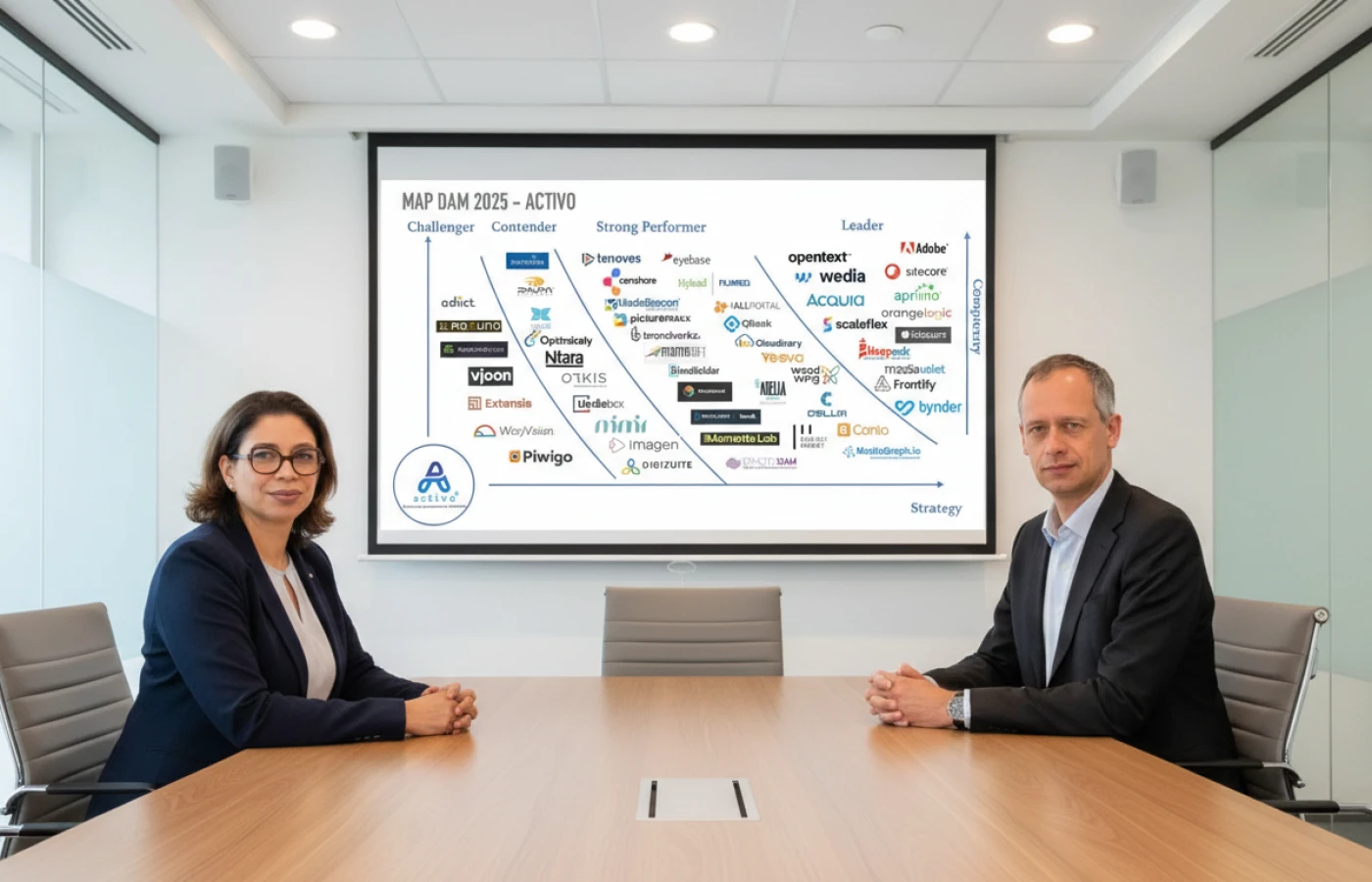
Digital asset management is more than a repository – it is the operating system for modern creative teams. This guide shows how a DAM for creative operations automates workflows, enables collaboration, enforces governance and tracks return on investment. Learn frameworks and decision models for selecting and implementing a DAM to scale creative output and demonstrate enterprise value.
Creative operations sit at the intersection of artistry and execution. As teams scale and marketing channels multiply, maintaining quality, speed and brand consistency becomes a strategic imperative. A digital asset management (DAM) platform designed for creative operations aims to solve these pressures by centralising assets, streamlining workflows and providing a single source of truth for design and marketing teams. This article explores how to optimise creative operations with a DAM, addresses common challenges, presents decision frameworks and ROI metrics, and outlines implementation strategies for long‑term success.
Creative operations is the discipline of orchestrating people, processes and technology to deliver creative work efficiently and effectively. In an enterprise setting it involves more than making sure projects are completed on time. It is about translating marketing strategy into repeatable workflows, aligning creative resources with business objectives and continuously improving processes. A mature creative operations function defines roles, sets timelines, manages budgets and implements governance to ensure that every asset produced is purposeful, on brand and compliant.
An effective creative operations program pursues several parallel objectives:
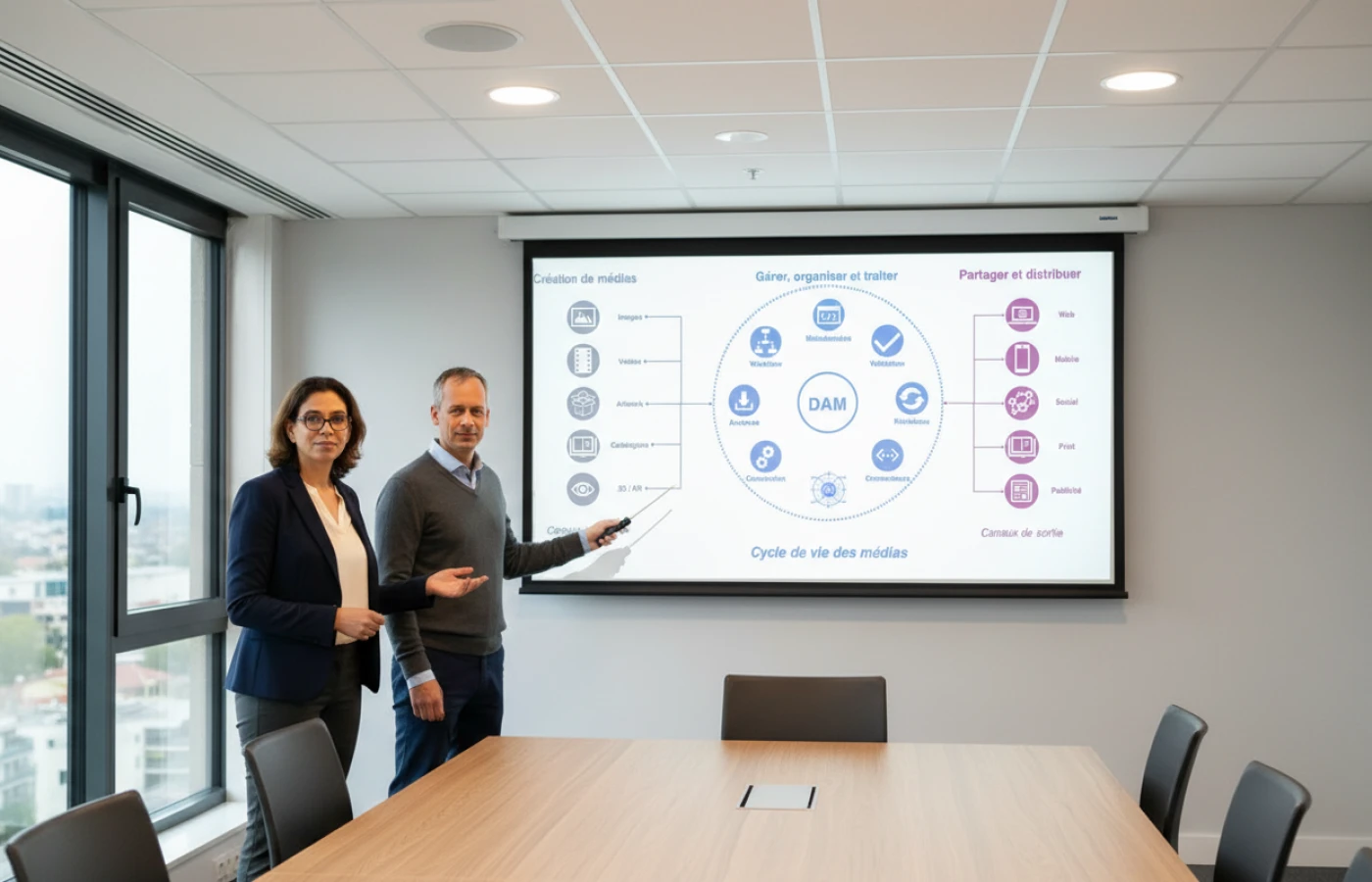
Without a structured operations function, creative teams can devolve into chaos. Requests arrive via email and chat, assets live on personal drives and approvals happen ad hoc. This environment breeds duplication, missed deadlines and inconsistent messaging. As campaigns proliferate across digital, social and experiential channels, the stakes rise: even a small brand misstep can erode trust. Creative operations bring discipline and governance, enabling the creativity that drives brand differentiation to thrive within a sustainable framework.
Creative teams face increasing complexity. Multi‑channel campaigns require assets in multiple formats and sizes. Global expansion introduces linguistic, cultural and regulatory differences. Remote work demands coordination across time zones. These pressures expose weaknesses in traditional processes and highlight the need for an integrated approach.
Most organisations have grown up with siloed file storage. Assets live on shared drives, cloud folders and personal laptops. File names are inconsistent and metadata is sparse. Teams waste hours searching for the latest version of a logo or re‑creating work because they cannot find existing assets. These inefficiencies multiply as the volume of content increases and deadlines shorten.
The lack of an authoritative source for assets also compromises brand consistency. Without clear guidelines, designers may unknowingly use outdated logos or colours. Legal teams struggle to ensure that rights‑managed media is used within license restrictions. When creative output is scattered, governance becomes nearly impossible.
Emails and spreadsheets may suffice for a small team, but they become a liability at scale. Requests arrive through multiple channels, leaving some tasks invisible until they cause delays. Feedback is scattered across chat threads and emails, making it easy to overlook critical comments. Without defined stages and deadlines, work can languish in review, causing missed launches and wasted effort.
Approval processes often lack transparency. If reviewers are unclear about their responsibilities or cannot see the latest version of an asset, they may provide conflicting guidance. Rework and revision cycles increase, frustrating teams and escalating costs. These bottlenecks reduce throughput and erode morale.
Enterprises must protect their brand while enabling creativity. Guidelines exist to preserve tone, style and legal compliance, yet in practice they can be difficult to enforce. Teams working with outdated assets or ignoring guidelines may inadvertently introduce off‑brand content into public channels. Poor governance exposes the business to regulatory fines, reputational damage and wasted investment.
Ensuring compliance becomes harder as campaigns span markets with distinct cultural norms and legal requirements. Without central oversight, local teams may adapt content in ways that conflict with corporate standards. The challenge is to empower local marketers without sacrificing control and accountability.
Modern campaigns require assets in diverse formats: social media posts, video snippets, interactive web modules, printed collateral and experiential content. Each platform has unique specifications and constraints. Generating these deliverables manually is time‑consuming and error‑prone. Teams must be able to repurpose assets quickly and generate variations without going back to design from scratch.
The proliferation of channels also amplifies the need for tracking and reporting. Marketers need to know which assets perform well in which contexts so they can optimise future campaigns. Without centralised data and analytics, insights remain anecdotal and decision‑making is reactive.
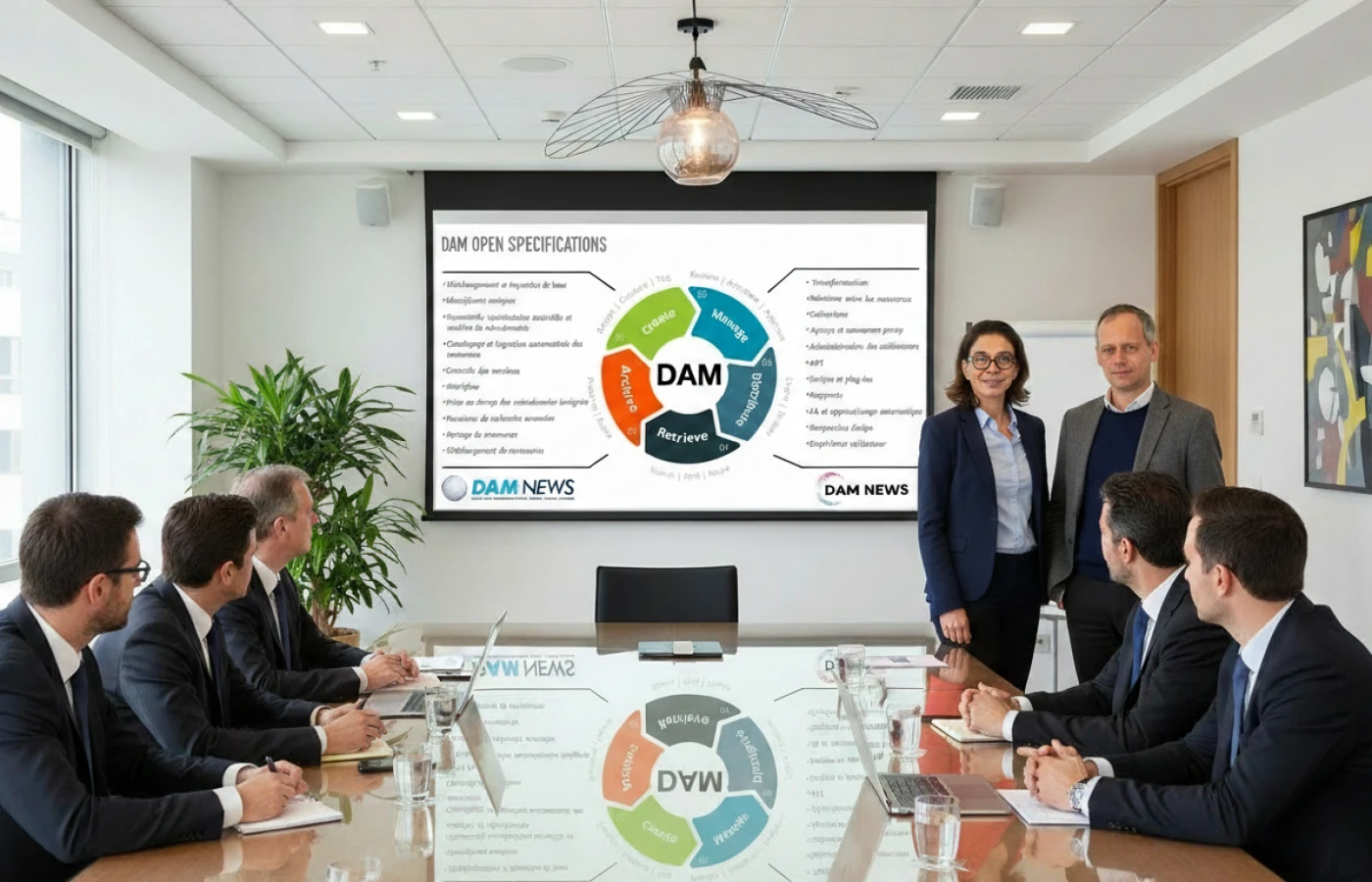
A digital asset management system designed for creative operations addresses these challenges by providing structure, automation and collaboration at scale. Rather than acting as a static library, a modern DAM is a dynamic engine that powers workflows, governs assets and connects to the broader marketing ecosystem.
At its core, a DAM stores all creative assets in a single, secure repository accessible across the organisation. This centralisation eliminates the fragmented file systems that plague creative teams. Rich metadata – including descriptive keywords, usage rights, status and relationships – makes assets discoverable. Taxonomy and metadata standards support consistent naming conventions and categorisation, reducing time spent searching and mitigating duplication.
Centralisation also ensures that only approved assets are available to downstream teams. Access controls restrict sensitive content to authorised users while ensuring that general assets are readily available. Automatic versioning and audit trails provide transparency into who created, modified or approved assets and when. This single source of truth is the foundation for governance and compliance.
One of the most significant contributions of a DAM to creative operations is workflow automation. Instead of relying on ad hoc emails, the DAM orchestrates requests, reviews and approvals through defined stages. Requesters submit briefs through forms that capture necessary information up front. The system assigns tasks to the appropriate stakeholders and sets deadlines based on service levels.
Flexible workflows allow teams to design approval processes that fit each project. Simple projects might require only a quick review from a brand owner, while high‑impact campaigns may involve multiple rounds of feedback from legal, compliance and regional stakeholders. The DAM routes tasks accordingly and sends notifications to keep work moving. Stakeholders can see the current stage, due dates and outstanding actions, reducing confusion and delays.
Flexibility does not mean chaos. Governance structures embedded in the workflow ensure that required approvals cannot be bypassed. Parallel approvals and conditional branches allow for agile decision‑making without sacrificing control. Visual dashboards show bottlenecks and progress, enabling operations managers to intervene proactively.
Creative operations do not exist in isolation. Designers use tools for ideation and production, marketers use content management systems and campaign management platforms, and data analysts rely on analytics tools. A DAM becomes valuable when it integrates seamlessly with these systems, eliminating manual handoffs and ensuring that assets flow through the content supply chain.
Through APIs and connectors, a DAM can pull creative files from design applications, push approved assets into content management systems, distribute content to marketing automation platforms and feed performance data back into the DAM for analysis. Integration reduces duplication and ensures that teams work within a unified environment. It also allows for the automation of repetitive tasks such as format conversion and distribution, freeing creative talent to focus on higher‑value work.
A key element of efficiency is the reuse of existing assets. A DAM makes it easy to find and repurpose materials, whether they are images, design elements or campaign templates. Templates provide a framework for creating variations – for example, resizing an ad or adapting a campaign for a local market – while preserving brand integrity. Locking brand elements and allowing edits to copy or imagery ensures consistency and reduces risk.
Localization becomes manageable when assets are associated with metadata indicating language, region and rights. The DAM can serve different versions based on user roles or region. Teams no longer need to maintain separate file repositories for each market; they simply select the appropriate variant within the DAM. This approach accelerates time to market, reduces production costs and ensures that local teams work within guardrails.
Cross‑functional collaboration is essential for creative projects. A DAM provides shared workspaces where teams can access the same files, comment directly on assets and record decisions. Discussions and annotations are anchored to the asset, creating a clear audit trail. When stakeholders are distributed across regions, the ability to access assets and provide feedback asynchronously ensures continuity. Teams in different time zones can pick up where others left off, reducing delays and handoff friction.
Visibility into workloads and timelines allows operations managers to balance resources. By tracking task assignments, durations and workloads, they can anticipate bottlenecks and reallocate resources. This transparency also fosters accountability: when everyone can see who is responsible for a task and what stage a project is in, there is less risk of work getting lost.
Creative operations must manage not just the creation of assets but also their lifecycle. Version control ensures that teams always work on the most recent file, and that previous versions are archived for reference or rollback. Rights management tracks usage permissions, expiration dates and licensing restrictions, preventing accidental misuse. Governance policies encoded into the DAM – such as mandatory metadata fields, naming conventions and approval checkpoints – enforce standards without requiring constant oversight.
A DAM can also manage the disposition of assets. Archiving policies automatically move outdated materials to cold storage or remove them entirely when licences expire. Retention schedules aligned with legal requirements ensure compliance. These policies reduce clutter and free up storage, supporting sustainability and cost optimisation.
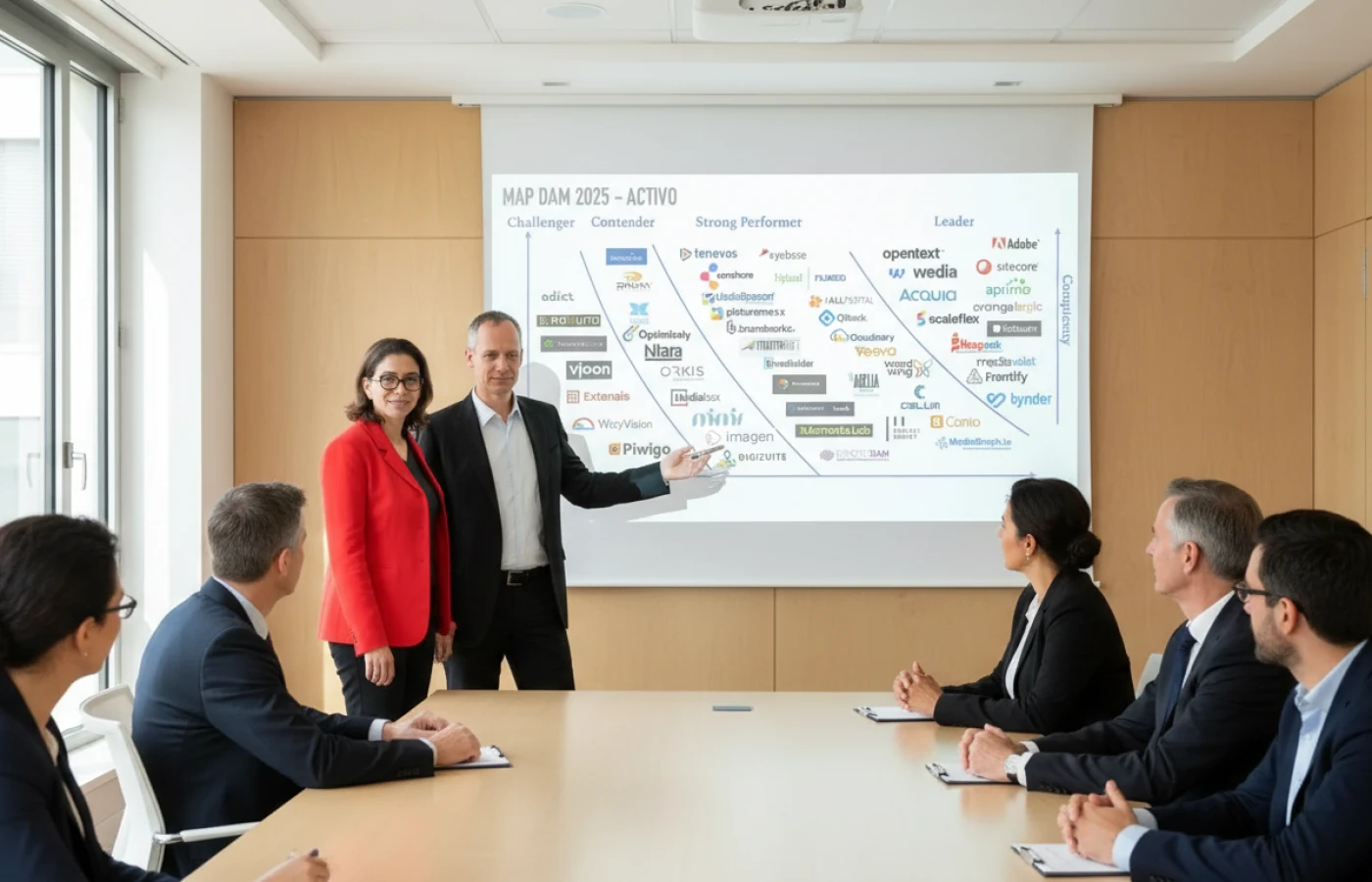
Investing in a DAM for creative operations must be justified through clear returns. To demonstrate value, decision‑makers need to look beyond anecdotal benefits and measure both quantitative and qualitative outcomes. A rigorous ROI framework ensures that investments align with enterprise goals and provides evidence for continuous improvement.
To calculate ROI, start with a baseline. Conduct a thorough assessment of current processes: how long does it take to fulfil creative requests? How many hours are spent searching for assets? How often are rights violations discovered? Collect both quantitative metrics and qualitative observations. Then define your objectives and identify the metrics that align with them.
Use time savings formulas such as:
ROI (%) = (Time Saved × Hourly Rate × Number of Campaigns) ÷ Investment Cost × 100
This calculation captures labour savings but should be supplemented with cost reductions from asset reuse and licensing. Qualitative benefits require narrative documentation: track improvements in brand consistency, collaboration and stakeholder satisfaction through surveys or interviews.
Once the DAM is deployed, measure the same metrics at regular intervals. Compare before‑and‑after results to highlight improvements. Use dashboards to present data to stakeholders and to identify areas for further optimisation. ROI is not static; it evolves as adoption increases and processes mature.
Not every organisation is at the same stage of creative operations development. A maturity model helps leaders understand where they stand and prioritise improvements. Assessing maturity across strategy, people, process, data and technology exposes gaps that hinder performance and guides investment decisions.
To apply the maturity model, assemble a cross‑functional team representing creative, marketing, operations and IT. For each pillar, evaluate your current state and define a target state based on business goals. Not every organisation needs to reach Level 5 across all pillars; alignment with strategy matters more than chasing maturity for its own sake.
Identify the gaps between current and target states. Prioritise initiatives based on potential impact and ease of implementation. For example, if intake is chaotic (Level 1 process) but technology adoption is advanced (Level 3), focus on standardising request workflows and training teams on existing tools. Develop an action plan with clear responsibilities and timelines. Reassess maturity annually to track progress and adjust goals.
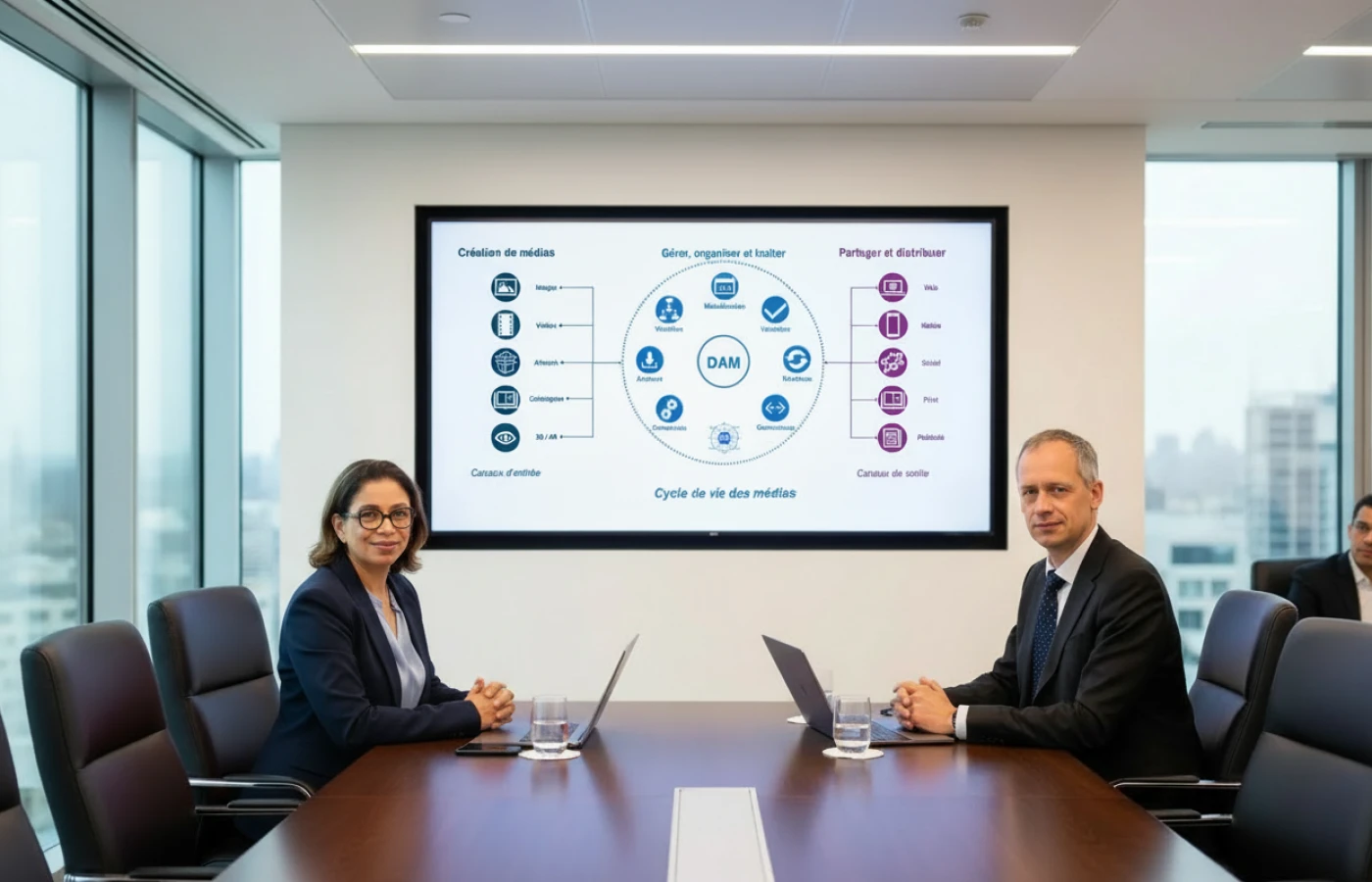
Selecting and configuring a DAM for creative operations is not a one‑size‑fits‑all decision. A framework helps decision‑makers evaluate options against business drivers and operational realities.
Begin by listing your critical business drivers: volume of creative output, number of stakeholders, geographic reach, regulatory requirements and desired speed to market. Map these drivers to potential deployment models and feature sets. For instance, if rapid deployment and elasticity are paramount, a cloud‑based DAM may be appropriate. If your organisation operates under strict data residency rules, an on‑premises or hybrid model may be necessary.
Evaluate capabilities such as metadata flexibility, integration options, workflow customisation and analytics. Determine whether your team can configure these features or if you require professional services. Identify must‑have features for launch versus those that can be phased in. This assessment anchors the decision in business outcomes rather than generic feature checklists.
Workflows in creative operations vary from simple approval loops to multi‑stage, cross‑departmental processes with conditional branches. Consider three archetypes:
By categorising your processes, you can align the DAM’s workflow engine with your governance requirements. Avoid over‑engineering simple processes or creating rigid structures where creative agility is essential.
Determine the scale at which creative operations operate today and the expected growth trajectory. For a small team producing a limited volume of assets, a lightweight DAM may deliver adequate returns. For a large enterprise managing thousands of assets across regions and channels, a more robust platform with advanced metadata, automation and analytics is necessary.
Conduct a cost–benefit analysis. Estimate the total cost of ownership (licensing, implementation, training, maintenance) and compare it with the tangible benefits such as time saved, reduced licensing fees and increased asset reuse. Factor in the opportunity cost of delayed campaigns and the risk of compliance failures. Use the ROI calculation framework discussed earlier to quantify the benefits and create scenarios for different levels of adoption.
Finally, consider the long‑term scalability of the platform. Does it support future needs such as AI‑powered tagging, omnichannel distribution, or integration with emerging creative tools? A strategic investment should accommodate innovation and growth rather than require replacement after a few years.
Once a decision is made, implementation is a critical phase that determines whether the DAM will deliver its promised benefits. Implementation is not merely a technical exercise; it involves change management, training and governance.
Begin by forming a governance committee that includes representatives from creative, marketing, IT, legal and regional teams. Define roles such as DAM administrator, metadata specialist, content librarian and governance lead. The committee establishes policies for asset inclusion, naming conventions, metadata standards, access permissions, rights management and retention schedules. Clear policies prevent the DAM from becoming a digital dumping ground and ensure that every asset has a purpose.
Develop training programs tailored to each role. Creatives need to know how to upload assets, apply metadata and access templates. Marketers need to understand how to find and reuse assets. Administrators need to manage user permissions, monitor usage and enforce policies. Ongoing education ensures adoption and reduces misuse.
Map existing creative processes and identify opportunities to streamline them in the DAM. Standardise intake forms to capture key information such as target audience, channel, deliverable types and deadlines. Define approval stages and assign responsibility for each. Create templates for briefs, reviews and final deliverables.
Establish metadata standards that reflect how your organisation thinks about content. Include fields for asset type, campaign, market, rights, status and keywords. Use controlled vocabularies and taxonomies to ensure consistency. Incorporate governance requirements into metadata, such as rights expiration dates and compliance flags.
Select a DAM platform that aligns with your business fit assessment and workflow requirements. During configuration, customise metadata fields, user roles, permissions and workflows. Resist the temptation to replicate existing inefficient processes; instead, redesign processes to take advantage of the DAM’s capabilities.
Plan integrations with design tools, content management systems, marketing automation platforms and analytics tools. Prioritise integrations that deliver immediate value, such as connecting the DAM to your creative suite to streamline asset ingestion and to your CMS to automate publishing. Build a roadmap for future integrations as adoption increases.
Implementation success hinges on user adoption. Communicate the purpose and benefits of the DAM to all stakeholders. Involve users early in configuration and testing to solicit feedback and build ownership. Provide hands‑on training and create user guides, video tutorials and FAQs. Identify champions within each team who can support peers and reinforce best practices.
Change management must address cultural shifts. Moving from personal file storage and ad hoc processes to a governed system may encounter resistance. Highlight the personal benefits: easier access to assets, fewer tedious searches and more time for creativity. Provide ongoing support, listen to concerns and iteratively refine processes.
Set up dashboards to track the metrics defined in your ROI framework. Monitor adoption rates, asset uploads, search queries, approval times, reuse rates and compliance incidents. Use this data to identify bottlenecks and training needs. Share progress with stakeholders to demonstrate value and secure continued investment.
Regularly review governance policies and workflows. As the organisation grows and markets evolve, processes may require adjustment. Conduct periodic audits of metadata quality and asset usage to ensure that the DAM remains a trusted source. Continual improvement transforms the DAM from a one‑time project into a strategic asset.

While a DAM provides the infrastructure for creative operations, success depends on how well it is aligned with strategy and culture. Independent consulting brings expertise, objectivity and frameworks to ensure that technology investments translate into business value.
Consulting should be viewed as an accelerator, not a replacement for internal ownership. The goal is to build internal capability so that creative operations can sustain itself long after the consultant has gone.
Optimising creative operations with a digital asset management system is both a technical and organisational endeavour. It requires disciplined governance, flexible workflows, integration with the marketing ecosystem and a metrics‑driven approach to ROI. A DAM provides the infrastructure to centralise assets, automate approvals, enable collaboration and enforce brand standards. However, success depends on aligning the system with strategy, designing processes that balance control and creativity, and cultivating a culture of continuous improvement.
For decision‑makers, the journey begins by assessing current creative operations maturity, defining business drivers and evaluating deployment models against governance and workflow complexity. Implementing a DAM is not a one‑time project but an ongoing program requiring cross‑functional involvement, training and measurement. With a clear framework and the right metrics, organisations can demonstrate tangible ROI through time savings, cost optimisation, improved asset utilisation and enhanced brand consistency.
In a world where speed, scale and quality are non‑negotiable, a DAM for creative operations is a strategic investment. By adopting a holistic approach encompassing strategy, people, process, data and technology, enterprises can unlock the full potential of their creative teams and deliver differentiated experiences that resonate with audiences and drive growth.

Interested in a joint project, a web demo or just getting to know us? We'll get back to you as soon as possible.
