
Creative teams waste 21% of their time searching for assets. That's one full day each week spent hunting through folders, Slack threads, and email attachments instead of creating. For a team of five creatives earning $75,000 annually, this inefficiency costs organizations roughly $78,750 per year in lost productivity.
Creative operations maturity models provide structured frameworks that map your team's current capabilities against five distinct levels of operational sophistication. Think of them as diagnostic tools that reveal where you stand today and chart a clear path forward.
These models help creative directors, marketing ops managers, and brand managers move beyond gut feelings about their team's performance. Instead of wondering "Why does everything take so long?" you get concrete benchmarks and actionable next steps.
Level 1 teams operate in reactive chaos—every project feels like an emergency, assets live in personal folders, and approval processes happen through text messages. Level 5 teams run like well-oiled machines with automated workflows, predictive resource planning, and real-time performance analytics.

DAM integration evolves dramatically across these maturity levels. At Level 1, you might not even know what DAM stands for. By Level 5, your DAM system serves as the central nervous system of your creative operations—automatically tagging assets with AI, triggering approval workflows, and feeding directly into campaign management platforms.
The journey from chaos to optimization isn't just about buying better tools. It's about fundamentally reimagining how creative work gets done, measured, and improved over time.
Creative operations maturity models adapt proven frameworks from software development and business process improvement. These models map how organizations evolve from chaotic creative workflows to streamlined, measurable operations.
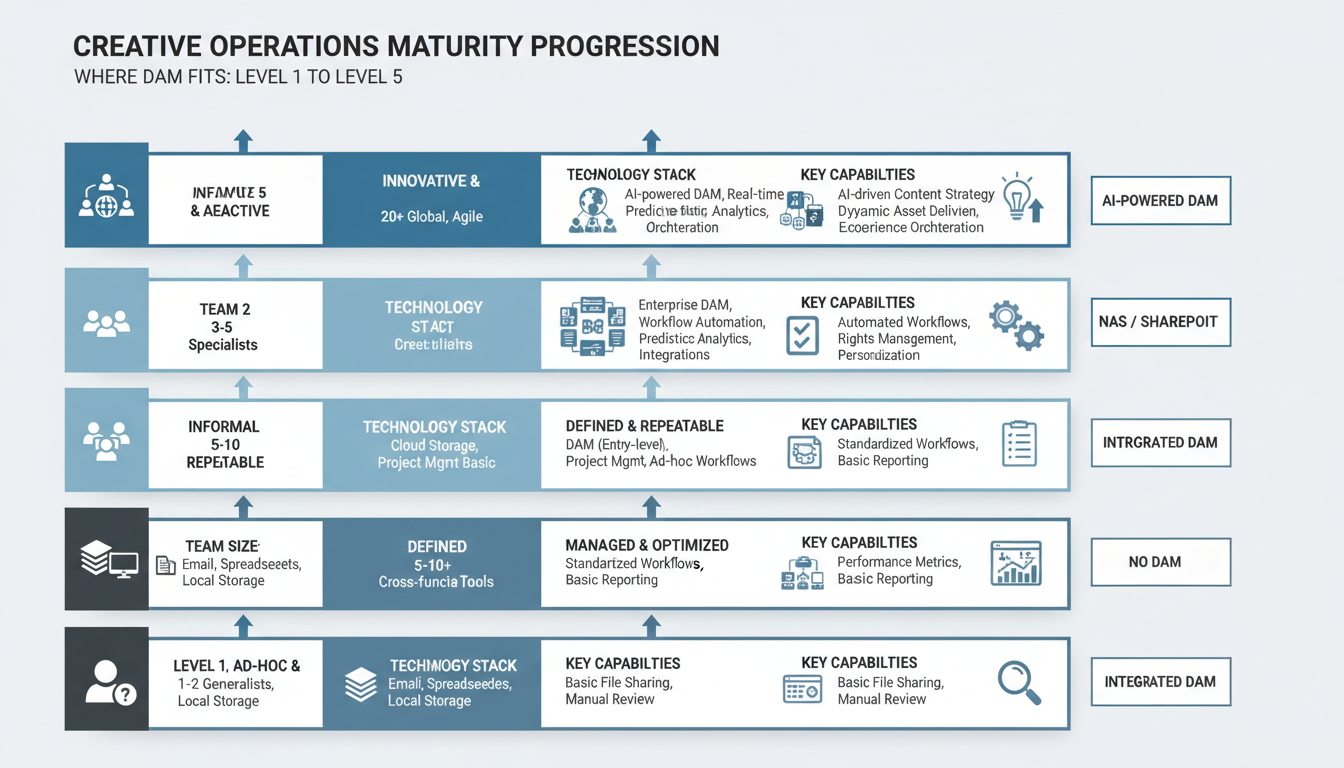
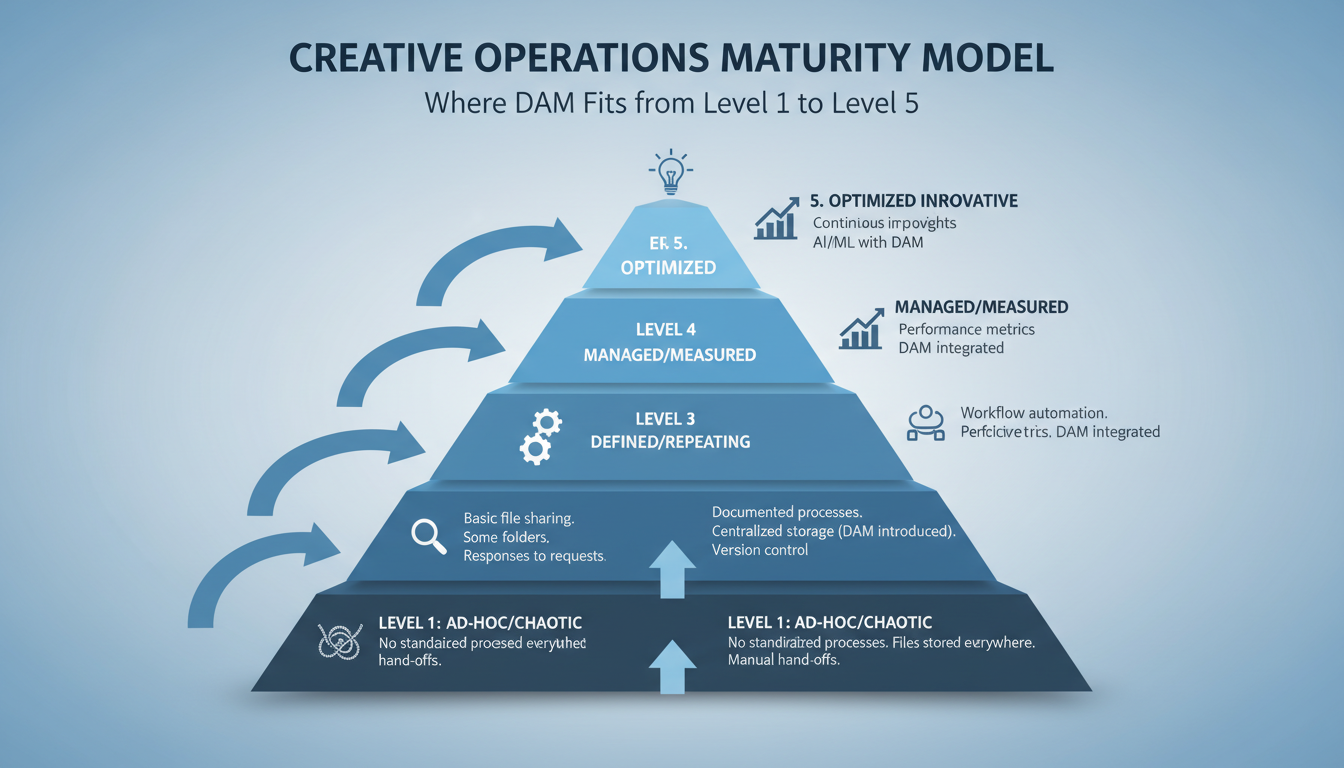
The five-level progression follows a predictable path:
Level 1: Ad-hoc - Teams work in silos with no standard processes. Files live everywhere from desktop folders to personal Dropbox accounts.
Level 2: Managed - Basic project management appears, but workflows vary by team or individual preference.
Level 3: Defined - Documented processes exist across the organization. This is where DAM systems typically get introduced.
Level 4: Quantitatively Managed - Teams measure performance metrics like asset reuse rates, approval cycle times, and creative ROI.
Level 5: Optimizing - Continuous improvement drives decisions. Advanced DAM features like AI tagging and automated workflows become standard.

Three core areas determine your maturity level:
Research shows 67% of organizations stall between managed and defined processes. Why? They implement DAM technology without changing underlying workflows. Teams upload files to the new system but still email attachments and save duplicates locally.
The breakthrough happens when leadership mandates single-source-of-truth policies. No more "quick" workarounds. Every asset flows through the DAM, every approval follows the documented process.
This discipline separates companies that see DAM ROI from those stuck with expensive digital filing cabinets.
Digital Asset Management (DAM) transforms alongside your creative operations maturity, but here's what most organizations miss: DAM isn't just storage that gets more sophisticated. It's the central nervous system that connects every creative touchpoint.
Level 1-2: Basic Asset Storage Early-stage teams treat DAM like a glorified file cabinet. You upload 200 brand photos, create basic folders, and call it done. The ROI is simple: designers save 3-4 hours weekly not hunting through desktop folders. Many assume this level only works for Fortune 500 companies, but creative agencies with just 15 people see immediate time savings.
Level 3: Workflow Integration DAM capabilities expand to connect creative tools directly. Your team exports finished designs from Figma straight into DAM, which automatically tags assets and notifies stakeholders. Integration touchpoints multiply: Photoshop, InDesign, Slack, and project management tools all pull from the same asset pool.
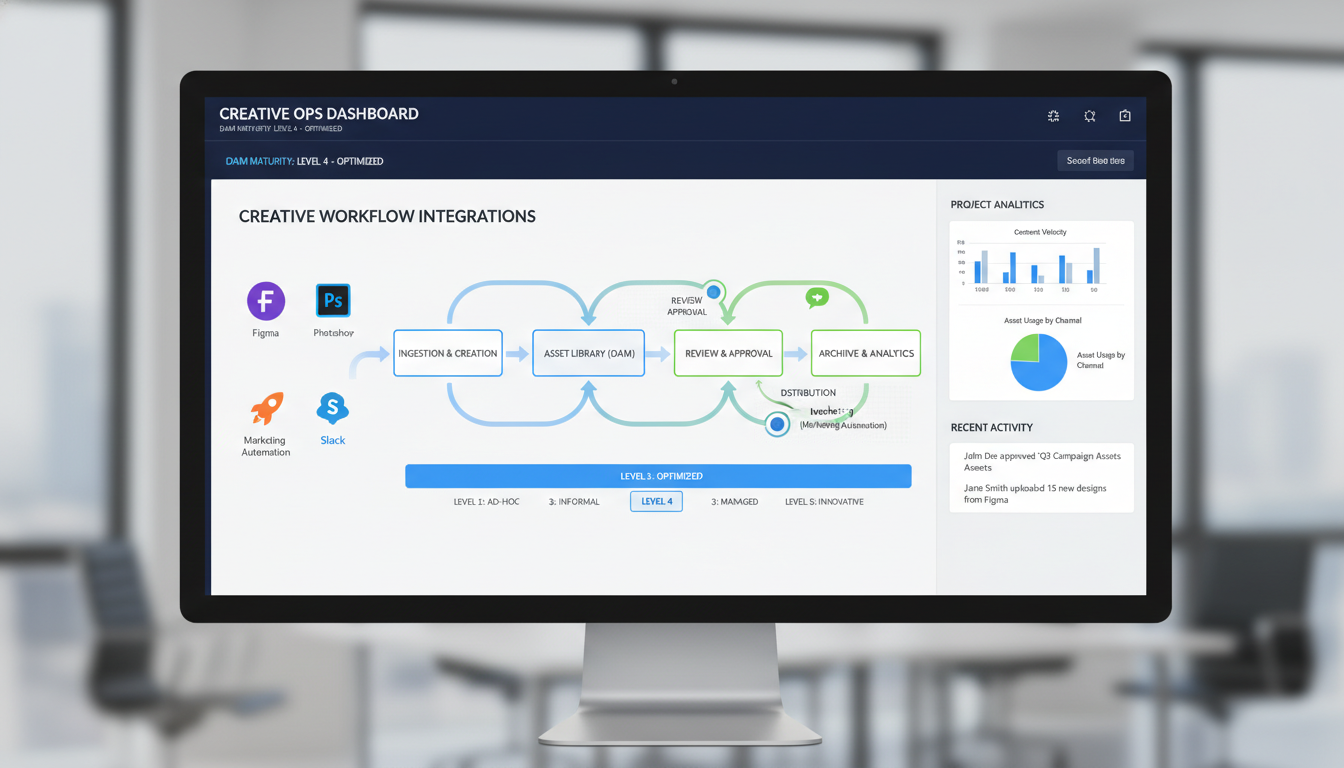
Level 4-5: Strategic Orchestration Advanced creative operations maturity models position DAM as mission control. The system doesn't just store your 10,000 product images—it tracks usage across 47 marketing campaigns, identifies top-performing creative formats, and automatically serves optimized assets to different channels.
ROI evolution becomes dramatic. Level 1 saves time. Level 5 generates strategic insights that drive campaign performance up 23% because you know which hero images convert best on mobile versus desktop.
The integration web expands beyond creative tools into marketing automation platforms, brand management systems, and analytics dashboards. Your DAM feeds customer data back to creative teams, closing the loop between asset creation and business impact.
Most teams skip levels, but DAM integration works best when it matches your actual creative operations maturity—not your aspirations.
Level 1 creative operations maturity feels familiar to most small teams: designers email attachments back and forth, assets live in personal Google Drive folders, and "final_logo_FINAL_v3" becomes an inside joke. This is where 73% of creative teams under 8 people operate, according to recent industry surveys.
The daily reality looks like this: Your designer opens Slack at 9 AM to find three different logo versions attached to various threads. She spends 45 minutes hunting through shared Dropbox folders, personal downloads, and email attachments just to find the right brand colors for a campaign. By the time she locates the correct files, the morning's creative momentum has vanished.
Level 1 Pain Points Hit Hard:
At this stage, DAM integration means basic cloud storage—Google Drive with folder structures or Dropbox shared links. You're not managing assets; you're just storing them slightly better than desktop folders.
Team Profile: 2-8 people, minimal documentation, everyone wears multiple hats. Success gets measured by simple metrics: "How fast can someone find our logo?" and "Are files organized by project or date?"
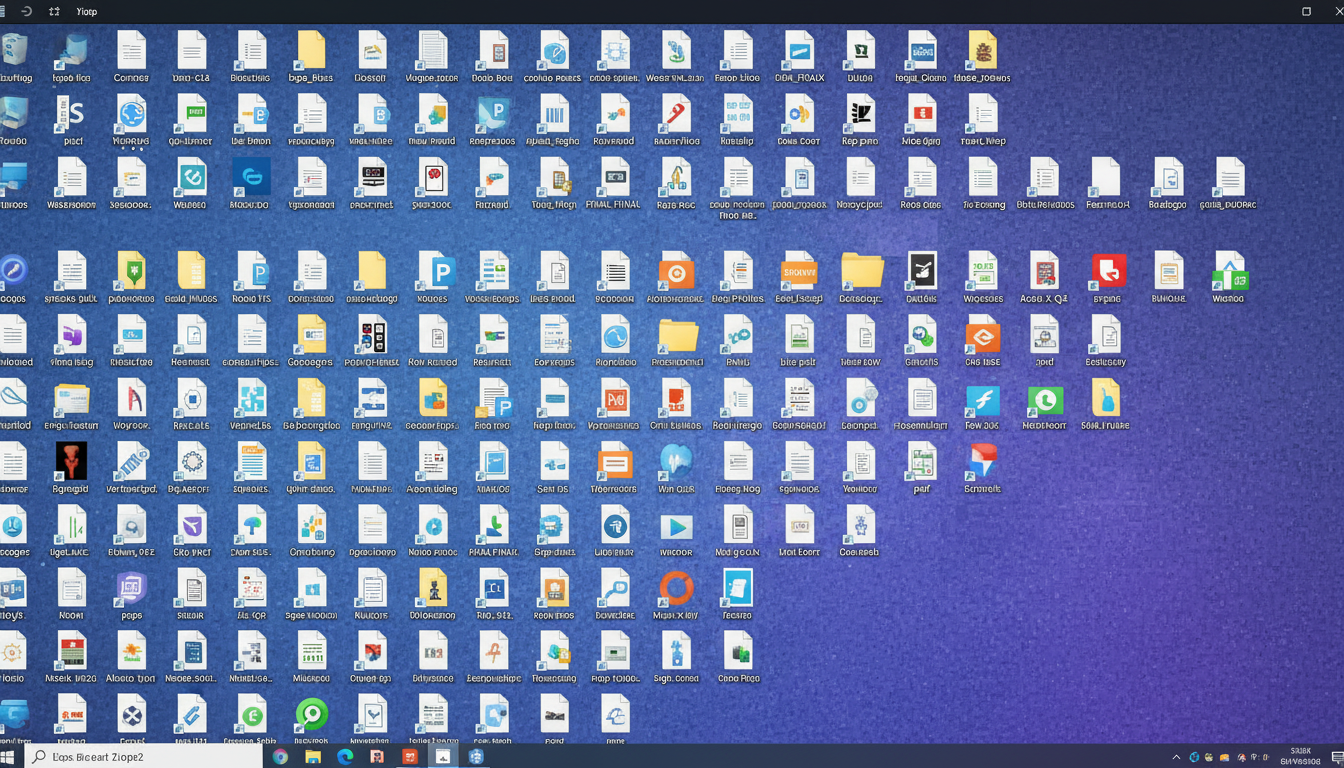
The Breaking Point: Most teams hit their progression trigger when they experience their first major brand crisis—wrong logo used in a $50K campaign, or when the team grows beyond 5 people and new hires can't find anything. That's when creative operations maturity becomes a business necessity, not just a nice-to-have organizational tool.
Level 2 creative operations maturity marks the turning point where growing teams recognize chaos isn't scalable. Organizations at this stage typically employ 8-20 people with a designated creative ops coordinator who becomes the DAM champion.
The transformation centers around implementing a dedicated DAM platform like Brandfolder or Canto. These entry-level systems bring immediate order through structured folder hierarchies and basic metadata tagging. Instead of hunting through email threads, your marketing team can now locate last quarter's social media templates in under 30 seconds.
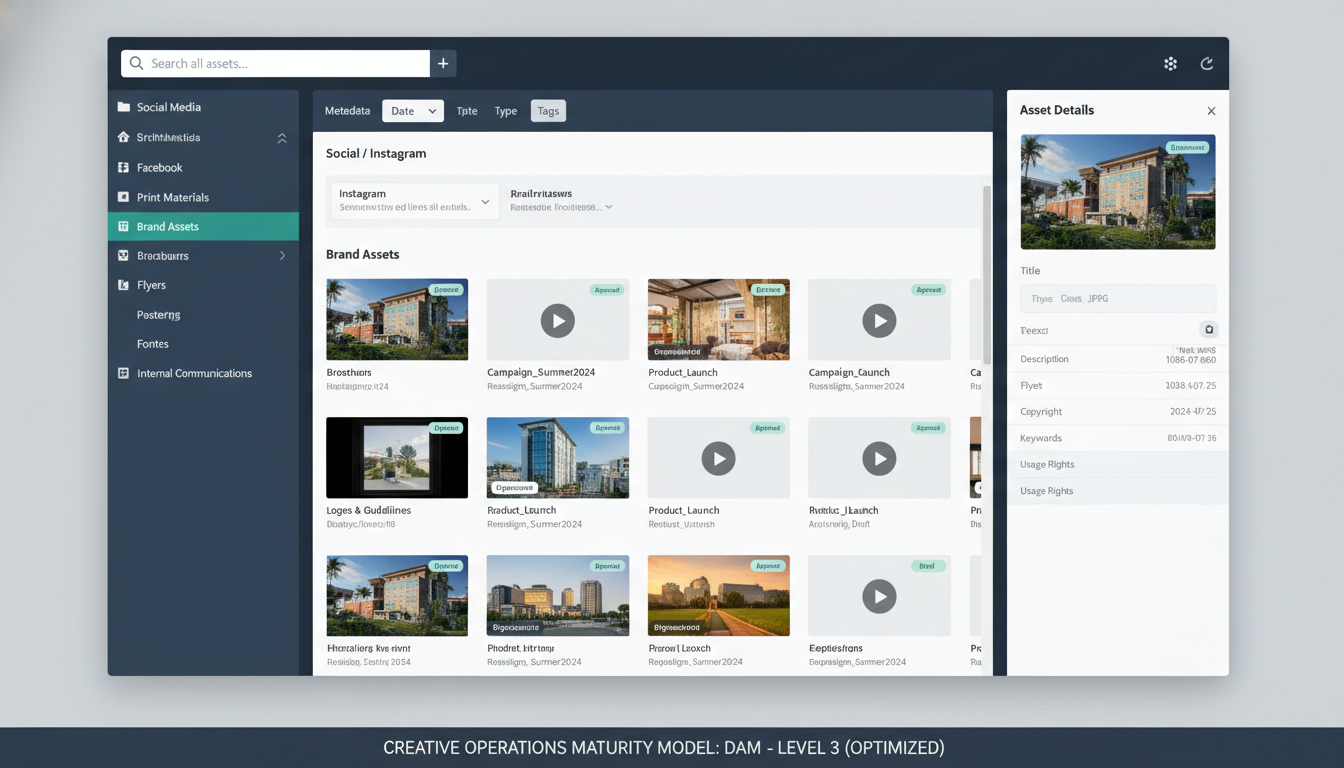
Key improvements at Level 2 include:
Consider a typical scenario: Your marketing team launches approval workflows for social media content. Designers upload posts to the DAM, stakeholders review within the platform, and approved assets automatically move to a "ready-to-publish" folder. This structured approach reduces approval cycles by 35-50% while eliminating the email attachment shuffle.
Integration becomes crucial at Level 2. Your DAM connects with Adobe Creative Suite, allowing designers to access approved brand assets directly within Photoshop or InDesign. Basic project management tools like Asana or Monday.com sync with the DAM to track asset status.
Success metrics show tangible improvements: asset findability jumps by 40%, and teams spend 60% less time searching for files. Most organizations need 6-12 months to establish this foundation properly.
The DAM role shifts from simple storage to workflow enabler, setting the stage for more sophisticated creative operations maturity as teams grow beyond 20 people.
Level 3 creative operations maturity represents the sweet spot where documented workflows meet sophisticated technology. Teams at this stage typically span 20-50 people with a dedicated creative ops team managing the entire content lifecycle.
The transformation becomes evident in real scenarios like Patagonia's approach to managing assets across 12 regional teams. Each region accesses the same brand-compliant templates, follows identical approval workflows, and maintains consistent visual identity—all through centralized systems that prevent creative drift.
Template libraries replace one-off designs. Automated workflows route projects through predefined approval stages. Brand compliance checks happen automatically, not through manual review sessions that slow everything down.
Teams implement role-based permissions that give designers access to working files while restricting stakeholders to approved assets only. Metadata standards ensure every image, video, and document contains searchable information that actually helps people find what they need.

Level 3 organizations typically deploy platforms like Widen, Bynder, or Adobe AEM Assets. These systems offer API integrations that connect creative workflows to marketing automation platforms, CMS environments, and social media schedulers.
Auto-tagging reduces manual metadata entry by 70%. Rights management prevents expired stock photos from appearing in new campaigns. Usage analytics show which assets drive engagement and which collect digital dust.
The integration ecosystem becomes the backbone—creative teams work in familiar tools while the DAM system handles distribution, version control, and compliance automatically.
Success metrics reflect this systematic approach: organizations report 60% reductions in off-brand content and 50% faster campaign launches. When creative operations maturity reaches Level 3, teams stop fighting their tools and start leveraging them strategically.
Level 4 creative operations maturity transforms creative teams from intuition-based to intelligence-driven organizations. Teams at this stage typically manage 50+ people across specialized roles, with creative operations functioning as a true center of excellence that influences strategic decisions company-wide.
The defining characteristic? Performance analytics become the foundation for every creative decision. Organizations don't just track what assets exist—they predict which ones will succeed.
Consider how global retailer Target operates at this level. Their creative ops team analyzes asset performance data across 15 different channels, predicting campaign success rates with 87% accuracy before launch. When their data showed video thumbnails with red backgrounds drove 34% higher click-through rates, they automatically prioritized similar assets in their production queue.
Enterprise DAM platforms like MediaValet and Nuxeo become strategic command centers rather than simple storage solutions. These systems integrate seamlessly with:
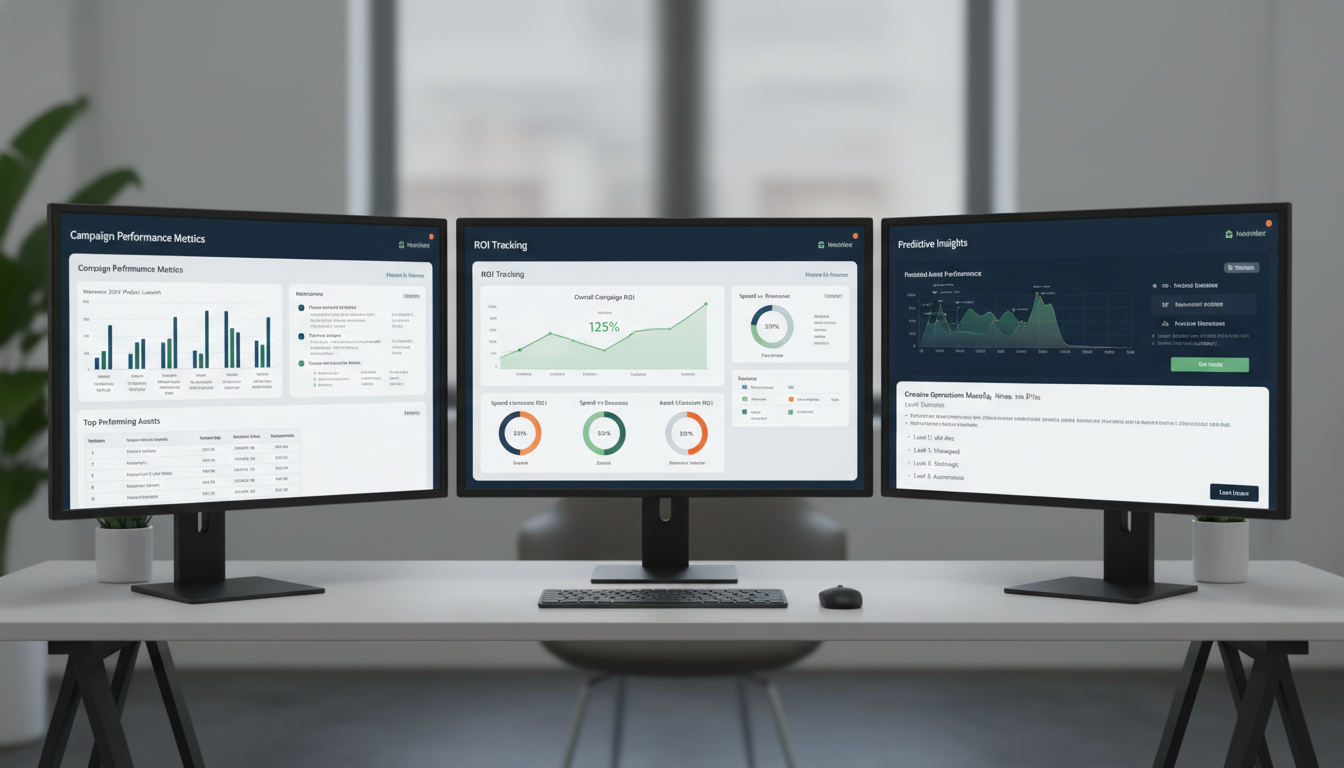
Level 4 organizations leverage machine learning for content recommendations, automated metadata tagging, and performance prediction. One pharmaceutical company reduced asset search time by 80% using AI-powered content suggestions, while their predictive models improved campaign ROI by 25%.
The organizational impact extends beyond efficiency gains. Creative directors make strategic decisions backed by concrete data rather than gut instinct. Resource allocation becomes scientific rather than political.
Common challenges include breaking down data silos between departments and managing change resistance from teams comfortable with traditional approaches.
Level 5 creative operations maturity represents the pinnacle where AI-powered systems operate with minimal human intervention. Teams at this stage typically manage enterprise-scale operations with 100+ people, but their technology stack performs the work of thousands.
Organizations at Level 5 deploy self-improving systems that learn from every creative decision. Consider Coca-Cola's real-world implementation: their AI-powered DAM automatically generates localized campaign variations for 200+ markets, adjusting colors, typography, and messaging based on cultural preferences and performance data. The system produced 47% more campaign variations in 2023 while reducing production time by 73%.
Your DAM transforms into a creative intelligence platform with headless architecture and API-first design. Key capabilities include:

The technology stack centers on custom AI models trained on your brand data. Teams invest $2-5 million annually in specialized talent and infrastructure, but see 300-500% ROI through market expansion and competitive advantages.
Creative operations become your primary differentiator. Netflix exemplifies this with their thumbnail optimization system generating thousands of personalized images daily, contributing to their 15% engagement improvement in 2023.
Success metrics shift to business outcomes: market share growth attributed to creative agility (typically 12-25%), innovation pipeline strength, and speed-to-market advantages. Your creative ops team doesn't just support business strategy—they drive it, turning content creation into a sustainable competitive moat that competitors struggle to replicate.
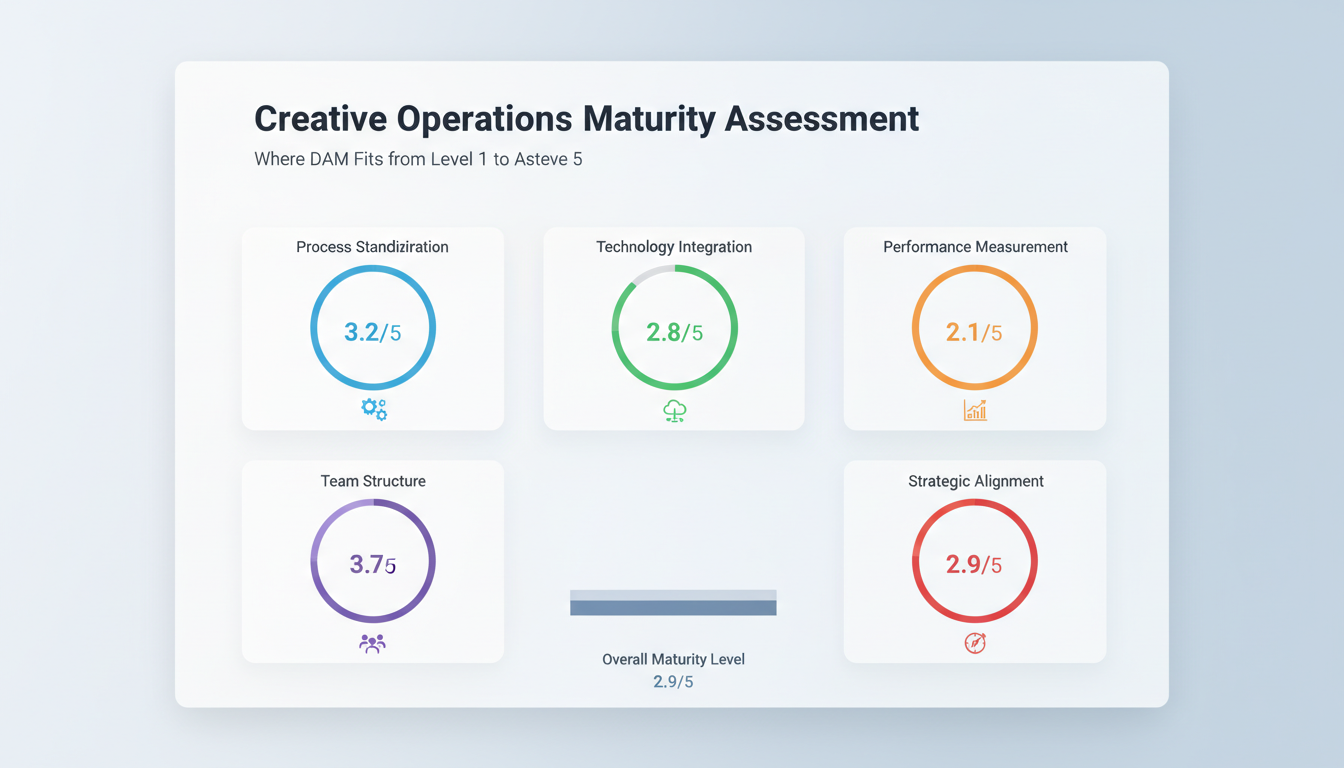
Before implementing DAM solutions or advancing your creative ops strategy, you need an honest baseline assessment. This 15-question framework evaluates your organization across five critical dimensions using a 5-point scale (1 = Ad hoc, 5 = Optimized).
Process Standardization examines workflow consistency. Do you have documented creative briefs? Are approval processes repeatable across projects?
Technology Integration measures system connectivity. Can your design tools automatically sync with project management platforms? Does asset metadata flow seamlessly between applications?
Performance Measurement evaluates data maturity. Are you tracking creative ROI beyond basic engagement metrics? Do you measure asset reuse rates and campaign attribution?
Team Structure assesses organizational design. Are creative roles clearly defined? Do you have dedicated creative ops professionals managing workflows?
Strategic Alignment examines business integration. Does creative output directly support revenue goals? Are creative decisions informed by market data?
Red flags signal lower maturity: designers searching email for latest file versions, manual asset handoffs between teams, creative decisions based purely on subjective preferences, and project timelines consistently missed due to revision cycles.
Green flags indicate advancement: automated workflow triggers, predictive analytics informing creative strategy, real-time collaboration across distributed teams, and measurable creative performance tied to business outcomes.
Organizations often overestimate their technology integration maturity. Having multiple tools doesn't equal integration. Similarly, teams undervalue process documentation, assuming institutional knowledge suffices.
Pro tip: Conduct quarterly assessments during active improvement programs. Monthly reviews create assessment fatigue, while annual reviews miss critical momentum shifts. This frequency aligns with most creative operations planning cycles and budget reviews.
Your creative operations maturity directly determines which DAM platform will succeed—and which will become expensive digital shelf-ware. Here's how budget, features, and implementation complexity scale across maturity levels.
Early-stage teams need simple, intuitive platforms like Brandfolder or Frontify. Focus on core usability over advanced features. Your 3-person marketing team doesn't need enterprise-grade metadata schemas—they need to find last month's product shots in under 30 seconds.
Implementation takes 1-3 months with basic folder structures and simple tagging. ROI expectations hover around 200%, primarily from reduced search time and eliminated duplicate work.
Common pitfall: Over-engineering the taxonomy from day one. Start simple.
Mid-maturity organizations require platforms like Widen or Bynder with robust API capabilities. You're managing 50,000+ assets across multiple brands, so advanced metadata becomes critical. Custom fields for campaign codes, usage rights, and approval status aren't luxuries—they're necessities.
Budget 4-6 months for implementation, including workflow automation setup and team training. Change management becomes crucial here; 40% of Level 3 DAM failures stem from poor user adoption, not technical issues.

Advanced teams deploy solutions like Adobe Experience Manager or MediaValet with extensive customization. You're integrating with Salesforce, connecting to PIM systems, and automating asset distribution across 15+ channels.
Expect 12-18 month implementations with dedicated project managers. ROI exceeds 500% through automated workflows and reduced creative production cycles.
Pro tip: Evaluate vendors on post-implementation support quality, not just features. Enterprise DAM success depends on ongoing optimization and user training programs that evolve with your creative operations maturity.
Moving between creative operations maturity levels requires more than good intentions—it demands strategic execution with measurable milestones.
Start with visible improvements that cost little but deliver immediate value. Standardize file naming conventions across your team within 30 days. Create three template workflows for your most common projects. These small changes demonstrate progress while building support for larger DAM integration initiatives.
Budget Allocation for Sustainable Growth:
This distribution prevents the classic mistake of over-investing in technology while neglecting the human elements that ensure adoption.
Executive sponsorship means more than approval—you need active participation. Schedule monthly progress reviews where leadership discusses creative ops improvements. Build champion networks by identifying one advocate in each department who benefits from better asset management.
Realistic Timeline Expectations: Most organizations advance one maturity level every 18-24 months. Rushing this process creates gaps in foundational capabilities that become expensive problems later.
Cross-functional collaboration accelerates progress more than any single technology purchase. When marketing, design, and IT teams align on creative operations maturity goals, DAM implementation becomes smoother and adoption rates increase by 40%.
Measure everything: asset retrieval times, project completion rates, revision cycles. These metrics justify continued investment and identify bottlenecks before they become roadblocks.
Common Acceleration Mistakes: Skipping foundational process documentation to rush into advanced DAM features creates confusion. Build solid Level 2 capabilities before attempting Level 4 automation workflows.
Each maturity level requires different skills, budgets, and timelines—but the payoff compounds as your creative operations become more sophisticated.
Most organizations take 6-12 months to advance one maturity level, though Level 1 to Level 2 can happen in 3-4 months with dedicated effort. You need a minimum team of 5-8 creatives producing 200+ assets monthly to justify DAM investment—smaller teams often see better ROI from simpler file organization tools like Dropbox Business.
You can't skip maturity levels successfully. Organizations attempting to jump from Level 1 chaos directly to Level 4 automation typically fail within six months. Each level builds essential habits and processes that support the next stage.
Track three key metrics: time-to-asset retrieval (should decrease 40-60% per level), asset reuse rates (doubles between Level 2-3), and creative throughput per team member (increases 25-30% annually). Calculate hard savings: if your team saves 2 hours daily on asset searches at $50/hour, that's $26,000 annually.
The biggest roadblock? Process adoption resistance. Creative teams often view DAM systems as bureaucratic overhead rather than productivity tools. Combat this by starting with your most organized team members as champions and demonstrating immediate value through faster project turnarounds.
Focus on three core capabilities initially: robust search functionality, automated metadata tagging, and simple approval workflows. Advanced features like AI-powered asset recommendations can wait until Level 4.
Allocate 15-20% of your annual creative operations budget for maturity improvements. This includes DAM licensing ($3,000-15,000 annually), training time (40 hours per team member), and process optimization consulting. The investment typically pays for itself within 8-10 months through improved efficiency.
The progression through creative operations maturity levels isn't just operational improvement—it's strategic differentiation. Organizations with mature creative operations achieve 40% faster time-to-market than their Level 1 counterparts, turning creative efficiency into revenue acceleration.
Remember: DAM technology enables transformation but doesn't create it. A Level 5 organization with basic DAM will outperform a Level 2 team with enterprise software every time. Focus on process maturity first, then layer in technology that amplifies your capabilities.
Immediate Actions (Next 30 Days):
Build Your Business Case: Calculate current creative inefficiencies in hours lost per week. Multiply by your team's hourly cost. Most organizations discover $50,000-200,000 in annual waste from poor asset management alone.
Mature creative operations transform marketing from cost center to profit engine. Level 4-5 organizations use their DAM systems to:

Your creative operations maturity directly impacts market responsiveness. While competitors struggle with version control and asset searches, mature organizations are already testing their next campaign iteration.
Ready to accelerate your maturity progression? Download our comprehensive Creative Operations Maturity Assessment Tool or schedule a strategic consultation to map your 12-month advancement roadmap.
The question isn't whether to evolve—it's how quickly you can outpace your competition.

Interested in a joint project, a web demo or just getting to know us? We'll get back to you as soon as possible.
